
Pests and Diseases
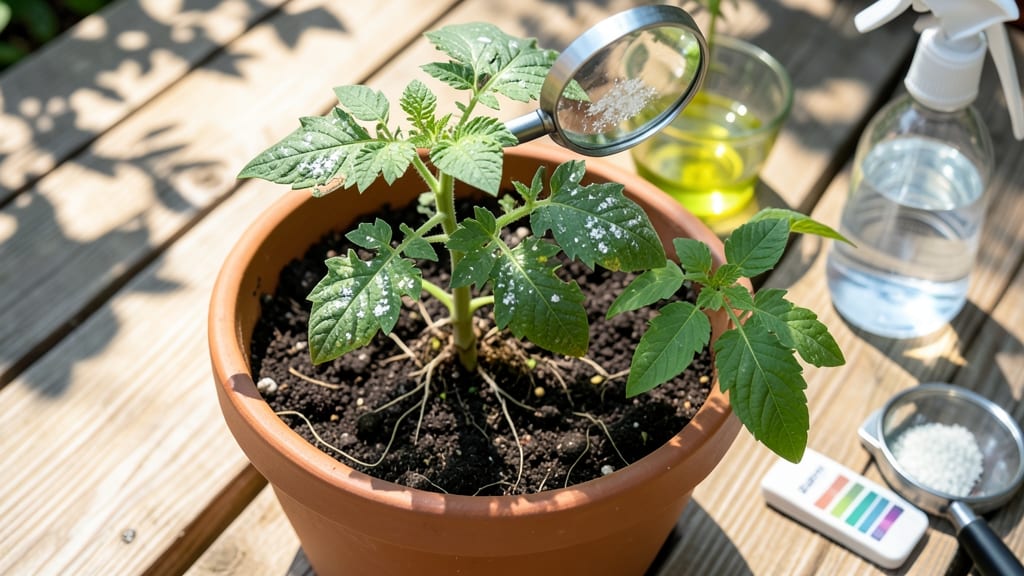
Those white spots on the leaves of your tomato seedlings mean one thing: it’s time to act before the whole plant turns into a sad, crumbly mess. 🌱 I’ve watched powdery mildew and fungal spots turn vibrant seedlings into limp shadows in just a week—don’t let that happen to yours.
The good news? Most cases are fixable with the right diagnosis and quick action.
First, check the spots: are they fuzzy white (powdery mildew), greasy brown (bacterial spot), or chalky white (downy mildew)? Flip the leaves—fungus loves hiding on the undersides. Overwatering, poor airflow, or damp leaves after rain are usually the culprits.
If you catch it early, you can save your seedlings with simple fixes like neem oil or baking soda spray.
Your goal is to stop the spread: prune infected leaves immediately, space plants wider for airflow, and water at the base (never overhead). A homemade spray of 1 tablespoon baking soda, 1 teaspoon dish soap, and a gallon of water works wonders—just spray every 7-10 days until the spots disappear.
With this, your seedlings will bounce back stronger than ever.
Prevention is easier than curing: next season, rotate crops, avoid overhead watering, and pick varieties bred for disease resistance. Trust me, a little extra care now means bigger, healthier tomatoes come harvest time—and no more panicked late-night Googling.
Root Causes of Leaf Spots
White spots on your tomato seedlings’ leaves aren’t just unsightly—they’re a red flag from nature signaling trouble. Understanding the why behind these spots is the first step to saving your plants. Below, we break down the most common culprits, their science-backed triggers, and how they hijack your seedlings’ health.
Fungi are the #1 cause of white or grayish spots on tomato leaves, thriving in damp, humid conditions. Here’s how they strike:
🔬 Powdery Mildew: The Fluffy Foe
What it is: A fungal disease (Oidium or Leveillula species) that coats leaves in a white, powdery film, like someone dusted them with talcum powder.
Why it happens: Powdery mildew spores germinate when:
- Humidity spikes: Ideal conditions are 70–100% humidity with stagnant air (think greenhouse or crowded seedlings). Spores land on leaves and germinate within 3–6 hours.
- Poor airflow: Fungal spores need still air to spread. Crowded plants or dense foliage create the perfect breeding ground.
- Stress signals: Tomato seedlings under nutrient deficiency (especially phosphorus or potassium) or water stress (alternating drought and overwatering) emit chemical cues that attract fungal spores.
- Old leaves as bait: Fungi target older leaves first because their waxy cuticle is thinner, making it easier to penetrate.
Actionable insight: Powdery mildew spreads via wind and water splashes, so even a single infected plant can contaminate your entire garden in 7–10 days.
💀 Early Blight & Late Blight: The Spotty Saboteurs
What it is: Two related fungal diseases (Alternaria solani for early blight, Phytophthora infestans for late blight) causing concentric white or gray spots with dark borders.
Why it happens:
| Early Blight | Late Blight |
|---|---|
|
|
Actionable insight: Both blights are soilborne, so rotating crops and sterilizing tools can cut infection rates by up to 60%.
Not all white spots are fungal—some are physical damage from pests leaving their calling cards.
🐞 Whiteflies: The Sap-Sucking Swarm
What it is: Tiny white moth-like insects that cluster on undersides of leaves, excreting sticky honeydew (which fosters sooty mold).
Why it happens:
- Attracted to yellowing leaves: Whiteflies are drawn to stressed seedlings (e.g., over-fertilized or waterlogged plants).
- Spread via wind and human activity: A single adult can lay 400 eggs in her lifetime, and they hitchhike on tools or clothing.
- Honeydew invites mold: Their waste creates a sugar-rich film that promotes Cladosporium (a black sooty mold), masking the original white spots.
Actionable insight: Check leaf undersides for tiny white specks that flutter away when disturbed—this is your first warning sign.
🐛 Spider Mites: The Invisible Web Weavers
What it is: Microscopic red or white mites that skeletonize leaves, leaving white stippled patterns.
Why it happens:
- Drought triggers: Spider mites thrive in dry, hot conditions (above 85°F). They desiccate plant cells while feeding, creating white or yellow patches.
- Weakened defenses: Seedlings with low humidity (<30%) or high salt levels (from tap water or fertilizer burn) are 3x more susceptible.
- Silk traps: They spin fine webs between leaves, trapping spores and debris that turn white over time.
Actionable insight: Hold a white sheet under leaves and tap gently—if you see tiny moving dots, it’s mites.
Sometimes, white spots aren’t biological—they’re your seedlings’ way of screaming, “Fix this!”
☀️ Sun Scorch: The Hidden Burn
What it is: White or gray patches from excessive UV exposure, often on young leaves.
Why it happens:
- Transplant shock: Seedlings moved from shade to full sun without acclimation suffer photooxidative stress.
- Reflective surfaces: Light-colored soil, mulch, or nearby concrete can amplify UV rays by up to 30%.
- Water stress: Plants lose turgor pressure in heat, making cells more vulnerable to sun damage.
Actionable insight: Gradually introduce seedlings to sun over 7–10 days (a process called hardening off).
💦 Overwatering: The Drowning Effect
What it is: White, mushy spots from root rot spreading to leaves via Pythium or Phytophthora fungi.
Why it happens:
- Waterlogged soil: Roots suffocate when oxygen levels drop below 10%, triggering fungal growth.
- Poor drainage: Containers without drainage holes or clay-heavy soil hold excess water near roots.
- Fungal hitchhikers: Pythium spores can lie dormant for
Fixing White Spots Fast: Organic Cures
Now that you’ve identified the cause of those pesky white spots on your tomato seedlings, it’s time to act! The good news? Most of these issues have easy, organic solutions that won’t break the bank or harm your plants.
Below, we’ve mapped out targeted fixes for each common cause, plus prevention tips to keep your seedlings thriving.
How to Treat It:
- 🌿 Prune & Improve Airflow
- Remove infected leaves immediately (don’t compost them—toss in the trash).
- Space seedlings 6–12 inches apart to reduce humidity buildup.
- Use a fan on low for 1–2 hours daily to dry leaves faster.
- 🧴 Apply Organic Fungicides - Baking soda spray: Mix 1 tsp baking soda + 1 tsp vegetable oil + 1 tsp dish soap in 1 quart of water.
Spray every 7–10 days (especially on undersides of leaves). - Neem oil solution: Combine 1 tbsp neem oil + 1 tsp mild soap in 1 quart of water.
Spray at dusk to avoid burning leaves (reapply every 5–7 days). - Copper fungicide: Use organic copper sprays (like Bonide Copper Fungicide) once a week for severe cases.
- 💧 Adjust Watering Habits
- Water early in the morning so leaves dry by nightfall.
- Avoid overhead watering—use a drip irrigation system or water at the base.
💡 Prevention Tips:
- Rotate crops—don’t plant tomatoes in the same spot yearly.
- Solarize soil (cover with clear plastic for 4–6 weeks in summer) to kill fungal spores.
- Plant resistant varieties like ‘Defiant PhR’ or ‘Mountain Merit.’
How to Treat It:
- 🚿 Blast Off Pests with Water
- Spray seedlings with a strong stream of water to knock off aphids and mites.
- Repeat every 2–3 days until pests disappear.
- 🐝 Introduce Beneficial Insects
- Release ladybugs, lacewings, or predatory mites (available at garden centers).
- Plant companion plants like marigolds or basil to attract pest-eating bugs.
- 🧴 Use Insecticidal Soap or Oil
- Mix 1 tbsp insecticidal soap in 1 quart of water and spray directly on pests (avoid spraying in direct sun).
- Horticultural oil spray (like Safer Brand) works well for mites—apply every 5–7 days.
💡 Prevention Tips:
- Inspect new plants before bringing them home.
- Sticky traps (yellow cards) can catch early signs of whiteflies.
- Avoid over-fertilizing with nitrogen—it attracts soft-bodied pests.
How to Fix It:
- 🌞 Shield from Extreme Heat
- Move seedlings to a shadier spot (50–70% sunlight) if temps exceed 90°F (32°C).
- Use shade cloth (30–50%) during peak afternoon sun.
- 💧 Boost Hydration & Humidity
- Keep soil consistently moist (not soggy) to prevent stress.
- Mist seedlings lightly in the morning if humidity drops below 40%.
- 🌱 Adjust Fertilizer for Sulfur
- If deficiency is suspected, add Epsom salt (magnesium sulfate)—mix 1 tbsp per gallon of water and spray foliage once a month.
- Use a balanced organic fertilizer (like 5-5-5) to avoid nutrient imbalances.
💡 Prevention Tips:
- Hardening off seedlings gradually before transplanting.
- Mulch around seedlings to retain moisture and regulate soil temp.
- Test soil pH—aim for 6.0–6.8 for optimal sulfur uptake.
How to Cleanse It:
- 🚰 Flush the Soil
- Water seedlings deeply 2–3 times daily for 3 days to leach out excess salts.
- Add compost or worm castings to improve soil structure.
- 🌿 Detox with Organic Matter
- Mix 1 inch of coconut coir or peat moss into the topsoil to bind chemicals.
- Apply a thin layer of compost tea to help break down residues.
- 🌱 Transplant if Necessary
- If soil is severely contaminated, move seedlings to clean, organic potting mix.
💡 Prevention Tips:
- Follow fertilizer labels—half-strength is often enough for seedlings.
- Avoid synthetic herbicides near your garden (even "organic" ones can drift).
- Use barrier crops (like clover) to block herbicide spray.
- Check seedlings daily for new spots—catch issues early!
- Rotate treatments every 2 weeks to prevent resistance (e.g., alternate neem oil and baking soda).
- Keep a garden journal to track what works (and what doesn’t).
With these targeted fixes, your tomato seedlings should bounce back in 7–14 days. Stay consistent, and soon you’ll be harvesting spot-free, healthy plants—ready for a bumper crop! 🍅✨
Frequently asked questions
Are white spots on tomato seedlings always caused by disease?
Not always! While fungal diseases like powdery mildew are common, white spots can also come from pests (whiteflies or spider mites), sun scorch, or even physical damage like hail. Always check the leaf undersides and spot texture—fungal spots are usually powdery, while pest damage often looks like tiny holes or webbing.
How quickly can white spots spread if I don’t treat them?
Fungal spots can spread rapidly—powdery mildew can infect your entire plant in just 7-10 days if humidity stays high. Early blight may take 2-3 weeks to show full symptoms, but it weakens plants faster. The key is acting within 48 hours of noticing spots to prevent total leaf loss.
Can I still save my tomato seedlings if most leaves have white spots?
It depends on severity! If only a few leaves are affected, prune them immediately and treat with neem oil or baking soda spray. For heavily infected plants, you may need to remove the entire seedling to prevent spread. Young seedlings can often recover if you catch it early—focus on airflow and proper watering habits.
Will homemade sprays really work against fungal spots?
Yes! A baking soda spray (1 tsp baking soda + 1 tsp oil + 1 tsp soap per quart of water) works well for powdery mildew, while neem oil (1 tbsp per quart) helps with early blight. For best results, spray every 7-10 days and always apply in the early morning so leaves dry quickly. Consistency is key!
How can I prevent white spots from coming back next season?
Start with crop rotation—don’t plant tomatoes in the same spot for 3 years. Use resistant varieties like 'Defiant PhR', improve airflow with proper spacing, and avoid overhead watering. Solarizing your soil (covering with plastic for 4-6 weeks) kills fungal spores before planting. Prevention beats cure every time!