
Plants
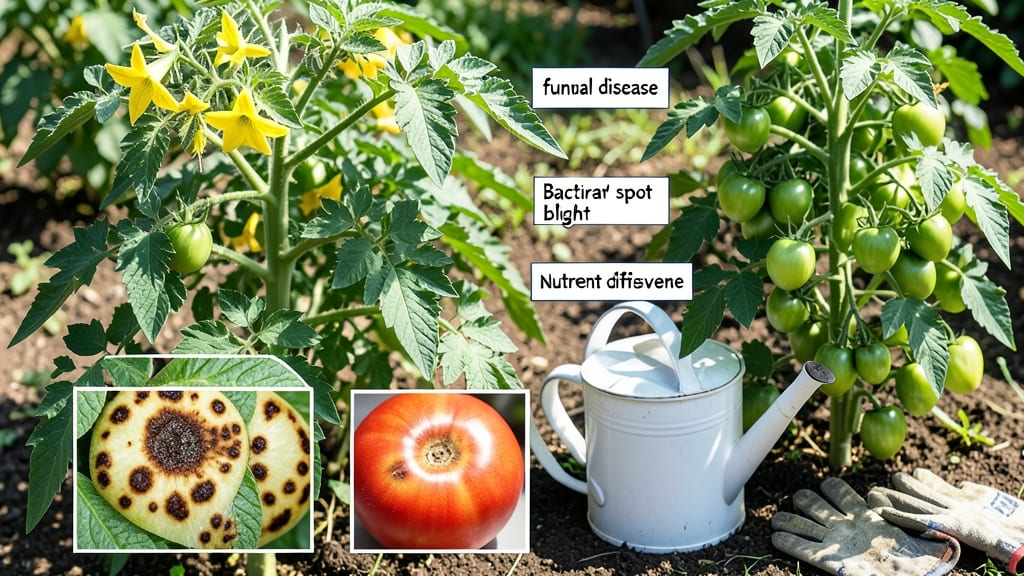
When these tomato plants have brown spots, they're usually battling fungal infections like early blight or late blight, struggling with environmental stress, or lacking key nutrients. Check for signs like concentric rings, wilting, or yellowing leaves to determine whether you need to prune, apply fungicides, or adjust your watering routine right away.
Tomato plants have brown spots can feel like a death sentence, but they're often fixable with the right approach. 🌱 The most common culprits are fungal diseases like early blight (Alternaria solani), which thrives in warm, humid conditions, or late blight (Phytophthora infestans), which spreads rapidly and can destroy plants in days.
Environmental factors like overwatering, poor airflow between plants, or even sunburn from intense afternoon sun can also trigger these spots. I've seen gardeners panic when they spot brown patches, but acting fast—whether by removing infected leaves, improving airflow, or adjusting watering schedules—can save your harvest.
For a quick fix, start by pruning any severely spotted leaves and disposing of them in the trash (not compost).
If fungal diseases are the issue, organic options like neem oil or copper spray can work wonders, while chemical fungicides provide faster protection. 💛 Adjusting your watering habits—like switching to drip irrigation instead of overhead watering—can drastically reduce future outbreaks by keeping foliage dry.
And don't forget to rotate your crops next season; planting tomatoes in the same spot year after year invites repeat infections.
💡 In This Article
- Identifying Common Causes of Brown Spots on Tomato Leaves
- Step-by-Step Fixes for Brown Spot Damage on Tomato Plants
Identifying common causes of brown spots on tomato leaves
Brown spots on tomato leaves often start as tiny specks that quickly expand, revealing the true culprit: fungal pathogens like Alternaria solani (early blight) or Phytophthora infestans (late blight).
These fungi thrive in warm, humid conditions (ideal at 75-85°F with high moisture), where their spores latch onto leaf surfaces and germinate within 48 hours.
Early blight typically appears as dark, concentric rings with tan centers, while late blight shows greasy, brown patches that spread rapidly—sometimes overnight—especially on lower leaves. 🌡️
Environmental stress plays a surprising role too. Overwatering keeps foliage damp for long periods, creating perfect conditions for fungal growth, while poor airflow between plants traps humidity.
Sun scorch, caused by intense afternoon sun (especially on young plants or those recovering from transplant shock), creates crispy, brown edges that feel dry to the touch.
Nutrient deficiencies can mimic disease symptoms: magnesium deficiency (often called "mottle leaf") causes brown patches between leaf veins, while potassium deficiency leads to yellowing edges that later turn brown and brittle.
Bacterial spot, caused by Xanthomonas perforans, produces small, water-soaked lesions that turn brown with yellow halos—unlike fungal spots, these often appear on both leaf surfaces and fruit. The key difference?
Bacterial spots are usually 1/8-inch wide and have a raised, crusty texture when dry. 🔍 To diagnose, examine spots under a magnifying glass: fungal spots often have fuzzy edges from spore growth, while bacterial spots remain more uniform.
Early detection is critical—fungal spores can spread via wind or splashing water, while bacterial infections travel through sap.
Don't overlook physical damage either. Hail, insect feeding (like aphids or spider mites), or even rough handling during pruning can create entry points for pathogens. These wounds start as irregular brown patches that may ooze sap initially, then harden.
The texture here is key: fungal spots feel papery when mature, while physical damage often retains the original leaf structure around the edges. 🌿
Seasonal patterns matter too. Early blight typically strikes in late summer when nights stay warm, while late blight peaks in cool, wet springs or falls. If your plants show brown spots during these periods, fungal diseases are likely.
For nutrient deficiencies, check the soil pH—tomatoes prefer 6.0-6.8—and look for other deficiency signs like stunted growth or purpling stems, which often accompany potassium shortages.
One pro tip: collect a few spotted leaves in a sealed plastic bag with a damp paper towel for 24 hours. If fuzzy mold appears, it's likely a fungal infection. This simple test can save you from misdiagnosing and wasting time on ineffective treatments. 🧪