
Plants
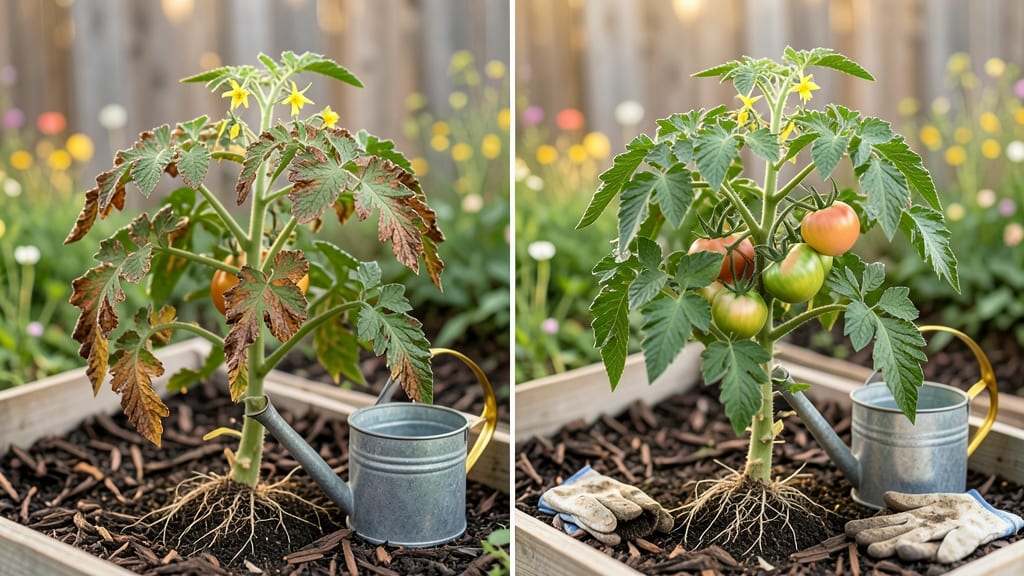
When your tomato plants browning leaves look like crisped lettuce overnight, neem oil is your secret weapon. 🌱 I’ve seen plants go from sad and crunchy to perky green in just a few days—no fancy tools or expensive sprays needed.
The key is acting fast and targeting the real problem, whether it’s fungus, pests, or environmental stress. Most browning starts with tiny brown spots on leaves or stems, often from early blight or sunburn. Neem oil doesn’t just mask the issue—it stops the spread while your plant recovers.
You’ll need to prune the worst damage first, then apply the oil at dusk for best results. Within 48 hours, you’ll notice leaves softening and new growth pushing through.
By the end of the week, your plants will look like they did at the start of the season—thick, green, and ready to produce. The trick is consistency: reapply neem oil every 7-10 days until the threat passes. This method works for container tomatoes, raised beds, and in-ground gardens alike.
Here’s the game-changer: neem oil also prevents future browning by strengthening plant defenses. Your tomatoes won’t just survive—they’ll thrive with fewer blemishes and better flavor. The only catch? Start treatment before browning spreads to the fruit, or you’ll be dealing with blighted tomatoes too.
Root Causes of Leaf Discoloration
When your tomato plants start showing brown patches or crispy leaves, it’s often a cry for help from the plant itself. Understanding the why behind the browning is the first step to saving your harvest.
Below, we break down the most common culprits—each with a clear scientific explanation and actionable insights to help you diagnose the issue fast.
Tomatoes love sunlight, but too much direct heat—especially during scorching afternoons—can cause leaves to literally cook. When temperatures soar above 90°F (32°C), the plant’s cell membranes break down, leading to:
- Brown, crispy edges on leaves (often on the upper side, facing the sun).
- A leathery or papery texture, like a sunburn on human skin.
- Wilting that doesn’t improve at night (unlike water stress).
Why it happens: Excessive heat increases transpiration rates (water loss) faster than roots can replace it, causing oxidative stress in leaf cells. The chlorophyll degrades, and anthocyanins (pigments that turn leaves reddish-brown) take over as a stress response.
💡 Pro Tip: If your tomatoes are in full sun, provide afternoon shade (use shade cloth or dappled shade from nearby plants). Mulch with straw or grass clippings to keep soil—and roots—cool. Drip irrigation (not overhead watering) can also help regulate temperature.
Water is the lifeblood of tomato plants, but imbalances trigger browning in distinct ways. Both underwatering and overwatering can cause leaf damage, but the symptoms differ:
🔥 Underwatering (Drought Stress)
- Brown, crispy edges that spread inward, often starting on older leaves.
- Leaves may curl upward or feel dry and brittle.
- Soil pulls away from pot edges (if container-grown) or feels bone-dry 1–2 inches down.
Why it happens: When roots can’t absorb enough water, the plant closes stomata (pores) to conserve moisture. This halts photosynthesis, and ethylene gas (a stress hormone) builds up, accelerating cell death. The browning starts at the edges because those cells are farthest from the water-transporting xylem vessels.
🌧️ Overwatering (Root Rot Risk)
- Yellowing between leaf veins (chlorosis) followed by brown, mushy patches.
- Leaves may droop suddenly even when soil is wet.
- A sour, rotten smell near the base of the plant (sign of fungal/bacterial rot).
Why it happens: Overwatered soil displaces oxygen in root zones, causing anaerobic conditions. Roots suffocate, and pathogenic fungi (like Phytophthora) or bacteria invade, blocking nutrient uptake. The plant can’t transport water efficiently, leading to oxidative damage in leaves.
💡 Pro Tip:
- For underwatering: Water deeply 1–2 times per week (check soil moisture 2 inches down—it should feel like a wrung-out sponge).
- For overwatering: Let the top 1–2 inches of soil dry out between waterings. Improve drainage with perlite or sand in potting mix, or raise containers to prevent soggy roots.
Pathogens thrive in warm, humid conditions and can turn tomato leaves brown in days. Here’s how to spot them:
🍄 Early Blight (Alternaria solani)
- Brown, concentric rings (like bullseyes) on older leaves.
- Spots may have yellow halos and gray centers with tiny black dots (fungal spores).
- Leaves crisp and drop if untreated.
Why it happens: The fungus infects through stomata (leaf pores) and thrives in high humidity (75%+) and temperatures between 60–85°F (15–29°C). It produces toxic metabolites that kill plant cells, creating the classic ring pattern.
🟣 Late Blight (Phytophthora infestans)
- Dark brown, greasy-looking spots that spread rapidly (can kill plants in 3–5 days).
- Affects both leaves and fruit, causing soft rot.
- Often appears in cool, wet conditions (50–77°F / 10–25°C).
Why it happens: This oomycete (a fungus-like organism) releases cellulase enzymes that break down plant cell walls. It spreads via water splashes or wind, making it highly contagious.
🟡 Bacterial Spot (Xanthomonas or Pseudomonas)
- Small, water-soaked brown spots with yellow edges.
- Spots may oozes bacterial slime when wet.
- Leaves crisp and develop shot-holes.
Why it happens: Bacteria enter through wounds or natural openings and multiply in high humidity. They produce toxins that disrupt cell membranes, causing the characteristic browning and tissue death.
💡 Pro Tip: For fungal/bacterial issues:
- Remove infected leaves immediately (don’t compost them—bag and trash).
- Apply copper fungicide or neem oil (as mentioned in your article) every 7–10 days for prevention.
- Improve air circulation with spacing or fans to reduce humidity around leaves.
- Avoid overhead watering—use drip irrigation or water at the base.
Some browning isn’t from disease or weather—it’s from tiny (or not-so-tiny) pests feasting on your plants. Look for:
🐜 Aphids, Spider Mites, or Whiteflies
- Yellowing or stippling (tiny brown dots) on leaves.
- Sticky honeydew residue (aphids) or fine webbing (spider mites).
- Leaves may
Revive Your Tomato Plants Now
Tomato plants with browning leaves can feel like a gardener’s worst nightmare—but don’t panic! The key to saving your crop lies in identifying the root cause and taking swift, targeted action.
Below, we’ve mapped out practical fixes for the most common culprits behind browning foliage, along with prevention tips to keep your plants thriving. Let’s turn those crispy edges into lush, green growth in no time.
Signs: Yellowing leaves, browning edges, soggy soil, or wilting despite damp conditions. Fix:
- 🚰 Stop Watering Immediately – Let the soil dry out slightly (stick your finger 1–2 inches deep; if it’s soggy, wait).
- 🪴 Improve Drainage – Mix in perlite or coarse sand to heavy soil, or repot into a container with drainage holes.
- 🌱 Prune Damaged Leaves – Snip off browned or yellowed leaves with clean scissors to redirect energy to healthy growth.
- ⏰ Water Deeply but Less Often – Use the "finger test" to check moisture before watering. Early morning is best to prevent fungal issues.
💡 Prevention Tip:
- Avoid saucer-style pots—water should drain freely. If using a saucer, empty excess water after 30 minutes.
- Mulch around the base with straw or shredded leaves to regulate soil moisture.
Signs: Scorched, papery brown patches on leaves (often on the upper side), wilting in hot afternoons. Fix:
- 🌿 Provide Shade Cloth – Use 30–50% shade fabric during peak sun (10 AM–4 PM) if temps exceed 90°F (32°C).
- 💦 Increase Humidity – Mist leaves early in the day or place a tray of water nearby (but avoid soggy soil).
- 🍃 Trim Lower Leaves – Remove leaves touching the hot ground to reduce heat exposure.
- 🌱 Adjust Watering – Water deeply in the morning to cool roots (avoid evening watering, which can invite pests).
🔥 Pro Tip:
- Reflective mulch (like white gravel) can deflect sunlight and reduce soil heat.
- Choose heat-tolerant varieties like ‘Solar Fire’ or ‘Heatmaster’ for future seasons.
Signs: Brown spots with yellow halos, black concentric rings, or white mold on undersides of leaves. Fix:
- 🧴 Apply Neem Oil Spray – Mix 1 tsp neem oil + 1 tsp mild soap + 1 quart water. Spray every 7–10 days until symptoms fade.
- 🪒 Prune Infected Leaves – Remove and dispose of (not compost) browned leaves to stop spread.
- 🌿 Improve Airflow – Space plants 18–24 inches apart and stake them to prevent humidity buildup.
- 🌱 Rotate Crops – Avoid planting tomatoes in the same spot next year (fungi linger in soil).
✨ Prevention Tip:
- Water at the base (not overhead) to keep leaves dry.
- Use copper fungicide as a preventive spray before symptoms appear.
Signs: Sticky residue (honeydew), brown speckling, or webbing on leaves. Fix:
- 🚿 Blast Off Pests – Spray leaves with a strong stream of water to dislodge bugs.
- 🧴 Use Insecticidal Soap – Mix 2 tbsp castile soap + 1 quart water. Spray every 3–5 days until pests vanish.
- 🌿 Introduce Beneficial Insects – Ladybugs or lacewings devour aphids naturally.
- 🍃 Isolate Infested Plants – Move them away from healthy tomatoes to prevent spread.
🎯 Pro Tip:
- Neem oil works on pests too! Use the same recipe as for fungi, but reapply after rain.
Signs: Brown crispy edges (often with yellowing between veins), stunted growth, or purple stems. Fix:
- 📊 Test Your Soil – Use a DIY soil test kit to check pH (ideal: 6.0–6.8) and nutrient levels.
- 🍽️ Balance Your Fertilizer – Switch to a low-nitrogen, high-potassium formula (like 5-10-10) to boost leaf health.
- 💧 Flush the Soil – Water heavily to leach out excess salts (common with over-fertilizing).
- 🌿 Add Compost – Mix in 1–2 inches of aged compost to replenish organic matter.
💪 Prevention Tip:
- Fertilize every 3–4 weeks during growing season—less is more!
- Avoid synthetic fertilizers if possible; opt for fish emulsion or worm castings for gentler nutrition.
If your tomato plant is critically stressed, try this emergency combo: 1. 🌿 Trim back – Cut 1/3 of the plant to reduce stress and redirect energy.
- 💧 Deep-water + Epsom Salt – Mix 1 tbsp Epsom salt in a gallon of water and pour at the base (boosts magnesium).
- 🌱 Move to Shade – Place in partial shade for 3–5 days to recover.
- 🍃 Monitor Closely – Watch for new growth; if none appears in 7–10 days, consider starting over.
Remember: Tomato plants are resilient! With the right care, they’ll bounce back—and your next harvest will be juicier than ever. 🍅✨
Frequently asked questions
Why are my tomato leaves turning brown only on the edges?
This is usually a sign of underwatering or heat stress. Check the soil—if it's dry 1-2 inches down, water deeply until moisture reaches 6 inches. For heat stress, provide afternoon shade and mulch to keep roots cool.
Can I still save my tomato plant if the browning has spread to the stems?
If stems are browning, you're likely dealing with late blight or root rot. Prune all infected stems immediately, then apply copper fungicide or neem oil every 7 days. For root rot, improve drainage and consider repotting. Severe cases may require replacement.
What's the difference between sunburn and fungal browning on tomato leaves?
Sunburn shows as dry, crispy brown patches on upper leaves facing sunlight, while fungal browning often has yellow halos or concentric rings. Sunburned leaves feel papery, while fungal spots may have black dots (spores). Check leaf undersides for mold.
How often should I apply neem oil to prevent browning?
Apply neem oil spray every 7-10 days during growing season as prevention. For active browning, use it twice weekly until symptoms improve. Always apply at dusk to avoid harming beneficial insects. Mix 1 tsp neem oil + 1 tsp soap + 1 quart water.
Will my tomato fruit still be safe to eat if the leaves are browning?
Most browning affects leaves first, but if fungus has reached the fruit (soft spots, mold), remove those tomatoes immediately. For pest damage, wash fruit thoroughly before eating. Healthy green leaves mean safe fruit—prioritize leaf care to protect your harvest.