
Diseases
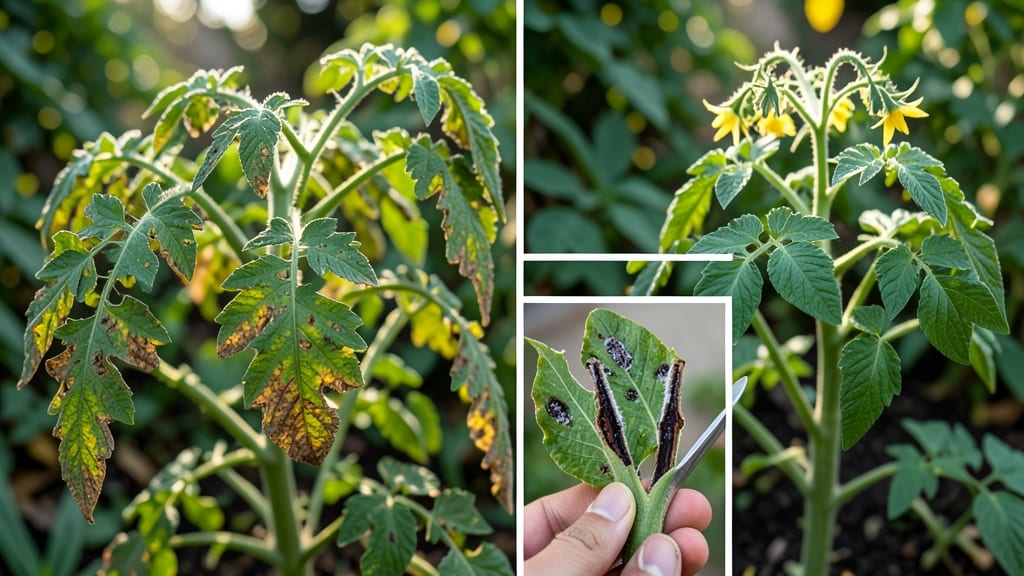
Your tomato plants might be fighting a silent battle—wilt disease can strike fast, turning lush vines into limp shadows. 🌱 I’ve lost entire harvests to fungal blight, but I’ve also learned how to spot it early and stop it before it spreads. The key is acting within days, not weeks.
Fusarium and Verticillium wilt start with yellowing leaves, then sudden wilting—even when soil stays moist. The stems often show dark streaks if you cut them open.
Crop rotation and resistant varieties like ‘Mountain Merit’ or ‘Defiant PhR’ are your first line of defense, but once it’s in your soil, prevention gets trickier.
You’ll save your plants with a mix of pruning infected vines, improving drainage, and applying organic fungicides like copper spray. The goal isn’t just to revive wilting plants—it’s to break the disease cycle so next season starts fresh with strong, healthy growth.
This works for backyard gardens, containers, and raised beds—just adjust the spacing and soil prep. Let’s turn your wilting tomatoes into thriving vines again, starting with the right moves today.
Root Causes Of Tomato Plant Wilting
When your tomato plants suddenly droop, turn yellow, or collapse, it’s often a sign of stress—or worse, a lurking disease. Understanding why tomato plants wilt is the first step to saving your harvest.
Below, we break down the most common culprits, from environmental factors to hidden pathogens, with clear explanations and actionable insights.
Tomatoes are tropical plants at heart, but extreme heat or improper watering can trigger wilting faster than you think. Here’s how it happens:
- Heat Stress: Temperatures above 90°F (32°C) can cause physiological wilting—the plant’s stomata (pores) close to conserve water, but the roots can’t keep up with demand. Leaves may also scorch or develop blotchy yellow patches.
- Underwatering: Tomato roots thrive in consistently moist (not soggy) soil. When soil dries out, roots shrink and struggle to absorb water, leading to wilting. Check soil moisture 1–2 inches deep—if it’s dry, it’s time to water deeply.
- Overwatering: While less common, waterlogged soil suffocates roots by cutting off oxygen. This leads to root rot (often caused by Pythium or Phytophthora), which weakens the plant’s ability to stand upright.
💡 Pro Tip: Mulch with straw or wood chips to retain moisture and regulate soil temperature. Water in the early morning to reduce evaporation and fungal growth.
Fungal diseases are the #1 cause of wilting in tomatoes, often masquerading as heat or drought stress. These pathogens thrive in warm, humid conditions and can spread rapidly if left unchecked.
🍄 Early blight (alternaria solani)
This fungal disease starts with yellow-brown spots on lower leaves, which develop into concentric rings as it progresses. The fungus clogs plant vessels, restricting water flow and causing wilting.
- How it spreads: Through contaminated soil, wind, or splashing water.
- Tell-tale sign: Wilting starts at the bottom of the plant and moves upward.
- Actionable fix: Remove infected leaves immediately, space plants for airflow, and apply copper fungicide preventatively.
🍅 Verticillium and fusarium wilt (verticillium dahliae, fusarium oxysporum)
These soil-borne fungi enter through root wounds and block the plant’s xylem vessels (water highways). Infected plants wilt suddenly, even when soil is moist, and recovery is nearly impossible.
- How it spreads: Survives in soil for years; can’t be eradicated once established.
- Tell-tale sign: One-sided wilting (e.g., only the east side of the plant droops) and yellowing veins.
- Actionable fix:
- Rotate crops away from nightshades (tomatoes, potatoes, peppers) for 3–4 years.
- Use resistant varieties like ‘Defiant PhR’ or ‘Mountain Merit.’
- Avoid overhead watering to prevent spore splash.
⚠️ Warning: These fungi cannot be cured—prevention is your best defense!
Pests like root-knot nematodes, aphids, or hornworms can chew or pierce plant tissues, disrupting water transport and causing wilting. Here’s how to spot them:
- Root-knot nematodes: Microscopic worms that feed on roots, causing galls (lumpy growths) and stunted root systems. Plants wilt even after watering.
- Aphids/Jassids: Cluster on new growth and suck sap, leading to curled leaves and wilting. Check the undersides of leaves for sticky residue (honeydew).
- Hornworms: Large green caterpillars that devour leaves and stems, causing sudden wilting in severe cases.
🔥 Quick Fixes:
- Inspect roots when transplanting—soak in warm water to drown nematodes.
- Spray neem oil or introduce ladybugs for aphid control.
- Handpick hornworms at dusk when they’re sluggish.
Tomatoes are heavy feeders, and when soil lacks essential nutrients or is compacted, roots can’t function properly. Here’s what to watch for:
| Deficiency | Wilting Signs | Quick Fix |
|---|---|---|
| Nitrogen (N) | Yellowing lower leaves (older growth), stunted growth. | Apply blood meal or fish emulsion. |
| Potassium (K) | Wilting even with moist soil, brown leaf edges, weak stems. | Use greensand or wood ash (sparingly). |
| Calcium (Ca) | Wilting new growth, blossom end rot on fruits. | Side-dress with crushed eggshells or lime. |
| Compacted Soil | Wilting after rain, roots appear black/mushy. | Add compost or perlite to improve drainage. |
🌡️ Soil Test Tip: Use a home soil test kit ($10–$20) to check pH and nutrient levels before planting. Tomatoes prefer pH 6.0–6.8.
Sometimes wilting is a last-resort survival mechanism—your plant is reacting to sudden stress. Common triggers include:
- Transplant Shock: Roots damaged during moving or repotting can’t absorb water,
How to Fix Wilted Tomato Plants
Wilted tomato plants can feel like a gardener’s worst nightmare—especially when you’ve poured so much care into your crop. But don’t panic!
Whether your plants are struggling from fungal blight, bacterial wilt, root rot, or environmental stress, there are practical steps to revive them (or prevent future outbreaks). Below, we break down cause-specific fixes, along with prevention tips to keep your tomatoes thriving.
Symptoms: Yellow/brown spots on leaves, wilting, dark streaks on stems, and rapid spread in humid conditions.
🍳 Immediate Treatment Steps
- Prune Infected Areas
- Use sterilized scissors (wipe with rubbing alcohol) to remove and destroy (don’t compost!) all wilting or spotted leaves and stems.
- Focus on lower leaves first—they’re the most vulnerable.
- Apply Fungicide
- Copper-based sprays (like Bordeaux mixture) or neem oil (1 tbsp per quart of water) work well for early blight.
- For late blight, chlorothalonil (e.g., Daconil) or baking soda spray (1 tsp baking soda + 1 tsp oil + 1 quart water) can help.
- Improve Airflow
- Space plants 18–24 inches apart and stake tomatoes to reduce humidity buildup.
- Avoid overhead watering—use drip irrigation instead.
🌡️ Prevention for Next Season
- Rotate crops: Don’t plant tomatoes (or nightshades like peppers/eggplants) in the same spot for 3+ years.
- Solarize soil: Cover beds with clear plastic for 4–6 weeks in summer to kill fungal spores.
- Choose resistant varieties: Look for ‘Mountain Merit’ or ‘Defiant PhR’—they’re bred for blight resistance.
Symptoms: Sudden wilting (even in cool weather), yellowing leaves, and oozing bacterial slime when stems are cut.
🔪 Emergency Actions
- Remove & Destroy Plants
- Bacterial wilt spreads fast—dig up entire infected plants (including roots) and burn or trash them (do NOT compost).
- Do not reuse soil from infected areas without sterilizing (steam or solarize).
- Disinfect Tools & Containers
- Clean pruners, gloves, and pots with 10% bleach solution (1 part bleach to 9 parts water).
- Avoid reusing mulch or soil from the infected patch.
- Prevent Spread to Healthy Plants
- Isolate new tomato plants for 2 weeks if bacterial wilt is suspected nearby.
- Avoid wounding plants (e.g., rough handling) to prevent bacterial entry.
🎯 Long-Term Prevention
- Use certified disease-free seedlings (avoid infected nurseries).
- Control flea beetles (they spread bacteria)—use row covers or neem oil sprays.
- Plant in well-draining soil to reduce bacterial buildup.
Symptoms: Mushy, black roots, wilting despite moist soil, and stunted growth.
⏰ Revive Your Plants Fast
- Stop Watering Immediately
- Let the soil dry out completely for 2–3 days to prevent further rot.
- Repot or Amend Soil
- If roots are firm and white, gently loosen compacted soil and add perlite or sand for drainage.
- If roots are rotted, trim the damaged parts, dust with cinnamon or fungicide powder, and repot in fresh, sterile potting mix.
- Adjust Watering Habits
- Water only when the top 1–2 inches of soil are dry.
- Use containers with drainage holes if growing in pots.
💡 Prevention Tips
- Test your soil—ideal pH for tomatoes is 6.0–6.8.
- Mulch properly: Use straw or wood chips (not thick layers) to retain moisture without suffocating roots.
- Avoid soggy soil: If your garden floods often, raise beds or plant on mounds.
Symptoms: Temporary wilting (leaves droop but bounce back when watered), scorched edges, or slow recovery.
🍃 Quick Fixes
- Provide Shade & Hydration
- Set up shade cloth (30–50%) if temps exceed 90°F (32°C).
- Water deeply in the morning (1–1.5 inches per week) and mulch to retain moisture.
- Revive Transplant Shock
- If wilting after moving, trim 1/3 of the foliage to reduce stress and fertilize lightly with fish emulsion or compost tea.
- Support Weak Plants
- Use stakes or cages to prevent stems from snapping under stress.
✨ Ongoing Care
- Hardening off seedlings: Gradually expose young plants to outdoor conditions over 7–10 days before transplanting.
- Monitor weather: Plan to harvest before extreme heat waves if possible.
| Problem | Fix It Now | Prevent Next Time |
|---|---|---|
| Fungal Blight | Prune + fungicide spray | Crop rotation + resistant varieties |
| Bacterial Wilt | Remove plants + sterilize | Disease-free seedlings + pest control |
| Root Rot | Stop watering + repot | Well-draining soil + proper mulch |
| Environmental Stress | Shade + deep watering | Mulch + gradual acclimation |
Remember: Early action is key! The sooner you identify the cause and apply the right fix, the better your tomatoes’ chances of bouncing back. And with these prevention strategies, you’ll keep your garden blight-free for seasons to come. 🍅🌱
Frequently asked questions
How can I tell if my tomato plant has fungal wilt vs. bacterial wilt?
Check the stems: fungal wilts (like Fusarium or Verticillium) show dark streaks inside when cut open, while bacterial wilt produces oozing yellow slime. Fungal wilts spread slowly, while bacterial wilt causes rapid collapse even in cool weather. Test by cutting a stem—if it’s mushy with slime, it’s bacterial.
Will pruning infected leaves actually help stop the spread?
Yes! Removing infected foliage stops fungal spores from spreading via wind or water. Always use sterilized tools and destroy (don’t compost) diseased plant parts. For fungal blight, focus on lower leaves first—they’re the most vulnerable. Do this in the morning so leaves dry quickly.
Can I save a tomato plant with root rot?
Only if you act fast! Stop watering immediately, trim rotted roots, and repot in fresh, sterile soil with perlite for drainage. If roots are black/mushy, recovery is unlikely. For containers, ensure drainage holes and water only when the top 1–2 inches of soil are dry. Prevent future rot with raised beds or mounds.
How long does it take to see results from fungicide sprays?
Most organic fungicides (like copper or neem oil) show improvement in 7–14 days with consistent application. For severe cases, reapply every 7–10 days during humid weather. Chemical options like chlorothalonil work faster (3–5 days) but require protective gear. Always apply in the early morning for best results.
Are there tomato varieties that naturally resist wilt diseases?
Look for ‘Defiant PhR’ (resistant to Fusarium and Verticillium) or ‘Mountain Merit’ (tolerates heat and disease). These hybrids are bred to withstand common soil-borne pathogens. For organic gardens, cherry tomatoes like ‘Tiny Tim’ often show better resilience. Always check seed packets for disease resistance labels.