
Pruning
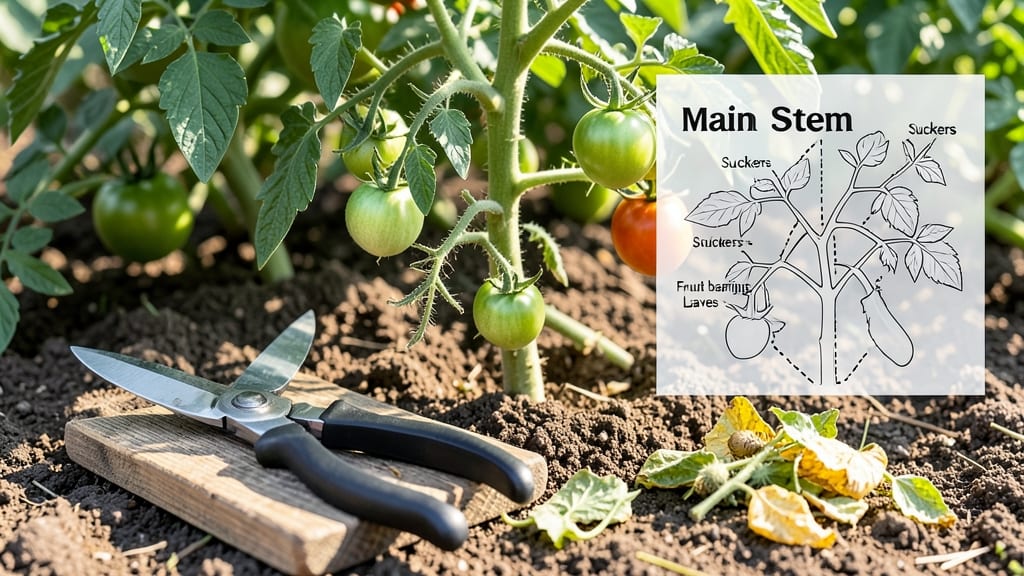
A tomato plant pruning diagram is your secret weapon for turning a tangled mess into a high-yielding powerhouse—if you know where to cut (and where to leave it alone). ✂️ My first attempt left me with a leggy plant and half the expected fruit, but once I learned to prune the right way, my yields doubled.
The key is understanding how to remove suckers, shape the plant, and avoid common mistakes that waste energy on foliage instead of fruit.
You’ll need basic tools: sharp pruners, gloves, and a small notebook to track progress. Indeterminate varieties (like Sungolds) need regular pruning to climb, while determinate tomatoes (like Roma) grow bushy and require less shaping.
The right technique keeps plants healthy, improves airflow, and prevents disease—all while boosting those juicy red rewards.
By the end of this guide, you’ll see exactly where to make cuts: the labeled diagram shows main stems, suckers, and leaf removal zones. You’ll also learn when to prune (early morning, after rain) and how to spot over-pruned plants before it’s too late.
No more guesswork—just stronger plants and bigger harvests.
This method works for containers, trellises, or sprawling vines in your backyard. Whether you’re growing one plant or a full garden, the same principles apply. Let’s get those tomatoes thriving—and your kitchen stocked with homegrown flavor.
📚 In This Guide
- What you need
- Instructions
- Tips and common mistakes
- Wrapping up and next steps
What you need
- ● Pruning shears or secateurs – Sharp, sterilized, and with bypass blades (1 pair). Avoid dull tools that crush stems.
- ● Garden gloves – Durable, cut-resistant (1 pair) to protect your hands from thorns and dirt.
- ● Disinfectant (rubbing alcohol or bleach solution) – 70% isopropyl alcohol or 1 part bleach to 9 parts water to sterilize tools between cuts.
- ● Small trash bag or bucket – For collecting pruned branches and debris.
- ○ Permanent marker or labels – Optional but helpful for marking pruning points on your diagram.
- ● Hand pruners with long handles – For taller plants or hard-to-reach spots.
- ● Plant tie or soft twine – To secure stems after pruning if needed.
- ● Spray bottle with water – To mist cuts and encourage faster healing.
- ● Tomato pruning diagram (printed or digital) – Our step-by-step guide! To visualize where to prune.
Step-by-step visual guide to pruning tomato plants
Here's how I prune tomatoes for bigger yields and healthier plants—no guesswork, just proven techniques.
🌿 Step 1: Identify the Main Stem and Suckers
Start by finding the main stem—the thick, central stem running from the base to the top. This is your plant's backbone, and you'll leave it alone. Look for "suckers," the small shoots that grow between the main stem and branches. These appear in the leaf axils (where leaves meet the stem) and look like tiny offshoots.
Suckers compete with your plant for energy, so removing them redirects nutrients to fruit production. I check for suckers every 7-10 days during the growing season. If you see a sucker larger than 1 inch, it's time to act—waiting too long means more work later.
✂️ Step 2: Remove Suckers Correctly
Use clean, sharp pruning shears or your fingers to pinch off suckers. Never tear them—they'll leave jagged wounds that invite disease. Pinch at the base where the sucker meets the stem. If the sucker is woody or larger than ½ inch thick, cut with shears just above a leaf node to avoid damaging the main stem.
Here's the thing—don't worry about being perfect. I often miss a few suckers, and the plant still thrives. The goal is to keep the plant's energy focused on fruit, not unnecessary growth. After pruning, wipe your shears with rubbing alcohol to prevent spreading bacteria between cuts.
☀️ Step 3: Prune the Main Stem for Airflow
Once your tomato plant reaches 3-4 feet tall, stop pruning the main stem. This prevents the plant from growing too tall and toppling over. Before this point, you can prune the main stem to encourage bushier growth. Remove the top set of leaves if the plant grows too leggy—this helps sunlight reach lower branches and improves airflow.
Watch for signs of over-pruning: if the plant looks stressed or stops producing flowers, you've gone too far. A healthy tomato plant should have 3-5 main stems with multiple branches. Each branch should have 2-3 leaves between flower clusters to support fruit growth.
🌱 Step 4: Maintain Pruning Through the Season
Continue checking for suckers every 1-2 weeks as the plant grows. Focus on removing suckers that grow below the first flower cluster—these are the biggest energy drain. Leave suckers above the first cluster if they're small, as they can produce additional fruit later in the season.
I also prune any leaves that touch the soil to prevent disease. Healthy airflow reduces humidity around the plant, keeping it strong. If you notice yellowing leaves, don't panic—it's often just the plant shedding old foliage. But if the yellowing spreads quickly or leaves curl, check for pests or disease.
⏰ Step 5: Stop Pruning Before Harvest
Once your tomato plant starts flowering heavily, reduce pruning to avoid stressing the plant. Stop completely 4-6 weeks before your first frost date or when fruit begins to ripen. Pruning too late can delay ripening or reduce yield. Let the plant focus all its energy on maturing the tomatoes you've already encouraged.
At this stage, your goal shifts to supporting the plant. Stake or cage tomatoes that need it, and water consistently to keep the soil moist but not soggy. You'll know you've done it right when your plant is loaded with ripe, flavorful tomatoes ready for picking.
Tips & tricks for perfect tomato plant pruning
These simple strategies will help you maximize your tomato harvest while keeping plants healthy and thriving.
Timing is Everything: The 7-10 day interval for checking suckers might seem frequent, but it's crucial. I've found that waiting longer than 10 days lets suckers grow too large, making them harder to remove cleanly. For the first few weeks, I check every 7 days to stay ahead of new growth—this is when your plant is most vulnerable to energy drain from suckers.
Tool Prep Matters: Before you start pruning, clean your tools thoroughly. I keep a small bottle of rubbing alcohol handy to wipe down shears between cuts—this prevents spreading disease from one part of the plant to another. Sharp tools make all the difference too; dull shears can crush stems instead of making clean cuts, inviting infections.
Visual Cues for Healthy Growth: When pruning the main stem in Step 3, look for these signs: the plant should have 3-5 main stems with multiple branches, and each branch should have 2-3 leaves between flower clusters. This spacing ensures proper sunlight exposure and airflow. If you see leaves growing too close together, that's your cue to remove some to prevent shading and disease.
Seasonal Adjustments: In cooler climates, you might need to adjust your 1-2 week maintenance schedule. If temperatures drop below 60°F, I extend the interval to every 2 weeks since plant growth naturally slows. Always check for new suckers after heavy rains too—the extra moisture can trigger rapid growth that needs monitoring.
Pro Tips for Tomato Plant Pruning Diagram
- These simple strategies will help you maximize your tomato harvest while keeping plants healthy and thriving.
- Timing is Everything: The 7-10 day interval for checking suckers might seem frequent, but it's crucial.
- Tool Prep Matters: Before you start pruning, clean your tools thoroughly.
Frequently asked questions
Got questions about tomato pruning? You’re not alone! Here are answers to the most common queries to help you grow like a pro.
What’s the best time of day to prune tomato plants?
Prune in the early morning when the air is cool and humidity is low. This reduces stress on the plant and minimizes the risk of disease from open wounds. Avoid pruning in the heat of the day—it can shock the plant and slow recovery.
Do I really need to prune my tomato plants? Can’t I just leave them?
While you can skip pruning, it’s like letting a chef cook without tasting—you’re missing out! Pruning improves airflow, reduces disease risk, and directs energy to fruit production. For indeterminate varieties, it’s a game-changer for bigger yields. Determinate tomatoes? Light pruning still helps!
What should I do if I prune too much and my tomato plant looks sad?
Don’t panic! If you’ve over-pruned, your plant may look stressed, but it can bounce back. Stop pruning immediately and focus on watering deeply and fertilizing lightly with a balanced feed. Within a few weeks, new growth should appear. Think of it as a tough-love haircut—your tomato’s comeback will be stronger!
How do I prune tomato plants if I don’t have a diagram or reference?
No diagram? No problem! Start by removing suckers (the small shoots in the leaf axils) when they’re pencil-sized. For indeterminate tomatoes, aim to leave 3-4 main stems. For determinate types, prune lightly to open up the plant. Check our visual guide for a side-by-side comparison of before-and-after pruning.
Can I prune tomato plants after it rains or when the soil is wet?
Wait until the soil is dry and the forecast is clear. Wet conditions can spread soil-borne diseases through fresh pruning wounds. If you must prune after rain, do it in the morning so the plant has time to dry out before nightfall. Pro tip: Use clean, sharp pruners to make clean cuts—this speeds up healing!
Wrapping up and next steps
Mastering tomato plant pruning with a visual guide is your ticket to a bountiful harvest! 🌱 By following these steps—removing suckers, pruning leaves, and shaping your plant—you’ll ensure stronger stems, better airflow, and far more tomatoes than you ever thought possible.
The key is patience and consistency, so grab those shears and get pruning!
Ready to put your new skills to work? Start with one plant this season, track your progress, and soon you’ll be a pruning pro. Happy gardening—and may your tomato yields be legendary! 🍅✨