
Vegetables
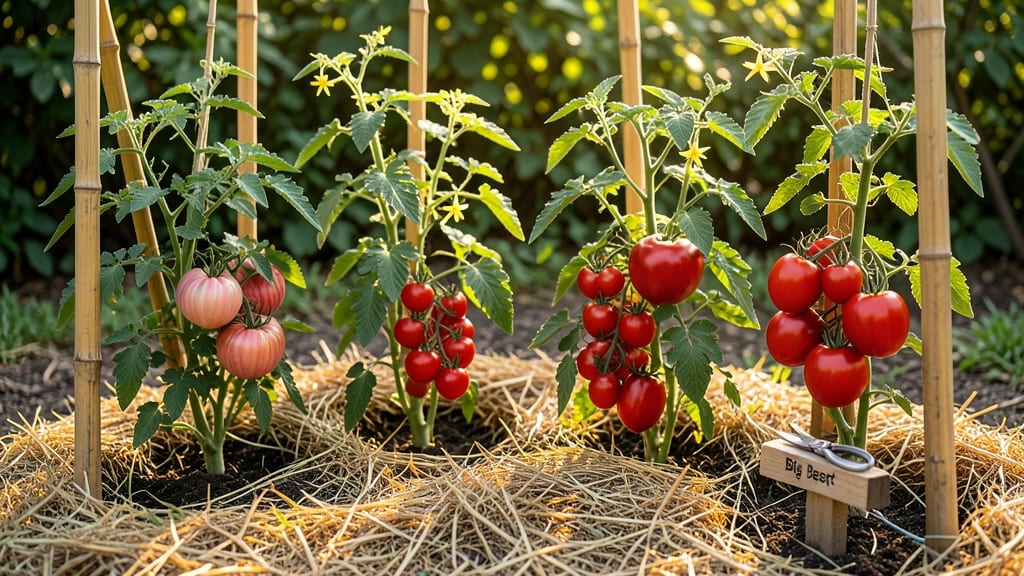
Lower-growing tomato classifications are the secret weapon for small spaces and container gardens. 🌱 I've grown everything from sprawling beefsteaks to compact cherry tomatoes, and the right choice can mean the difference between a crowded mess and a productive, easy-care harvest.
These compact plants thrive in pots, raised beds, and even vertical gardens where their full-sized cousins would flop.
The key difference isn't just height—it's how they grow. Determinate varieties produce all their fruit at once and top out around 3-4 feet, while indeterminate types keep growing and fruiting until frost.
My favorite compact varieties include 'Tiny Tim' (18 inches tall), 'Patio Princess' (24 inches), and 'Balcony Red'—all designed to stay small without sacrificing flavor. Each needs different spacing, pruning, and support to perform at their best.
What you'll get is a garden that fits your space without sacrificing productivity. These varieties handle heat and humidity better than many full-sized tomatoes, and their compact growth means fewer broken stems and easier harvesting.
The right choice can also mean fewer disease problems since many compact types have better air circulation between plants.
Perfect for balconies, patios, or small backyard plots where space is limited. Whether you're working with 4-inch pots or a 4-foot-wide raised bed, these varieties let you grow delicious tomatoes without the sprawl. Here's how to choose and care for them—no matter how small your growing area.
📚 In This Guide
- What you need
- Instructions
- Tips and common mistakes
- Wrapping up and next steps
What you need
- ● Tomato seeds or seedlings: Choose 3–5 varieties of lower-growing tomatoes (e.g., Tiny Tim, Patio Princess, or Sweet 100 cherry tomatoes). Start with 1–2 packets of seeds or 3–4 seedlings per variety.
- ● Containers or pots: 5–10 gallon pots (or larger) with drainage holes—at least 12 inches deep for dwarf varieties and 5–7 gallons for determinate types. Use 3–5 containers total if testing multiple varieties.
- ● High-quality potting mix: A sterilized, well-draining mix (e.g., 60% peat moss, 20% perlite, 20% compost). Avoid garden soil—it compacts and holds too much moisture!
- ● Fertilizer: A balanced, slow-release fertilizer (10-10-10 or 5-5-5) or organic options like composted manure or worm castings. Use 1–2 tbsp per pot at planting.
- ● Watering can or hose with a gentle spray nozzle: Lower-growing tomatoes need consistent moisture but hate soggy roots.
- ○ Stakes or cages (optional but helpful): Small tomato cages (4–6 inches tall) or bamboo stakes for support, especially for determinate varieties.
- ● Pruning shears or scissors: For trimming suckers or dead leaves—sterilize with rubbing alcohol between cuts!
- ● Sunny spot: 6–8 hours of direct sunlight daily—even lower-growing tomatoes thrive with ample light! A south-facing window or balcony works for containers.
- ○ pH test kit (optional): Ideal soil pH for tomatoes: 6.0–6.8. Adjust with lime (to raise pH) or sulfur (to lower) if needed.
- ○ Mulch (optional): Straw or shredded leaves to retain moisture and suppress weeds. Apply a 2-inch layer around plants.
- ○ Row covers or shade cloth (optional): For early-season protection from pests or late frosts—30–50% shade cloth works for heat-sensitive varieties.
- ○ Grow lights (optional for indoors): LED grow lights (12–16 hours/day) if natural light is limited.
How to select and grow compact tomato varieties for small gardens
Not all tomatoes need a 6-foot cage—here’s how to choose and cultivate dwarf and indeterminate varieties that thrive in tight spaces.
🌱 Step 1: Identify the Right Tomato Types for Limited Space
For small gardens, focus on determinate (bush) varieties like 'Tiny Tim' or 'Patio Princess,' which top out at 2-3 feet and produce fruit in a compact cluster. These are perfect for containers or tight beds. Indeterminate varieties like 'Tumbling Tom' or 'Micro Tom' can also work if trained vertically in 4-foot trellises—they grow continuously but stay manageable.
Check seed packets for height labels—anything under 4 feet is ideal for balconies or windowsills. Avoid full-size indeterminates (like 'Sungold') unless you’re willing to prune aggressively. The key is matching plant habit to your space: determinate = bush, indeterminate = vine (but controlled).
☀️ Step 2: Position for Optimal Sunlight and Airflow
Even compact tomatoes need 6-8 hours of direct sun daily—no exceptions. Place them in the sunniest spot available, even if it’s a south-facing windowsill or a raised bed along a fence. If growing in containers, rotate pots quarter-turn weekly to prevent leaning toward light.
Spacing is critical: 18-24 inches apart for determinates, 12-18 inches for dwarf indeterminates. Crowding invites disease and weak stems. Watch for yellowing leaves—a sign of too much shade or poor airflow. If leaves touch, prune aggressively to prevent fungal issues like early blight.
🪴 Step 3: Support and Prune for Compact Growth
Determinate varieties rarely need staking, but indeterminates (even dwarf types) benefit from small cages or stakes inserted at planting. Use 4-foot bamboo stakes or mini tomato cages (18 inches tall) to keep plants upright without taking up extra space. Tie stems loosely with soft plant ties every 6-8 inches as they grow.
Prune suckers (the shoots in the leaf axils) weekly to redirect energy to fruit. For determinates, remove suckers entirely; for indeterminates, leave 1-2 suckers to encourage bushiness. Stop pruning 4-6 weeks before harvest—new growth won’t ripen in time. You’ll know you’re on track when the plant stays dense but not overcrowded, with 3-5 main stems per plant.
💧 Step 4: Water and Fertilize for Small-Space Success
Consistent moisture is non-negotiable for compact tomatoes. Water deeply 1-2 times weekly, aiming for 1 inch of water per week (check by measuring rainfall or using a rain gauge). Avoid wetting leaves to prevent disease—water at the base only. In containers, water when the top inch of soil feels dry, but never let them sit in soggy soil.
Fertilize lightly with a balanced 10-10-10 formula at planting, then switch to a low-nitrogen, high-phosphorus (like 5-10-10) once flowers appear. Over-fertilizing leads to leafy growth at the expense of fruit. Look for dark green leaves with purple stems—a sign of phosphorus deficiency. If this happens, reduce nitrogen and increase phosphorus in your next feeding.
✂️ Step 5: Harvest and Maintain for Continuous Production
Harvest when tomatoes are fully colored and slightly soft to touch. For determinates, expect a 2-3 week harvest window; indeterminates produce throughout the season if pruned and fed correctly. Pinch off spent flowers to encourage more fruit formation. In containers, harvest frequently—overripe tomatoes attract pests and diseases.
Extend the season by pruning old leaves (those below the first fruit cluster) to improve airflow. If frost threatens, cover plants with frost cloth or move containers indoors to a sunny spot. With proper care, even dwarf varieties can produce 50-100 tomatoes per plant—proof that small spaces can yield big rewards.
Tips & tricks for perfect small-space tomato growth
Took me years to figure out how to maximize yield without sacrificing space—here's what actually works for compact tomato varieties.
Variety Selection Wisdom: When choosing between determinate and indeterminate types, prioritize dwarf indeterminates like 'Tumbling Tom' for containers—they produce continuously but stay under 4 feet when properly pruned. For true bush varieties, 'Patio Princess' is my go-to because it matures in just 55 days and stays under 2 feet tall. The key is matching plant habit to your specific space constraints: balconies = determinates, windowsills = dwarf indeterminates.
Sunlight Strategy: That 6-8 hour daily sun requirement is non-negotiable, but here's the trick: if your space only gets 4-5 hours of direct sun, choose cherry tomato varieties like 'Micro Tom'—they tolerate partial shade better than larger tomatoes. For containers, rotate them quarter-turn weekly to prevent leaning toward light, which I learned after watching my plants grow lopsided for two seasons.
Pruning Precision: The weekly sucker removal in Step 3 is where most beginners go wrong. For determinates, remove all suckers to maintain that compact bush shape. For indeterminates, leave 1-2 suckers every 6-8 inches to encourage branching, but stop pruning 4-6 weeks before harvest—this is critical for fruit development. I used to over-prune, which resulted in fewer tomatoes despite my best efforts.
Container Care: If growing in pots, use 5-gallon containers minimum for determinates and 7-gallon containers for indeterminates. The extra space prevents root binding, which I discovered after my dwarf plants produced half the expected yield. Always use well-draining soil mix with 30% compost—this improves moisture retention while preventing soggy roots that lead to disease.
Pro Tips for Tomato Lower Classifications
- Took me years to figure out how to maximize yield without sacrificing space—here's what actually works for compact tomato varieties.
- For true bush varieties, 'Patio Princess' is my go-to because it matures in just 55 days and stays under 2 feet tall.
- For containers, rotate them quarter-turn weekly to prevent leaning toward light, which I learned after watching my plants grow lopsided for two seasons.
Frequently asked questions
Got questions about tomato lower classifications?
You’re not alone! Here are answers to the most common queries about growing compact tomato varieties in small spaces—whether you’re a beginner or a seasoned gardener.
What are the best tomato varieties for small spaces or containers?
Look for determinate (bush) varieties like ‘Patio,’ ‘Tiny Tim,’ or ‘Balcony Red’—they stay under 3 feet tall and thrive in pots. Indeterminate types (e.g., ‘Cherry Roma’) need pruning but can work in large containers with support. Always check seed packets for "compact" or "dwarf" labels!
How long does it take for lower-growing tomatoes to produce fruit?
Most compact tomatoes mature in 60–75 days from transplanting, but cooler weather or smaller pots may delay ripening. Start seeds indoors 6–8 weeks early for a head start. Pro tip: Use grow lights if natural sunlight is limited!
Can I grow cherry tomatoes in the same pot as other lower-classification varieties?
Yes, but avoid overcrowding—cherry tomatoes (e.g., ‘Tumbling Tom’) spread aggressively. Pair them with determinate types like ‘Bush Early Girl’ in a 5-gallon+ pot. Monitor vines and prune suckers to prevent competition for nutrients.
Why aren’t my compact tomatoes ripening, even in warm weather?
Check these fixes:
- Sunlight: Ensure 6–8+ hours daily—move pots to sunnier spots if needed.
- Watering: Keep soil consistently moist (not soggy) to avoid blossom-end rot.
- Fertilizer: Switch to low-nitrogen, high-phosphorus feed (like 5-10-10) when flowers appear.
- Pollination: Gently shake plants or use a small brush to transfer pollen if bees are scarce.
What’s a good alternative if I can’t grow tomatoes in my space?
Try these space-saving, high-yield alternatives:
- Peppers (e.g., ‘Shishito’ or ‘Jalapeño’) – Compact, prolific, and thrive in 1-gallon pots.
- Bush beans – Fast-growing (50 days) and fix nitrogen in soil.
- Dwarf eggplants (e.g., ‘Fairy Tale’) – Stay under 2 feet tall.
- Herbs (basil, thyme, oregano) – Zero-maintenance and edible!
All pair well with tomatoes in container gardens for a vertical harvest!
Wrapping up and next steps
Exploring tomato lower classifications—like determinate, semi-determinate, and dwarf varieties—opens up a world of gardening possibilities, especially for small spaces! 🌱 Whether you’re a beginner or a seasoned grower, these compact options prove that big harvests don’t need big yards. Start small, experiment with a few varieties, and watch your garden thrive!
Ready to take the next step? Try planting one of these space-saving varieties this season—your balcony or patio will thank you! 🌿