
How To
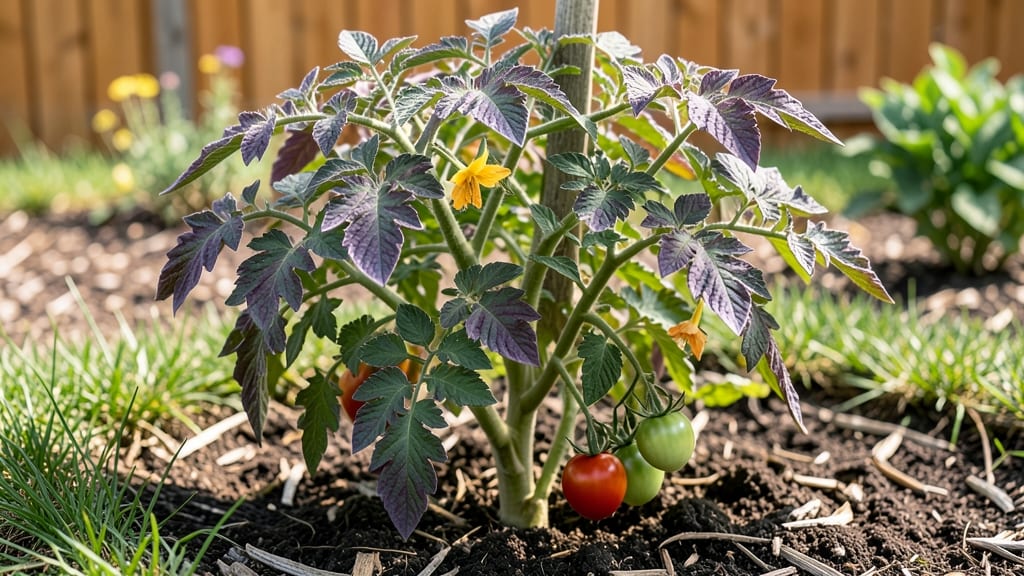
Tomato leaves turning purple isn't just unsightly—it's your plant's SOS signal. 🌱 I've seen this happen after years of gardening, and the good news? Most cases are easy to fix with the right diagnosis.
Purple leaves often mean phosphorus or magnesium deficiency, but temperature stress or fungal issues can mimic the symptoms too. The key is figuring out which problem you're dealing with before it spreads.
Start by checking the undersides of leaves for powdery mildew or spots—those are clear signs of fungal infection. If the soil feels cool to the touch, temperature stress might be the culprit.
But if the veins stay green while the leaf edges turn purple, you're likely dealing with a nutrient deficiency. Grab a soil test kit (they're cheap and accurate) to confirm what your tomatoes are missing.
For phosphorus deficiency, a quick fix is bone meal or a balanced 10-10-10 fertilizer. Magnesium issues? Epsom salt (1 tablespoon per gallon of water) sprayed on leaves works wonders.
Prune any severely affected leaves to redirect energy to healthy growth. Most gardeners see improvement within 7-10 days of treatment, but severe cases might need repeated applications.
Prevention is easier than fixing: mulch heavily to retain soil warmth, avoid overwatering, and rotate crops yearly. If purple leaves keep coming back despite your efforts, it might be time to consult a local extension office—they can help rule out hidden soil issues or pests.
Your tomatoes will be back to vibrant green in no time!
Root Causes Behind Purple Tomato Leaves
Understanding why your tomato leaves are turning purple starts with recognizing the stress signals your plants are sending. These color changes aren’t just cosmetic—they’re a direct response to underlying issues, often tied to nutrient imbalances, environmental stressors, or physiological disorders.
Let’s break down the most common culprits and what’s really happening at the cellular level.
When temperatures drop below 50°F (10°C)—especially at night—tomato plants can develop anthocyanin pigments, the same compounds that give purple hues to eggplants and red cabbage. These pigments act as natural sunscreen, protecting leaves from UV damage when chlorophyll production slows down in cooler conditions.
Why it happens:
- Cold stress disrupts photosynthesis, forcing the plant to reroute energy toward protective pigments.
- Young leaves and stems are often the first to show purple tinges because they’re most vulnerable to temperature fluctuations.
- Frost or late-season chills can trigger this even in warm climates.
Actionable clue: If purple appears suddenly after a cold snap but disappears in warmer weather, temperature stress is likely the culprit.
Tomatoes are thirsty plants, and inconsistent watering—whether drought or waterlogging—can lead to purple leaves. The issue stems from how water affects nutrient uptake and root health.
Why it happens:
- Drought stress: When soil dries out, roots struggle to absorb phosphorus and potassium, two critical nutrients for energy transfer. The plant compensates by producing anthocyanins to protect cells.
- Overwatering: Soggy roots can’t breathe, leading to anaerobic conditions that block nutrient absorption. Purple leaves may appear alongside yellowing (chlorosis) if iron or manganese deficiencies develop.
- Salinity buildup: In containers or sandy soils, excess salts from fertilizers or tap water can burn roots, further disrupting nutrient flow.
Actionable clue: Check the soil 1–2 inches deep—if it’s bone-dry or muddy, watering habits are the problem. Mulching helps regulate moisture.
While nitrogen deficiency (yellowing leaves) gets more attention, phosphorus (P) and potassium (K) deficiencies are the top triggers for purple foliage. These nutrients are vital for energy production and stress resistance, and their shortages force the plant to shift into "survival mode."
Why it happens:
- Phosphorus deficiency:
- Critical for ATP (energy currency) in cells, phosphorus shortages stunt root growth and cause dark purple or reddish hues, especially on lower leaves.
- Common in alkaline soils (pH >7.0), where phosphorus binds to calcium and becomes unavailable.
- Young plants or those in poor-quality soil are most at risk.
- Potassium deficiency:
- Potassium regulates water balance and enzyme activity. Without enough, leaves develop purple edges or speckling, often paired with weak stems or curled leaves.
- Over-fertilizing with nitrogen-heavy feeds (like lawn fertilizer) can starve plants of potassium, as the two compete for uptake.
Actionable clue: Test your soil’s pH and nutrient levels (home kits work!). If phosphorus is low, amend with bone meal or rock phosphate; for potassium, use potassium sulfate or wood ash.
When tomato plants experience physical stress—like rough handling during transplanting, root pruning, or pest damage—they may turn purple as a last-ditch effort to recover.
Why it happens:
- Root pruning or damage: Even minor root cuts during repotting can disrupt nutrient absorption for weeks. The plant prioritizes leaf protection (via anthocyanins) over growth.
- Transplant shock: Moving plants from seedling trays to the garden (or larger pots) can cause osmotic stress, where roots struggle to hydrate and absorb nutrients efficiently.
- Pest/disease attack: Root-knot nematodes, aphids, or fungal infections (like early blight) can chew roots or block vascular pathways, leading to purple leaves as a symptom of systemic distress.
Actionable clue: If purple appears right after transplanting but other leaves stay green, root trauma is likely. Gently inspect roots for damage or pests and avoid disturbing them further.
Not all purple leaves are a cause for alarm! Some heirloom and hybrid tomato varieties naturally produce purple-tinged foliage, especially when young or under mild stress.
Why it happens:
- Anthocyanin-rich cultivars: Varieties like ‘Indigo Rose’ or ‘Black Krim’ have high anthocyanin levels as a genetic trait, even in optimal conditions. These pigments can deepen under bright light or cool nights.
- Juvenile phase: Seedlings of many tomatoes start purple before turning green as they mature.
Actionable clue: Check your seed packet or plant tags—if the variety is known for purple leaves, no action is needed unless the discoloration spreads or paired with wilting.
Ironically, over-fertilizing—especially with nitrogen—can trigger purple leaves by creating nutrient lockout or toxic buildup.
Why it happens:
- Nitrogen overload: Excess nitrogen competes with phosphorus and potassium for uptake, leading to deficiencies even if soil tests show high levels.
- Salt buildup: Synthetic fertilizers (like Miracle-Gro) can increase soil salinity, burning roots and preventing nutrient absorption.
- pH imbalances: Fertilizers like lime (to raise pH) or sulfur (to lower pH) can throw off micronutrient availability, causing manganese or iron deficiencies, which manifest as purple between veins.
Actionable clue: Flush the soil with water (1–2 inches per week) to leach excess salts. Switch to organic fertilizers (like compost or fish emulsion) for a slower, safer nutrient release.
Fixing Purple Tomato Leaves Fast
Now that you know why your tomato leaves are turning purple—whether it’s a nutrient deficiency, environmental stress, or disease—let’s get them back to vibrant green in no time! Below are practical, step-by-step fixes tailored to each cause, plus prevention tips to keep your plants thriving.
If purple leaves are caused by a lack of essential nutrients, your tomatoes need a quick boost. Here’s how to diagnose and treat the most common issues:
🔥 Phosphorus Deficiency (Purple Stems & Undersides)
Phosphorus helps with energy transfer in plants, and a deficiency often shows up as deep purple or violet hues on stems and leaf undersides. How to Fix It: - Apply a balanced fertilizer (look for a 10-10-10 or 5-10-10 NPK ratio).
Phosphorus is the middle number. - Use bone meal or rock phosphate as a slow-release organic option. Sprinkle 1–2 tablespoons per plant and gently work it into the soil. - Compost tea or fish emulsion can also provide a phosphorus kick.
Mix 1 tablespoon of fish emulsion per gallon of water and water the base of the plant.
> 💡 Pro Tip: Avoid over-fertilizing with nitrogen (the first number in NPK)—too much can mask phosphorus deficiency while worsening other issues.
🍳 Potassium Deficiency (Purple Edges & Weak Growth)
Potassium helps regulate water and nutrient movement. Purple or reddish edges on older leaves? It’s a sign your tomatoes are potassium-starved. How to Fix It: - Use a potassium-rich fertilizer like potassium sulfate (0-0-50) or greensand.
Apply 1 tablespoon per plant and water thoroughly. - Banana peels are a natural (but slower) source. Chop them up, bury near roots, or steep in water for a week before using as a foliar spray. - Wood ash (from untreated wood) can also help.
Sprinkle ½ cup per plant and mix into the topsoil.
👨🍳 Magnesium Deficiency (Interveinal Purple Spotting)
Magnesium helps chlorophyll production, and a deficiency causes purple patches between leaf veins (especially on older leaves). How to Fix It: - Epsom salt (magnesium sulfate) is the fastest fix.
Dissolve 1 tablespoon in 1 gallon of water and spray on leaves every 2 weeks until improved. - Dolomitic lime (for soil pH adjustment) can also help long-term. Work ½ cup per plant into the soil. - Avoid overwatering, as magnesium leaches out in soggy soil.
If purple leaves are due to temperature, light, or water issues, adjusting your growing conditions will help.
❄️ Cold Stress (Purple from Chilly Nights)
Tomatoes hate sudden temperature drops below 50°F (10°C).
Purple leaves can appear as a survival mechanism to protect against cold. How to Fix It: - Cover plants at night with frost blankets, row covers, or even old sheets if temps dip below 55°F (13°C). - Use black plastic mulch to absorb and retain heat during the day. - Move potted tomatoes to a sheltered spot or indoors (if possible) during cold snaps.
☀️ Heat & Sunburn (Purple from Too Much Sun)
Intense heat or direct afternoon sun can cause purple discoloration, especially in thin or young leaves. How to Fix It:
- Provide afternoon shade with shade cloth (30–50%) or a lightweight row cover during peak heat.
- Water deeply in the morning to cool leaves and prevent stress.
- Prune lower leaves to improve airflow and reduce sun exposure to sensitive foliage.
💦 Overwatering or Poor Drainage (Purple from Root Stress)
Waterlogged soil starves roots of oxygen, leading to nutrient uptake issues and purple leaves. How to Fix It: - Check soil moisture—stick your finger 1–2 inches deep.
Water only when the topsoil is dry. - Improve drainage by amending soil with perlite, vermiculite, or compost. - Raise containers if growing in pots to prevent water pooling at the bottom.
If purple leaves are caused by verticillium wilt, early blight, or spider mites, act fast to save your plants.
🍄 Fungal Diseases (Verticillium Wilt or Early Blight)
Purple or blackened stems and leaves can signal a fungal infection. How to Fix It:
- Remove infected leaves immediately and destroy them (don’t compost).
- Apply a copper fungicide (like Bordeaux mixture) or neem oil spray every 7–10 days for prevention.
- Rotate crops—don’t plant tomatoes in the same spot next year.
- Improve airflow by pruning and spacing plants properly.
🕷️ Spider Mites (Purple Speckling from Pests)
Tiny spider mites suck plant sap, causing purple or yellow stippling on leaves. How to Fix It:
- Spray with soapy water (1 tsp mild dish soap per quart of water) every 3 days until mites disappear.
- Release beneficial insects like ladybugs or predatory mites.
- Keep plants hydrated—mites thrive in dry conditions.
Once your tomato leaves are back to green, keep them healthy with these easy maintenance habits:
| Prevention Tip | How to Do It |
|---|---|
| Test soil every season | Use a DIY soil test kit or send a sample to your local extension office. |
| Fertilize regularly | Use a balanced fertilizer (like 10-10-10) every 4–6 weeks during growth. |
| Mulch heavily | Straw or wood chips retain moisture, regulate soil temp, and prevent weeds. |
| Monitor pests weekly | Check undersides of leaves and new growth for early signs of trouble. |
| Rotate crops | Avoid planting tomatoes (or nightshades) in the same spot for 3+ years. |
| Prune for airflow | Remove suckers and crowded leaves to reduce humidity and disease risk. |
Final Thought: Purple tomato leaves don’t have to mean game over—most issues are quick to fix with the right adjustments. Start with the most likely cause, act fast, and your plants will be back to producing juicy, red tomatoes in no time! 🍅✨
Frequently asked questions
Why do only the older leaves turn purple while new growth stays green?
This classic pattern usually signals a nutrient deficiency, most commonly phosphorus or potassium. Older leaves act as nutrient reservoirs, showing deficiency symptoms first. Check if the purple appears on leaf undersides (phosphorus) or edges (potassium) to pinpoint which nutrient your tomatoes need.
Can I still harvest tomatoes if the leaves are turning purple?
Yes! Purple leaves often indicate stress rather than fruit quality issues. The plant will still produce tomatoes, though yields might decrease if the problem is severe. Focus on fixing the underlying cause while harvesting what's already on the vine—just avoid eating leaves (they can be bitter).
How quickly should I expect to see improvement after treating the problem?
With proper treatment, you should notice changes within 7-10 days. Nutrient deficiencies often show improvement fastest with foliar sprays (like Epsom salt for magnesium). Environmental fixes (like adjusting watering) may take slightly longer, but consistent care should restore normal color within 2-3 weeks.
Is it safe to use Epsom salt on tomato plants with purple leaves?
Epsom salt (magnesium sulfate) is excellent for magnesium deficiencies that cause purple between leaf veins. Mix 1 tablespoon per gallon of water and spray on leaves every 2 weeks
Could my tomato plants be getting too much sun if the leaves are turning purple?
While excessive sun typically causes yellowing or scorching, intense heat stress can trigger purple discoloration—especially in young leaves. If your plants are in full sun during peak afternoon hours, try providing 30-50% shade cloth or moving containers to a slightly shadier spot. Water deeply in the morning to help cool the plants.