
Plants
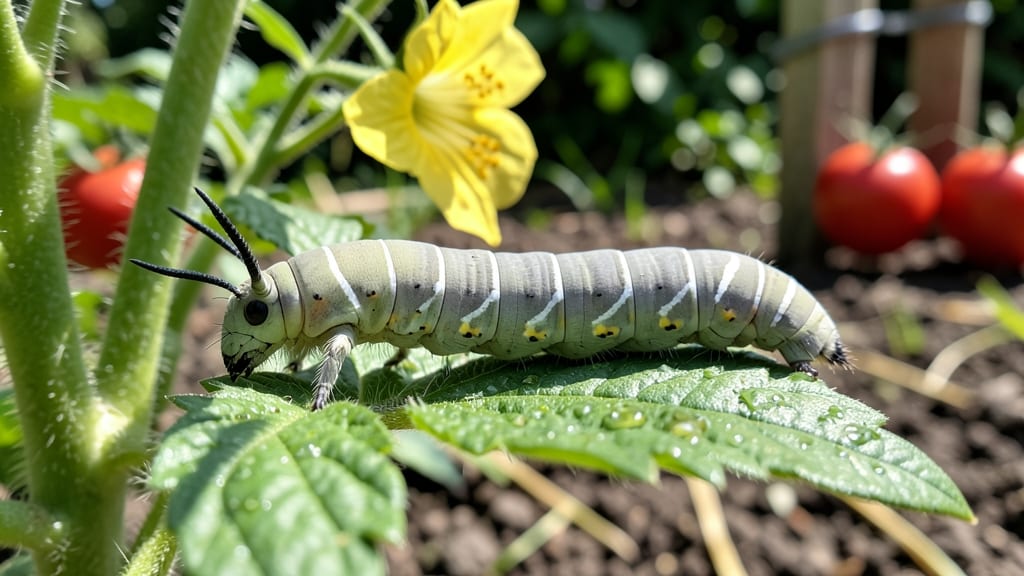
That green, striped caterpillar munching your tomatoes might not be the tomato hornworm look-alike—here’s how to tell the difference. 🌱 I’ve spent years watching these imposters wreak havoc, and the key is in the details: body shape, stripes, and even their poop.
Misidentifying them can mean wasted time or worse, harming beneficial insects.
The real tomato hornworm has V-shaped white stripes and a horn-like tail, while look-alikes like the five-spotted hawk moth caterpillar lack stripes entirely and have a smoother body.
Check for black "spots" on the sides—hornworms have them, mimics don’t. Even their frass (poop) differs: hornworm droppings are greenish, while others are brown.
Once you spot the right pest, act fast. Handpicking works for hornworms, but mimics like the tobacco hornworm need neem oil or Bacillus thuringiensis. The goal? Protect your plants without accidentally killing the good guys lurking nearby.
This guide cuts through the confusion so you can save your tomatoes—and keep your garden’s balance intact. Let’s break it down step by step.
Nature’s Deceptive Mimics Explained
When you spot a caterpillar munching on your tomato plants, it’s easy to assume it’s a Manduca sexta—the infamous tomato hornworm. But nature has a knack for deception, and several other caterpillars can fool even the sharpest gardener’s eye.
Understanding why these look-alikes exist—and how they thrive—can help you distinguish them from the real deal. Here’s the science behind the confusion.
Many caterpillars that resemble tomato hornworms have evolved cryptic coloration to avoid predators. The tomato hornworm’s signature green body with white diagonal stripes mimics the veins and texture of tomato leaves, making it nearly invisible while it feeds.
Other caterpillars, like the five-spotted hawkmoth caterpillar or tobacco hornworm, have adopted similar strategies:
- Leaf mimicry: Their bodies often feature irregular patterns or "false edges" that break up their outline, tricking predators into seeing them as part of the foliage. 🌿
- Color shifts: Some species, like the hickory horned devil, start green but turn brown or gray as they mature, matching dried leaves or bark.
- Size and shape tricks: Look-alikes may have similar body proportions or "horns" (like the carolina sphinx moth caterpillar) to deter birds and lizards that might otherwise see them as easy prey.
Actionable tip: Examine the underside of the leaf where the caterpillar is feeding. A true tomato hornworm will leave clean, ragged holes, while some mimics (like the variegated cutworm) create notched or serrated edges.
Some caterpillars that resemble tomato hornworms aren’t just hiding—they’re actively advertising their toxicity. The tomato hornworm itself is harmless to humans but can carry parasitic wasp eggs (a natural pest control!).
However, other mimics, like the black swallowtail caterpillar or spiny oakworm, have evolved bright colors or spines as a warning:
- Bright yellow, orange, or red hues: These caterpillars often contain toxic chemicals (like cyanide derivatives) that make birds and mammals think twice before attacking.
- Spines or bristles: Species like the hickory horned devil have venomous spines that can cause irritation or even allergic reactions in predators.
- Mimicry of toxic species: Some harmless caterpillars (like the celery leaf tier) copy the coloration of toxic look-alikes to gain protection through Batesian mimicry.
Actionable tip: If a caterpillar has bright colors or obvious spines, handle it with gloves or avoid touching it—it’s likely a toxic mimic. Tomato hornworms are soft-bodied and green with no defensive structures.
Tomato hornworms are specialized feeders, meaning they thrive almost exclusively on plants in the nightshade family (tomatoes, peppers, potatoes, eggplants). But their look-alikes often have broader diets, leading them to your garden by accident:
| Caterpillar | Primary Host Plants | Why It Visits Tomatoes |
|---|---|---|
| Five-spotted hawkmoth caterpillar | Tomatoes, peppers, petunias | Loves tomatoes but may also feed on other garden flowers if tomatoes are scarce. |
| Tobacco hornworm | Tobacco, tomatoes, peppers | Prefers tobacco but will switch to tomatoes if tobacco isn’t available. |
| Variegated cutworm | Grasses, weeds, many vegetables | Opportunistic feeder—not picky about what it eats. |
| Black swallowtail | Carrots, parsley, dill | Only visits tomatoes if no preferred hosts are nearby. |
Actionable tip: Check nearby plants. If you see a caterpillar that doesn’t match your tomato plants’ damage pattern (e.g., chewed leaves on carrots or weeds), it’s likely a non-hornworm visitor.
The tomato hornworm’s dramatic decline in some regions isn’t just due to pesticides—it’s also because of natural predators and parasites. This creates an opportunity for look-alikes to move in:
- Wasp parasitism: Tomato hornworms are often overrun by braconid wasps, which lay eggs inside them. If hornworm populations drop, similar caterpillars with fewer natural enemies (like the tobacco budworm) may take over.
- Bird predation: Birds learn to avoid spiny or brightly colored caterpillars, leaving mimics like the hickory horned devil unharmed while they devour your plants.
- Climate shifts: Warmer winters allow more species to survive and expand their ranges, increasing the chance of encountering unfamiliar caterpillars.
Actionable tip: If your garden suddenly has more caterpillars than usual but fewer hornworms, you may be dealing with opportunistic species filling the ecological void. Introduce beneficial insects (like ladybugs or lacewings) to restore balance.
Understanding these evolutionary and ecological drivers helps you see why nature’s caterpillar imposters exist—and how to outsmart them in your garden. 🕵️♂️
Quick Fixes for Garden Pests
If you’ve spotted a caterpillar munching on your tomatoes and aren’t sure whether it’s a tomato hornworm look-alike or something worse, act fast! Early intervention prevents damage and keeps your plants thriving.
Below are practical, step-by-step solutions tailored to common causes—from misidentification to actual infestations—along with prevention tips to keep your garden pest-free.
Before treating, double-check what’s chewing on your plants. Many garden pests resemble hornworms, but their habits and damage differ.- 🔍 Inspect the caterpillar:
- Look for distinctive markings (e.g., white diagonal stripes on a hornworm vs. solid green or brown on others).
- Check for horn-like projections (a key trait of tomato hornworms).
- Observe frass (droppings)—hornworms leave dark, irregular piles, while other caterpillars may leave finer, pellet-like droppings.
- 🌿 Examine the damage:
- Hornworms skeletonize leaves (eat between veins), leaving a lace-like pattern.
- Other pests (like loopers or beetle larvae) may chew holes or leave jagged edges.
- 📸 Snap a photo: Compare your find to a visual guide (like the one in this article) for confirmation.
Pro Tip: 💡 Use a magnifying glass or phone camera with a macro lens for close-ups. If unsure, relocate the caterpillar to a potted plant (like dill or basil) to observe its behavior—hornworms love these too!
If it’s a hornworm (or look-alike), handpicking is the fastest, chemical-free solution.- 👨🍳 Choose the right time: Go out early morning when caterpillars are sluggish and easier to spot.
- 🔪 Use gloves or tongs: Wear gardening gloves to avoid handling bristly hairs (some caterpillars, like tomato hornworms, have mild irritants).
- 🗑️ Dispose properly:
- Drop them in soapy water (to kill instantly).
- Or relocate them far from your garden (though they’ll likely die without host plants).
- ⏰ Repeat daily: Check plants every 2–3 days during peak season (late spring to early fall).
Pro Tip: 🌡️ If temps drop below 50°F (10°C), hornworms become less active—use this to your advantage for easier removal!
If manual removal feels tedious, enlist beneficial predators that naturally target caterpillars.- 🐝 Attract parasitic wasps:
- Plant dill, fennel, or parsley nearby—they attract braconid wasps, which lay eggs inside hornworms.
- Within days, the wasp larvae will kill the caterpillar from within.
- 🦋 Encourage ladybugs and lacewings:
- Buy beneficial insect eggs or neem oil sprays to boost their populations.
- These predators devour eggs and small larvae before they become a problem.
- 🐶 Chickens or ducks (if you have them): They’ll peck pests on sight—just supervise to avoid garden damage.
Pro Tip: ✨ Avoid pesticides! They kill beneficial insects along with pests, disrupting this natural balance.
Stop pests before they start with these low-effort strategies:- 🌱 Plant companion flowers:
- Marigolds, nasturtiums, and basil repel pests with their strong scents.
- Interplant them among tomatoes to create a natural barrier.
- 🕷️ Introduce nematodes:
- Apply beneficial nematodes (like Heterorhabditis bacteriophora) to the soil. They seek out and kill caterpillar larvae underground.
- Reapply every 4–6 weeks during growing season.
- 🌿 Practice crop rotation:
- Avoid planting tomatoes, peppers, or eggplants in the same spot yearly. This breaks pest life cycles.
- Rotate with beans, squash, or herbs to confuse pests.
- 🌙 Use row covers:
- Cover young plants with floating row covers until flowering. This blocks moths from laying eggs.
- Remove covers during pollination for tomatoes.
Pro Tip: 🎯 Healthy plants resist pests better! Ensure tomatoes get 6+ hours of sun, 1–2 inches of water weekly, and balanced fertilizer (like 10-10-10).
With these solutions, you’ll minimize damage and keep your garden thriving—without harsh chemicals. Start with manual removal, then layer in prevention for long-term success!
Frequently asked questions
What’s the fastest way to tell a tomato hornworm from a look-alike?
Check for three key traits: V-shaped white stripes (hornworms only), a black horn-like tail, and black \"spots\" on the sides. Look-alikes like the five-spotted hawkmoth lack stripes and have smoother bodies.
Can I use the same control methods for hornworms and their look-alikes?
No—hornworms are harmless to humans, but some mimics (like the hickory horned devil) have venomous spines. Always handpick hornworms, while toxic look-alikes need neem oil or BT spray. Never touch brightly colored caterpillars with bare hands!
Why do I keep seeing more look-alikes than actual hornworms?
Hornworm populations have declined due to pesticides and wasp parasitism, creating space for opportunistic species like the tobacco hornworm. These mimics thrive when hornworms disappear, often targeting the same plants.
What should I do if I find a caterpillar with bright yellow or red stripes?
That’s likely a toxic mimic (like the black swallowtail)—avoid handling it! These caterpillars contain cyanide derivatives and may cause irritation. Use neem oil or BT spray instead of manual removal.
How do I prevent hornworm look-alikes from returning next year?
Use crop rotation, plant companion flowers (like marigolds), and introduce beneficial nematodes. Healthy plants resist pests better—ensure tomatoes get 6+ hours of sun and balanced fertilizer.