
How To
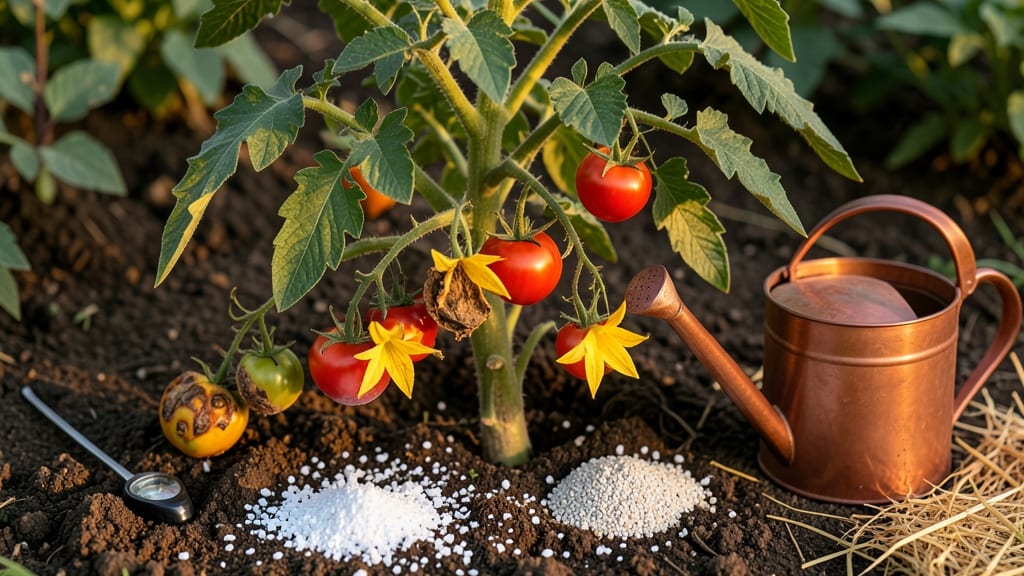
A tomato end rot remedy requires consistent moisture, calcium-rich amendments like crushed eggshells or lime, and stable soil pH to prevent further fruit damage and revive affected plants.
Tomato end rot appears as sunken, leathery spots on blossom ends, signaling calcium deficiency during fruit development. 🌱 The issue stems from uneven watering or soil pH swings that block calcium absorption—even fertile soil can't deliver nutrients if plants experience stress.
I've found crushed eggshells work best as a natural calcium boost, but testing your soil pH first ensures you're addressing the root cause rather than just symptoms.
For immediate results, harvest affected tomatoes (they won't worsen) and focus on preventing new cases. 💫 Mulching retains moisture while organic matter like compost gradually improves soil structure. Remember: prevention is key—once end rot starts, the damage is already done to those specific fruits.
💡 In This Article
- Why Calcium Deficiency Causes Tomato End Rot
- Step-by-Step Tomato End Rot Prevention Guide
Why calcium deficiency causes tomato end rot
Tomato end rot occurs when calcium can't reach developing fruit fast enough to meet demand. Calcium moves through plants via the transpiration stream—water evaporating from leaves creates a suction that pulls dissolved minerals upward.
When soil moisture fluctuates, this process stalls, leaving blossom ends (the fruit's growing tip) starved of calcium. The deficiency causes cell walls to weaken, creating those signature sunken, leathery patches. 🔥
Water stress is the primary villain: even 1-2 days of drought can trigger end rot in susceptible varieties like Roma or Beefsteak.
The problem isn't just lack of calcium—it's the plant's inability to transport what's already in the soil. pH swings below 6.0 or above 7.0 make matters worse by locking calcium into unavailable forms.
For example, in acidic soil, calcium binds to organic matter instead of staying mobile for roots to absorb.
Fruit development demands peak calcium uptake during the 10-14 days after flowering, when cells rapidly divide. If the plant can't deliver enough calcium during this critical window, the oldest cells (at the blossom end) suffer first.
Think of it like a traffic jam: even if there's plenty of calcium in the soil, if the "highway" (transpiration stream) gets blocked by drought or compacted soil, the nutrients can't reach their destination. 💫
Interestingly, calcium deficiency symptoms appear only in the fruit—not the leaves—because tomatoes prioritize calcium for new growth. This means your soil test might show adequate calcium levels while your tomatoes still develop end rot.
The key is ensuring calcium is water-soluble and mobile in the soil solution, which requires both proper pH (6.2-6.8) and consistent moisture.
Here's what's happening at the cellular level: calcium stabilizes cell membranes and acts as a "glue" between pectin molecules in cell walls. Without enough calcium, these walls become weak and prone to collapse, creating the characteristic rot.
The process is irreversible in affected fruits, but preventing new cases depends on maintaining this delicate balance of moisture and nutrient availability. ✨
Consider this comparison: a healthy tomato plant absorbs calcium at a rate of about 10-20 mg per square meter per day during peak growth. When water stress occurs, that rate can drop by 50% or more, creating exactly the conditions for end rot to develop.
This is why even organic-rich soils can produce end-rotten tomatoes if irrigation isn't consistent.