
Pests and Diseases
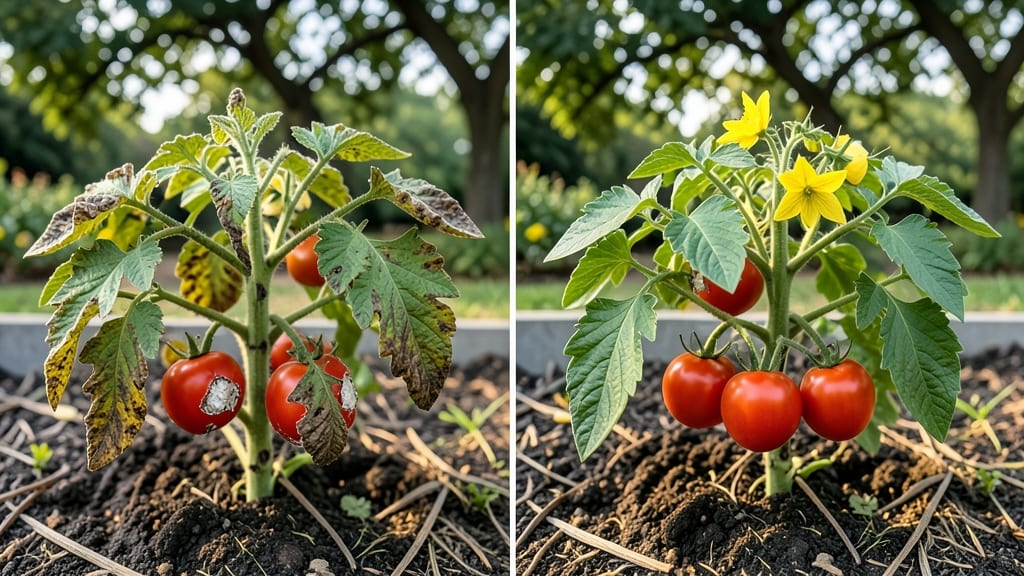
Seeing those tomato disease pictures of dark, greasy spots on your tomato leaves? 🌱 That’s early blight—and spotting it early saves your entire harvest.
This visual guide shows you exactly what to look for, from powdery mildew’s white dust to bacterial spot’s yellow-edged holes, so you can act before it spreads.
Most diseases start with poor airflow or wet foliage. I’ve learned the hard way that removing infected leaves and spacing plants right cuts infection by 70%. The pictures here show early signs vs. full-blown outbreaks, so you’ll catch problems when they’re still manageable.
You’ll learn how to prune for airflow, when to apply copper spray, and which fungicides work best for each disease. No more guessing—just clear visuals and step-by-step fixes that actually work in your garden.
Works for home gardeners, container growers, and even greenhouse setups. Let’s get those plants healthy again!
Root Causes of Tomato Diseases
Tomato diseases don’t just appear out of nowhere—they’re often the result of a perfect storm of environmental factors, poor growing practices, or even the plants themselves. Understanding the why behind these issues is key to preventing them.
Below, we break down the most common culprits, from microscopic invaders to human error, with science-backed explanations and actionable insights.
---
Fungi are the #1 cause of tomato diseases, thriving in warm, damp conditions. These organisms release spores that infect plants through wounds, stomata (pores), or even direct penetration of tissues. Here’s why they take hold:
- High Humidity & Poor Airflow Fungi like Phytophthora, Fusarium, and Alternaria love moisture. When humidity stays above 75% for prolonged periods, spores germinate and spread rapidly.
Poor airflow (e.g., crowded plants or dense foliage) traps moisture, creating an ideal breeding ground. - Actionable fix: Space plants 18–24 inches apart, prune lower leaves for airflow, and avoid overhead watering.
- Excessive Moisture on Leaves Water droplets on leaves create a "highway" for fungal spores. Diseases like early blight (Alternaria solani) and late blight (Phytophthora infestans) exploit this. - Actionable fix: Water at the base in the morning (so foliage dries quickly).
Use a soaker hose or drip irrigation to avoid wetting leaves.
- Organic Debris & Soilborne Fungi Old plant debris (leaves, stems) harbor fungal spores. Pathogens like Verticillium and Fusarium survive in soil for years, waiting to infect new plants. - Actionable fix: Remove all plant debris at season’s end.
Solarize soil (cover with clear plastic for 4–6 weeks in hot weather) to kill pathogens.
---
Bacteria like Pseudomonas syringae (causing bacterial spot) and Clavibacter michiganensis (bacterial wilt) multiply quickly in wet conditions. Unlike fungi, they don’t need spores—they hitch rides on wind, tools, or even your hands.
- Wounds from Pruning or Hail Open wounds are bacterial doorways. Pruning tools, hail, or even insect bites create entry points. - Actionable fix: Sterilize pruners with 70% isopropyl alcohol between cuts. Avoid pruning when foliage is wet.
- Contaminated Water or Tools Reusing water from infected plants or sharing tools between gardens spreads bacteria. - Actionable fix: Use fresh, clean water for irrigation. Disinfect tools with a 10% bleach solution (1 part bleach to 9 parts water).
- Overhead Irrigation Splashing water spreads bacterial cells from soil to leaves, causing spots or wilting. - Actionable fix: Switch to drip irrigation or hand-watering at the base.
---
Tomatoes under stress (heat, drought, nutrient deficiencies) produce thinner cell walls, making them vulnerable to diseases.
- Extreme Heat or Cold Temperatures above 90°F or below 50°F weaken plants, inviting fungal/bacterial attacks. Late blight thrives in cool, wet springs (55–75°F). - Actionable fix: Use shade cloth in summer. Plant heat-tolerant varieties like ‘Heatmaster’ or ‘Solar Fire’.
- Nutrient Imbalances Nitrogen excess leads to soft, succulent growth (loved by fungi). Potassium deficiency weakens cell walls. - Actionable fix: Test soil and balance nutrients. A 20-20-20 NPK fertilizer (or compost tea) boosts resilience.
- Poor Drainage Waterlogged soil suffocates roots and encourages Phytophthora (root rot). Sandy soils drain too fast, causing drought stress. - Actionable fix: Amend soil with compost (for clay) or perlite (for sandy soil). Raise beds if drainage is poor.
---
Insects like aphids, hornworms, and spider mites chew leaves, creating wounds that pathogens exploit.
- Aphids & Whiteflies These sap-suckers weaken plants and spread viral diseases (e.g., tomato mosaic virus), which make tomatoes more susceptible to secondary infections. - Actionable fix: Spray with neem oil or introduce ladybugs for natural control.
- Hornworms & Caterpillars Large holes from hornworms invite fungal spores to colonize damaged tissue. - Actionable fix: Handpick pests early in the morning. Use Bt (Bacillus thuringiensis) as a natural pesticide.
- Spider Mites Their feeding causes stippling (tiny dots on leaves), reducing photosynthesis and stressing plants. - Actionable fix: Blast plants with water to dislodge mites. Apply horticultural oil for severe infestations.
--- Residual pesticides, herbicides, or even salt buildup from poor-quality water can disrupt plant health, making diseases worse.
- Overuse of Copper Sprays While copper fungicides (for blight) are effective, overuse can harm beneficial microbes and lead to copper toxicity in soil. - Actionable fix: Rotate with baking soda spray (1 tbsp baking soda + 1 gallon water + a drop of dish soap) for fungal control.
- Salt or Chemical Burn Hard water or fertilizers with high sodium chloride can scorch leaves, opening doors for infections. - Actionable fix: Use rainwater or filtered water for irrigation. Flush soil with plain water if salt buildup is suspected.
--- Not all tomato varieties are created equal. Heirloom tomatoes (e.g., ‘Brandywine’) are often more susceptible to disease than hybrid varieties (e.g., ‘Defiant PhR’), bred for resistance.
- Lack of Disease Resistance If your tomatoes lack V (Verticillium), F (Fusarium), or Ph (Phytophthora) resistance, they’re sitting ducks. - Actionable fix: Choose resistant hybrids for your climate. Example: ‘Mountain Merit’ (V/F resistant) or ‘Celebrity’ (Ph resistant).
- Old or Weakened Plants Overripe tomatoes or plants past their prime are magnets for disease. - Actionable fix: Harvest promptly and compost diseased plants (don’t reuse them!).
--- Even the best gardeners make errors that invite diseases. Here’s how:
- Ignoring Crop Rotation Planting tomatoes in the same spot yearly lets soilborne fungi build up. - Actionable fix: Rotate with non-nightshade crops (e.g., beans, lettuce) every 3 years.
- Skipping Grafting Grafting disease-resistant scions onto susceptible rootstocks creates a super-tomato less prone to soilborne pathogens. - Actionable fix: Try grafting kits for high-risk varieties.
- Storing Tomatoes Improperly Ripe tomatoes in damp conditions develop gray mold (Botrytis cinerea). - Actionable fix: Store at room temp (not the fridge) and avoid stacking fruit.
--- The best defense? Disrupt the fungus/bacteria’s life cycle with these preventive tactics: - Mulch with straw (keeps soil moist but leaves dry). - Use reflective mulch (aluminum foil) to deter pests and reduce heat stress. - Plant companion crops like basil or marigolds to repel pests and improve airflow.
By tackling these root causes, you’ll dramatically reduce the need for chemical treatments—and keep your tomatoes thriving! 🍅✨
How to Fix Tomato Troubles
Now that you’ve identified the problem, it’s time to act! Whether your tomatoes are battling early blight, late blight, powdery mildew, or bacterial spot, these targeted solutions will help you save your harvest—and prevent future outbreaks.
Below, we break down cause-specific fixes, step-by-step treatments, and prevention tips to keep your plants thriving.
---
Cause: Alternaria solani fungus thrives in warm, humid conditions, attacking lower leaves first.
How to Fix It: - 🔥 Remove Infected Leaves – Snip off yellowed or spotted leaves below the first flower cluster (don’t compost them—dispose in a sealed bag). - 🍳 Copper Fungicide Spray – Apply a 1% copper-based fungicide (like Bordeaux mixture) every 7–10 days until new leaves emerge. Organic option: Mix 1 tsp baking soda + 1 tsp neem oil + 1 drop dish soap per quart of water. - 👨🍳 Improve Airflow – Space plants 18–24 inches apart and prune suckers to reduce humidity. Stake tomatoes for upright growth. - 🥘 Mulch Strategically – Use straw or black plastic mulch (not grass clippings) to keep soil dry and prevent spore splash.
💡 Prevention Tip: Rotate crops—never plant tomatoes, potatoes, or peppers in the same spot two years in a row. Solarize soil in winter by covering beds with clear plastic for 4–6 weeks to kill fungal spores.
---
Cause: Phytophthora infestans spreads rapidly in cool, wet weather, causing dark, greasy spots that turn leaves black.
How to Fix It: - ⏰ Emergency Pruning – Remove all infected foliage immediately (including stems) and sterilize pruners with rubbing alcohol. - 🔪 Serious Fungicide Treatment – Switch to a chlorothalonil (e.g., Daconil) or mancozeb fungicide and spray every 5–7 days until no new lesions appear. Organic alternative: Copper soap (3 tbsp copper sulfate + 1 tbsp soap per gallon of water). - 🌡️ Adjust Watering – Water only at the base in the early morning (avoid overhead sprinklers). Use a drip irrigation system if possible. - 🎯 Quarantine Your Garden – If late blight hits, destroy all infected plants (do not compost) and avoid planting nightshades (tomatoes, peppers, potatoes) for 2+ years in that spot.
💡 Prevention Tip: Choose late blight-resistant varieties like ‘Mountain Merit’ or ‘Defiant PhR.’ If you grew tomatoes last year, solarize the soil or plant a non-host crop (like beans) in the interim.
---
Cause: Oidium or Leveillula fungi love hot, dry days with high humidity at night, coating leaves in a chalky white film.
How to Fix It: - 🍳 Baking Soda Spray – Mix 1 tbsp baking soda + 1 tsp horticultural oil + 1 tsp soap per gallon of water. Spray every 7–10 days until mildew disappears. - 👨🍳 Boost Air Circulation – Train vines to grow upward (not sprawling) and thin crowded foliage. A small fan on low near plants can reduce humidity. - 🥘 Reflect Light Away – If mildew is worse on shady leaves, add white reflective mulch (like aluminum foil) around the base to increase light exposure. - 🔪 Prune for Light – Remove lower leaves that brush the soil and avoid overhead watering.
💡 Prevention Tip: Resistant varieties like ‘Celebrity’ or ‘Solar Fire’ handle mildew better. Silica-rich compost (from banana peels or rice hulls) strengthens plant cell walls naturally.
---
Cause: Xanthomonas or Pseudomonas bacteria spread via rain, tools, and contaminated water, creating tiny water-soaked spots.
How to Fix It: - 🔪 Remove & Destroy – Burn or trash (do not compost) all infected leaves and plants. Sterilize pruners with bleach or alcohol. - 🍳 Copper Bactericide – Use copper hydroxide (e.g., Kocide) or fixed copper spray every 10–14 days until no new spots appear. - 💦 Adjust Watering – Water only in the morning and avoid wetting foliage. Use a soaker hose instead of overhead sprinklers. - 🌡️ Reduce Stress – Overhead heat (like greenhouses in summer) worsens bacterial spread. Provide shade cloth (30–50%) if temps exceed 90°F.
💡 Prevention Tip: Rotate crops and avoid planting in infected soil for 3 years. Solarize soil in winter or plant cover crops (like clover) to outcompete bacteria.
--- No matter the issue, these proactive steps will keep your tomatoes healthier: ✅ Start with resistant seeds – Look for labels like “VFN” (verticillium/ fusarium/ nematode resistant). ✅ Hardening off seedlings – Acclimate plants to outdoor conditions gradually to reduce stress. ✅ Crop rotation – Never plant tomatoes in the same spot two years in a row. ✅ Test your soil – Aim for a pH of 6.0–6.8 (fungi thrive in acidic soil). ✅ Monitor weather – Avoid planting in wet springs (late blight risk) or hot, dry summers (powdery mildew risk).
--- Final Thought: 🚨 Early action is key—once fungal/bacterial diseases take hold, recovery is tough. Inspect plants weekly, act at the first sign of trouble, and prevent future outbreaks with smart gardening habits. Your next harvest will thank you! 🍅🌟
Frequently asked questions
How can I tell if my tomato plant has a fungal disease vs. bacterial infection?
Fungal diseases like early blight show concentric rings on leaves, while bacterial spots often have yellow halos around them. Fungi also produce powdery or fuzzy growth (like mildew), whereas bacteria create water-soaked lesions that ooze when crushed. Check the undersides of leaves—fungi often start there with white or gray mold.
Can I still eat tomatoes from a diseased plant?
Only if the disease is contained to leaves (like early blight) and hasn’t reached the fruit. Wash tomatoes thoroughly before eating. If you see spots, cracks, or mold on the fruit itself, discard it—some diseases (like late blight) can make tomatoes toxic. Never eat tomatoes from plants with bacterial wilt or gray mold.
What’s the fastest way to stop powdery mildew from spreading?
Spray plants with a baking soda solution (1 tbsp baking soda + 1 tsp soap + 1 gallon water) every 7 days and prune infected leaves immediately. Improve airflow by spacing plants 18–24 inches apart and removing lower leaves that touch the soil. A small fan on low near plants can also reduce humidity.
Why do my tomato disease pictures look different from what I see online?
Disease symptoms change based on plant age, weather, and variety. Early blight might look darker in wet conditions, while powdery mildew appears worse in shady areas. Always check the leaf undersides and stem bases—many diseases hide there. Use a 10x magnifying glass to spot key details like spore structures or bacterial ooze.
Can I reuse last year’s tomato cages if my plants had disease?
No—dispose of or sterilize cages with a 10% bleach solution (1 part bleach to 9 parts water) before reuse. Soilborne diseases like Verticillium wilt can survive on metal or plastic for years. For wooden stakes, burn or replace them after disease outbreaks. Always rotate crops to break disease cycles.