
Vegetables
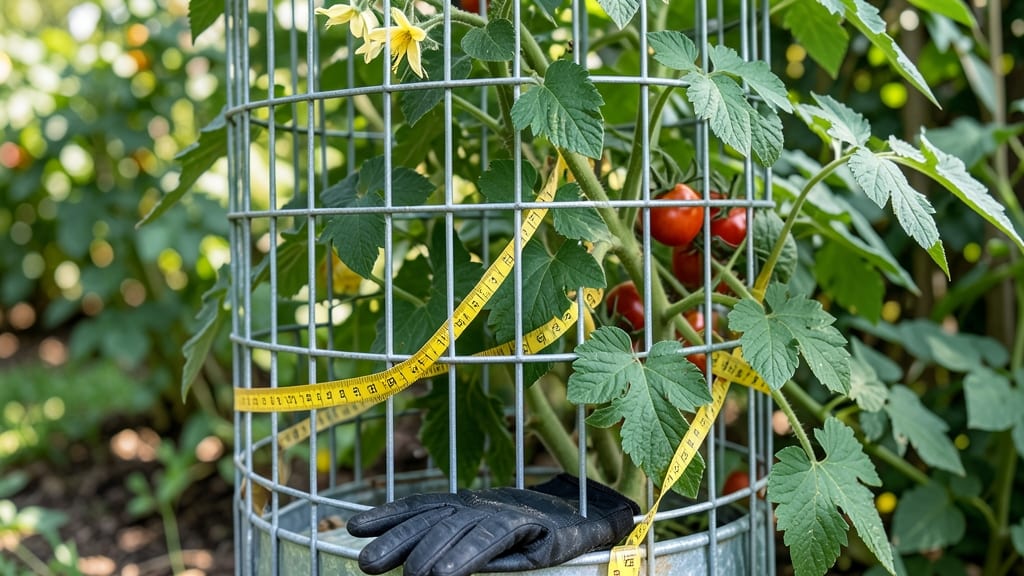
Your tomato plants need a sturdy tomato cage with the right dimensions that matches their growth habits—6-foot cages for indeterminate varieties or 4-foot cages for determinate tomatoes make all the difference between a manageable harvest and a tangled mess. 🌱 I learned this the hard way when my 5-foot cage collapsed under a 7-foot 'Sungold' plant last summer, sending ripe tomatoes rolling into the neighbor's yard (awkward).
The right dimensions aren't just about height—width matters too. A cage that's 24-30 inches wide gives indeterminate tomatoes enough space to sprawl without crowding, while determinate varieties thrive in 18-24 inch cages.
Material strength is just as critical: powder-coated steel or heavy-duty plastic won't rust or warp under the weight of heavy fruit. You'll end up with tomatoes that grow vertically instead of sprawling, saving space and making harvests easier.
The plants stay healthier too—better air circulation means fewer diseases, and you avoid the heartbreak of fruit rotting on the ground. Proper sizing also means you can fit 2-3 plants per cage without competition. Common mistakes?
Choosing cages that are too small for your variety or skipping the 6-inch deep base that prevents tipping. For heavy producers like 'Beefsteak' tomatoes, consider trellises instead—they handle the weight better and last longer. Let's get those plants growing straight and strong!
📚 In This Guide
- What you need
- Instructions
- Tips and common mistakes
- Wrapping up and next steps
What you need
- ● Metal or PVC pipes (½-inch to ¾-inch diameter) – 6 to 10 pieces, each 4 to 6 feet long (depending on desired height).
- ● Galvanized wire or twine – 20 to 30 feet (for securing joints and reinforcing structure).
- ○ Metal or plastic connectors (optional but recommended) – 6 to 12 pieces (for sturdy joints).
- ● Staple gun + staples – For attaching wire to pipes or reinforcing seams.
- ● Measuring tape – To ensure precise tomato cage dimensions (e.g., 4’ x 4’ for standard cages, or taller for indeterminate varieties).
- ● Pliers or wire cutters – For trimming and shaping materials.
- ● Drill or screwdriver – If pre-drilling holes for connectors.
- ● Work gloves – To protect hands from sharp edges or wire.
- ○ Level (optional) – Ensures your cage stands plumb for stability.
- ● Post-hole digger or stakes – If anchoring the cage to the ground.
- ● Powder-coated or painted pipes – For a rust-resistant finish.
- ● Heavy-duty zip ties – As an alternative to wire for securing joints.
- ● Decorative lattice or trellis panels – Adds aesthetics while supporting vines.
- ● Solar-powered stake lights – For extending growing season in cooler climates.
How to choose the perfect tomato cage dimensions for your plants
Here's the breakdown I use to pick cages that actually hold up to heavy harvests—no more flimsy collapses mid-season.
🌱 Step 1: Measure Your Tomato Variety's Expected Height
First, check your tomato variety's mature height on the seed packet or plant tag. Determinate varieties (like 'Roma' or 'Celebrity') typically reach 4-5 feet, while indeterminate types (such as 'Sungold' or 'Brandywine') can soar 6-10 feet or more. I always err on the side of taller cages—6-8 feet—because indeterminate vines grow aggressively once they hit summer.
If you're growing in containers, the cage height should match or exceed the pot's depth. A 5-gallon bucket might need a 4-foot cage, while a 15-gallon grow bag demands 6-7 feet. Pro tip: Measure from the base to the top of your tallest pot, then add 12-18 inches for vine growth above the rim.
🪴 Step 2: Determine Cage Diameter for Proper Airflow
Cage diameter directly impacts airflow and disease prevention. For determinate tomatoes, a 24-inch diameter cage provides enough space for bushy growth without overcrowding. Indeterminate varieties, however, need 30-36 inches to accommodate sprawling vines and heavy fruit loads. I avoid cages wider than 36 inches—they become unwieldy and trap too much humidity.
Check the cage's internal diameter (the space inside the wires), not the outer measurement. A cage labeled "30-inch" often has a 24-inch internal space—measure before buying. For container growing, match the cage's base diameter to the pot's width to prevent tipping. A 20-inch pot pairs well with a 24-inch cage for stability.
☀️ Step 3: Assess Cage Material and Sturdiness
Look for cages made from 14-16 gauge galvanized steel or heavy-duty plastic-coated wire. These materials resist rust and bending under 10-15 pounds of fruit weight per vine. I steer clear of flimsy 18-gauge wire cages—they bend like pretzels when laden with tomatoes. For windy areas, opt for stake-and-cage hybrids or freestanding A-frame designs with cross-bracing for extra support.
Test a cage's strength by pressing down on the top—it should flex slightly but not collapse. If the wires bend under 20 pounds of pressure, it won’t last the season. For heirloom or beefsteak varieties, consider double cages (two cages nested together) or wooden trellises to distribute weight evenly.
✂️ Step 4: Plan for Cage Stability and Spacing
Stability starts with the base. Cages with wide, flat bases (12-18 inches) or staked designs resist tipping better than narrow, single-stem supports. Space cages 2-3 feet apart in rows to allow walkways and airflow. In containers, anchor the cage to the pot with soft plant ties or zip ties to prevent shifting in wind or when harvesting.
For ground planting, bury the cage 6-8 inches deep or use U-shaped stakes to secure it. If growing in high tunnels or greenhouses, reduce spacing to 18 inches between cages to maximize vertical space. I always leave 12 inches of clearance between the cage and adjacent plants to prevent leaf rub and disease spread.
⏰ Step 5: Adjust for Late-Season Weight and Harvesting
By mid-summer, a single indeterminate tomato plant can weigh 20-30 pounds. Choose cages with reinforced joints or additional support wires at the top to handle this load. I reinforce cages with soft pruning ties at the top third to secure the heaviest fruit clusters. Avoid cages with single-wire tops—they sag and break under weight.
Plan for easy harvesting by selecting cages with open tops (no wire lids) and removable sides if possible. This lets you reach deep into the center without disturbing the plant. For cherry tomatoes, a 36-inch cage with extra-wide openings makes picking easier and reduces fruit rot from trapped moisture.
Tips & tricks for perfect tomato cage support systems
Here's what nobody tells you about selecting tomato cages that won't fail under a summer's worth of fruit.
Height Matters: In Step 1, when evaluating indeterminate varieties like 'Sungold' or 'Brandywine', I always add 12-18 inches to the pot's height for vine growth above the rim. This extra clearance prevents the plant from outgrowing its support mid-season. For container growing, match the cage height to your pot's depth plus that extra buffer—nothing's more frustrating than watching vines flop over the top when they're just a few weeks from harvest.
Diameter for Airflow: The 30-36 inch diameter recommendation for indeterminate varieties in Step 2 isn't just about space—it's about preventing fungal diseases. Tight cages create humid microclimates where blight thrives. I've seen cages labeled "30-inch" with only 24-inch internal space, so always measure the actual growing area before purchasing. For heirloom varieties with broad canopies, consider a 36-inch cage with removable sides for better airflow circulation.
Material Strength Test: Before buying, press down on the top of any cage you're considering—it should flex slightly but not collapse under 20 pounds of pressure. I've had 14-gauge steel cages last multiple seasons while 18-gauge ones bent within weeks. For windy areas, look for cages with cross-bracing or stake-and-cage hybrids that distribute weight more evenly. The extra upfront cost pays off when you're not replacing cages every year.
Late-Season Reinforcement: By Step 5, when your indeterminate plants are bearing 20-30 pounds of fruit, the top third of the cage becomes the most critical support zone. I reinforce this area with soft pruning ties every 12 inches to prevent sagging. For beefsteak varieties, I've even used double cages or wooden trellises nested inside to handle the extra weight—trust me, you don't want to discover mid-July that your cage can't support the harvest.
Pro Tips for Tomato Cage Dimensions
- Here's what nobody tells you about selecting tomato cages that won't fail under a summer's worth of fruit.
- Height Matters: In Step 1, when evaluating indeterminate varieties like 'Sungold' or 'Brandywine', I always add 12-18 inches to the pot's height for vine growth above the rim.
- Diameter for Airflow: The 30-36 inch diameter recommendation for indeterminate varieties in Step 2 isn't just about space—it's about preventing fungal diseases.
Frequently asked questions
Got questions about tomato cage dimensions? You’re not alone! Here are some of the most common concerns—plus quick answers to help you pick the perfect setup for your garden.
What are the standard tomato cage dimensions?
Most tomato cages measure 4 feet tall with a 2-foot diameter at the base, tapering slightly upward. However, sizes vary—some are shorter (3 feet) for determinate varieties, while taller cages (5+ feet) support indeterminate tomatoes. Always check the product specs for exact measurements!
How many tomato plants can one cage support?
One sturdy cage typically supports 1-2 tomato plants, depending on the variety. Indeterminate (vining) tomatoes need taller cages and may require additional stakes or ties. For compact determinate varieties, a single cage works perfectly—just avoid overcrowding to prevent disease.
When is the best time to install a tomato cage?
Install cages at planting time (spring) to give roots immediate support. If using transplants, gently place the cage around the plant without disturbing roots. For container gardening, position cages before planting to avoid root damage. Pro tip: Bury the bottom 6 inches for extra stability!
Can I use a wire tomato cage instead of a sturdy plastic one?
Yes! Wire cages (like 5-foot-tall chicken wire or spiral cages) are budget-friendly and reusable. However, they may require additional staking for heavy vines. Plastic cages offer durability and wind resistance, but wire works well if secured tightly. Just avoid flimsy materials that bend under weight!
Why is my tomato plant leaning even with a cage?
Leaning often means the cage isn’t tall enough or isn’t properly secured. Check for:
- Loose or bent wires (tighten or replace the cage).
- Overcrowded plants (thin to 1-2 main stems per cage).
- Weak stems (use soft ties to gently guide growth upward).
Wrapping up and next steps
Choosing the right tomato cage dimensions is the secret to a thriving garden—whether you're growing cherry tomatoes or beefsteak varieties! With the right support, your plants will flourish, and your harvest will reach new heights. 🌱✨
Now that you’re equipped with the knowledge, it’s time to roll up your sleeves and build (or buy) the perfect cage for your tomatoes. Start by measuring your space, gathering materials, and following the steps to create a sturdy structure. Happy gardening—your future meals will thank you!