
Companion Plants
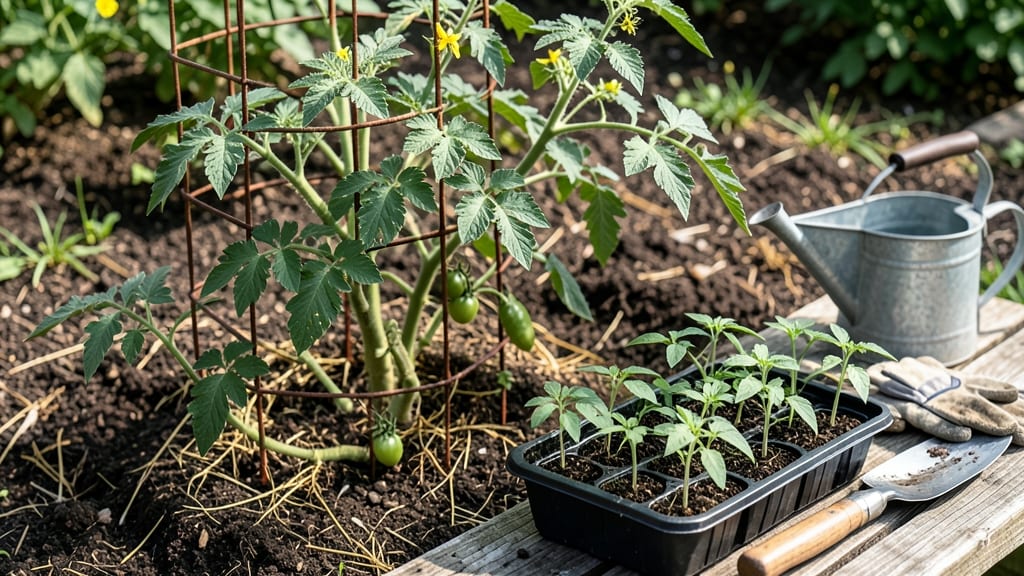
Here are some essential tips for planting tomato plants right—it’s the difference between a handful of fruits and a garden bursting with sun-ripened tomatoes. 🌱 I’ve learned that spacing, support, and soil prep aren’t just details—they’re the foundation for a harvest that makes your neighbors jealous. The right technique turns a $3 plant into a $50 harvest, and it all starts with how you set them in the ground.
Most gardeners mess up spacing or depth, thinking it doesn’t matter. But too close, and your plants compete for sunlight and nutrients; too far, and you waste space. The secret is 18-24 inches apart for indeterminate varieties (the vining types) and 12-18 inches for bush tomatoes.
Dig holes just deep enough so the first set of leaves sits above soil level—buried stems rot, while exposed ones dry out.
Support comes next, and skipping it is a rookie mistake. Stakes or cages keep plants upright, prevent disease from wet foliage touching the ground, and make harvesting easier. By midseason, your tomatoes will be heavy enough to snap stems without support.
And here’s the bonus: proper spacing and staking cut back on pests and diseases by improving airflow around the plants.
Now, let’s talk early care—watering deeply once a week (not daily), mulching to keep roots cool, and watching for early signs of blight or aphids. These small steps turn a $3 plant into a $50 harvest by summer’s end.
Ready to plant like a pro? Let’s get those tomatoes growing strong.
📚 In This Guide
- What you need
- Instructions
- Tips and common mistakes
- Wrapping up and next steps
What you need
- ● Tomato seedlings or seeds: Choose disease-resistant varieties (e.g., Celebrity, Roma, or Cherry) based on your climate. Start with 4–6 plants for a small garden or 10+ for larger harvests.
- ● Well-draining potting mix or garden soil: 50 lbs of high-quality compost or organic matter (aim for 10% compost mixed with native soil).
- ○ Fertilizer: Balanced 10-10-10 or tomato-specific fertilizer (e.g., 5 lbs for a small garden). Optional: Slow-release granules or liquid feed like fish emulsion.
- ● Support structures: Cages: 3–5 ft tall (1–2 per plant, depending on variety).
- ● Trellis or stakes: 6–8 ft bamboo stakes or T-posts (1–2 per plant).
- ● Twine: 100 ft of 3/16-inch twine for tying.
- ● Watering tools: Drip irrigation kit or soaker hoses (recommended for consistency).
- ● Watering can (5-gallon capacity) or hose with adjustable nozzle.
- ● Mulch: 2–3 inches of straw, grass clippings, or shredded leaves to retain moisture.
- ● Companion plants: Basil, marigolds, or onions (plant 1–2 per tomato to deter pests).
- ● Pruning shears: Bypass pruners for trimming suckers and dead leaves.
- ● Epsom salt: 1 tbsp per plant (mixed into soil) for magnesium boost.
- ● Row covers: Lightweight fabric to protect seedlings from pests or frost.
- ● pH test kit: Ensure soil pH is 6.0–6.8 (tomatoes love slightly acidic soil!).
Step-by-step guide to planting tomato plants for maximum yield
Here’s how I ensure every plant gets the space and support it needs to thrive—no more crowded, flopping vines.
🌱 Step 1: Choose the Perfect Planting Spot
Tomatoes crave full sun—at least 6-8 hours daily—so scout your yard for the sunniest, most sheltered location. I avoid low spots where cold air pools in spring, and I steer clear of windy areas that stress young plants. A south-facing wall or fence works great if your yard lacks open space.
Check the soil drainage by digging a 6-inch hole and filling it with water. If it doesn’t drain within 2 hours, amend the soil with 2-3 inches of compost or plant in raised beds. Well-draining soil prevents root rot, which can kill plants in just 48 hours if left unchecked.
☀️ Step 2: Space Plants for Airflow and Sunlight
Proper spacing prevents disease and ensures strong, productive vines. For determinate varieties (bush types), space plants 24-36 inches apart in rows 3 feet apart. Indeterminate varieties (vining types) need 18-24 inches between plants and 3-4 feet between rows—they’ll sprawl if crowded.
Dig holes just deep enough to bury the root ball without burying the stem. I use a trowel to loosen the roots slightly before placing the plant in the hole, which encourages them to spread outward. Pat the soil gently around the roots to remove air pockets, then water deeply to settle everything.
🪴 Step 3: Install Support Structures Immediately
Tomatoes grow fast, and weak stems can’t handle the weight of fruit. I install 5-6 foot tall cages or sturdy stakes (at least 2 inches thick) the same day I plant. For cages, press them 6 inches into the ground so they don’t topple when vines fill them. For stakes, drive them 12-18 inches deep and tie the main stem to the stake with soft plant ties (never wire—it cuts into stems).
If using trellises, angle them slightly toward the sun to prevent shading. I prune suckers (the shoots that grow between the main stem and branches) weekly to direct energy into fruit production. This keeps plants manageable and prevents disease from overcrowded foliage.
💧 Step 4: Water Deeply and Mulch to Retain Moisture
Water deeply 1-2 times per week (more in extreme heat) to encourage strong root growth. I water at the base of the plant in the morning to reduce evaporation and fungal risks. Avoid wetting leaves, which spreads disease. You’ll know moisture is right when the top 2 inches of soil feel dry to the touch.
Spread 2-3 inches of mulch (straw or shredded leaves work best) around the base, keeping it 2 inches away from the stem to prevent rot. Mulch locks in moisture, regulates soil temperature, and suppresses weeds. Replenish as it breaks down—this is the secret to consistent harvests all season.
✂️ Step 5: Prune and Train for Maximum Fruit Production
Pinch off the first flowers that appear on indeterminate varieties—they’ll produce small, weak fruit while the plant establishes. Once the plant reaches 3-4 feet tall, prune suckers (those little shoots in the leaf axils) to focus energy on fruit-bearing branches. I leave 2-3 main stems for heavy producers like beefsteak tomatoes.
Tie new growth to the support structure every 1-2 weeks as vines lengthen. This prevents stems from snapping under fruit weight. When fruit sets, I remove any leaves below the lowest cluster to improve airflow and reduce disease. This might seem harsh, but it keeps your harvest coming strong until frost.
Tips & tricks for perfect tomato plant growth
These game-changing insights will help you avoid common pitfalls and maximize your tomato harvest all season long.
Sunlight Strategy: I've learned the hard way that those 6-8 hours of daily sun aren't just about location—they're about timing too. If your plants start looking stressed by mid-afternoon, consider adding temporary shade cloth during peak summer heat (100°F+ days). The goal is consistent energy production, not just sunlight exposure. This prevents sunburn on leaves and keeps fruit from developing scald marks.
Root Ball Technique: When planting, I make sure to loosen the roots of container-grown plants before placing them in the hole—this encourages them to spread outward rather than circling. After planting, I press the soil firmly around the roots with my hands (not a shovel!) to eliminate air pockets. This small step makes a huge difference in how quickly your plants establish themselves in the garden.
Support System: For those 5-6 foot tall cages, I always press them 6 inches into the ground—this prevents them from toppling when vines get heavy. Pro tip: If using stakes, drive them 12-18 inches deep—this gives you a sturdy anchor that won't wobble when you tie the main stem. I've seen too many plants snap because the support wasn't deep enough!
Watering Wisdom: The 1-2 times per week watering schedule works best when you water deeply—meaning until water runs out the bottom of the hole. I check moisture by feeling the top 2 inches of soil—if it's dry, it's time to water. Morning watering is key because it gives leaves time to dry before evening, which prevents fungal diseases from taking hold.
Pro Tips for Tips For Planting Tomato Plants
- These game-changing insights will help you avoid common pitfalls and maximize your tomato harvest all season long.
- Sunlight Strategy: I've learned the hard way that those 6-8 hours of daily sun aren't just about location—they're about timing too.
- Root Ball Technique: When planting, I make sure to loosen the roots of container-grown plants before placing them in the hole—this encourages them to spread outward rather than circling.
Frequently asked questions
Got questions about growing your tomato plants? You’re not alone! Here are answers to the most common queries to help you grow like a pro.
When is the best time to plant tomato seedlings?
The ideal time to plant tomato seedlings depends on your climate. In warmer regions, plant after the last frost when soil temperatures reach at least 60°F (15°C). For cooler areas, start indoors 6-8 weeks before the last frost and transplant outdoors after the danger of frost has passed. Use row covers if nighttime temps dip below 50°F (10°C).
How long does it take for tomato plants to produce fruit?
Most tomato varieties take 60-85 days from transplanting to harvest, depending on the type (determinate vs. indeterminate). Early varieties like ‘Early Girl’ may fruit in as little as 50 days, while heirlooms like ‘Brandywine’ can take 90+ days. Patience pays off—consistent care (water, sunlight, and nutrients) speeds up the process!
Can I plant tomato plants too close together?
Yes! Overcrowding leads to poor air circulation, increasing disease risk (like blight) and stunted growth. Follow spacing guidelines: 18-24 inches apart for determinate varieties and 24-36 inches for indeterminate types. Use cages, stakes, or trellises to maximize space and support vertical growth.
What should I do if my tomato plants get pests or diseases?
Act fast! For pests like aphids or hornworms, handpick or spray with neem oil or insecticidal soap. Fungal diseases (e.g., early blight) thrive in wet conditions—prune lower leaves for airflow and avoid overhead watering. For bacterial spots, remove infected leaves and rotate crops next season. Prevention is key!
Can I grow tomatoes in containers if I don’t have a garden?
Choose 5-gallon containers or larger for indeterminate varieties (like ‘Sungold’) and 3-5 gallons for determinate types. Use well-draining potting mix, place in full sun (6+ hours), and fertilize regularly. Dwarf or bush varieties (e.g., ‘Tiny Tim’) thrive in containers—just ensure they have support stakes and consistent watering.
Still stumped? Drop your question in the comments—we’re happy to help!
Wrapping up and next steps
Planting tomato plants is a rewarding journey that combines a little patience, the right techniques, and a dash of love for nature. By following these spacing and support secrets, you’ll set the stage for a thriving garden and a harvest that’ll make your taste buds dance! 🌱✨
Now that you’re armed with knowledge, it’s time to roll up your sleeves and get growing. Start by marking your garden beds, gather your supplies, and watch your tomato plants flourish—one step at a time. Happy planting!