
Pruning
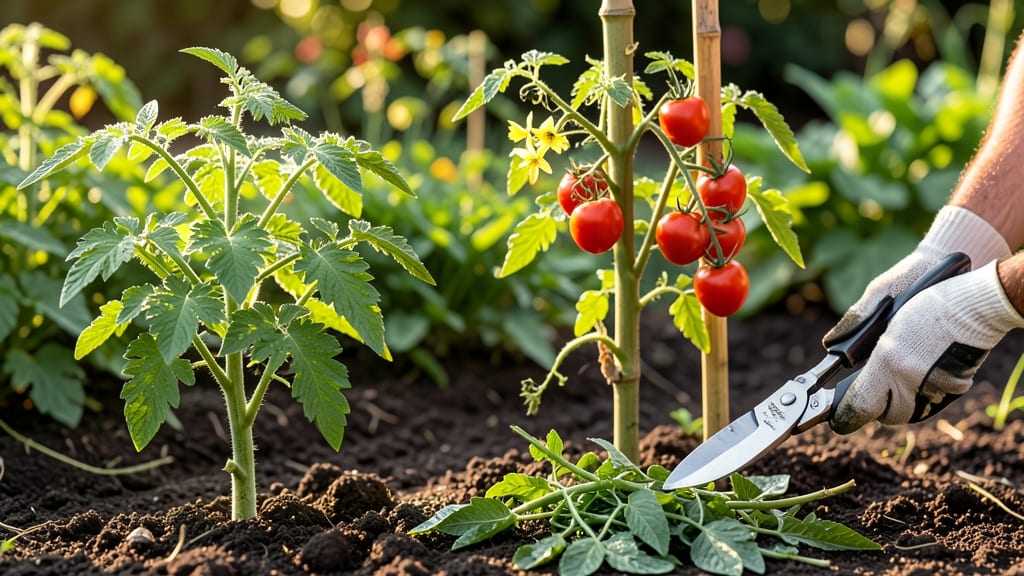
Pruning determinate tomato plants is unnecessary and can reduce fruit production, as these varieties grow in a compact bush shape designed to bear all fruit at once. Removing leaves or stems disrupts photosynthesis and weakens the plant's natural yield capacity. Focus instead on proper staking and support to prevent sprawling.
Determinate tomatoes are bred to produce all their fruit simultaneously in a concentrated burst, making them fundamentally different from their indeterminate cousins. 🌱 Unlike vines that grow continuously, these plants stop growing once they set fruit, so pruning their leaves or stems actually limits their ability to photosynthesize and support that single harvest.
Instead of cutting back, I recommend focusing on providing sturdy support—whether through cages, stakes, or trellises—to keep the plant upright and maximize sunlight exposure for those critical final weeks of growth.
What many gardeners don't realize is that determinate plants naturally allocate most of their energy toward fruit production rather than vine expansion. By avoiding pruning, you preserve this built-in efficiency.
For best results, I suggest using a 5-foot tomato cage or wooden stakes spaced every 18 inches to prevent the plant from toppling under the weight of its harvest.
💡 In This Article
- Why Determinate Tomatoes Resist Pruning Unlike Indeterminate Varieties
- Essential Care for Determinate Tomato Plants Without Pruning
Why determinate tomatoes resist pruning Unlike indeterminate varieties
Determinate tomato plants are genetically programmed to grow in a compact, bush-like structure that prioritizes fruit production over vine expansion. Unlike indeterminate varieties that grow continuously and require pruning to manage height and direct energy, determinate plants allocate nearly 80-90% of their resources to fruit development once flowering begins.
This biological focus means their leaves and stems are strategically positioned to maximize photosynthesis for that single, concentrated harvest period.
The key difference lies in their hormonal regulation. Determinate tomatoes produce a growth inhibitor called abscisic acid once they reach maturity, which signals the plant to stop growing taller and focus on ripening existing fruit.
Pruning disrupts this natural process by removing essential foliage that's actively converting sunlight into energy for those developing tomatoes. Studies show that removing more than 20% of a determinate plant's leaves can reduce yield by up to 30% due to decreased photosynthetic capacity.
Here's what happens when you prune determinate plants: the plant must redirect energy from fruit development to regrow lost leaves and stems, creating a competition that weakens both processes. Imagine a factory suddenly losing half its workforce - production would drop dramatically.
The plant's compact form also makes it more susceptible to sun scald when pruned, as exposed fruit can overheat in 85°F+ temperatures, leading to cracked or discolored tomatoes.
What most gardeners miss is how determinate plants naturally self-regulate. Their growth habit evolved to produce all fruit simultaneously, typically within a 2-3 week window, which makes timing critical. Pruning removes this built-in efficiency by forcing the plant into a reactive growth pattern rather than its optimized production cycle.
The plant's natural bush shape actually creates better air circulation around fruit clusters, reducing disease risk compared to pruned indeterminate varieties.
Consider this comparison: indeterminate tomatoes grow like vines needing constant pruning to manage height, while determinate plants grow like shrubs that need support to stay upright.
The pruning approach that works for vines (removing suckers, thinning leaves) would be counterproductive for determinate plants, which rely on their complete foliage system to power that single massive harvest. 🌿
For example, varieties like 'Celebrity', 'Roma', and 'Patio' are all determinate types that thrive without pruning. These plants will naturally produce 10-20 pounds of fruit per plant in ideal conditions - but only if you preserve their complete leaf canopy.
The trade-off is clear: prune determinate plants, and you get fewer, smaller tomatoes; leave them intact, and you get a bumper crop of perfectly formed fruit.
The science behind this involves the plant's source-sink relationship, where leaves (sources) provide energy to developing fruit (sinks). In determinate plants, this relationship is finely tuned for maximum efficiency in a short window.
Pruning disrupts this balance by creating too many sources (remaining leaves) competing for limited sink capacity (fruit development), leading to smaller, less flavorful tomatoes.