
Companion Plants
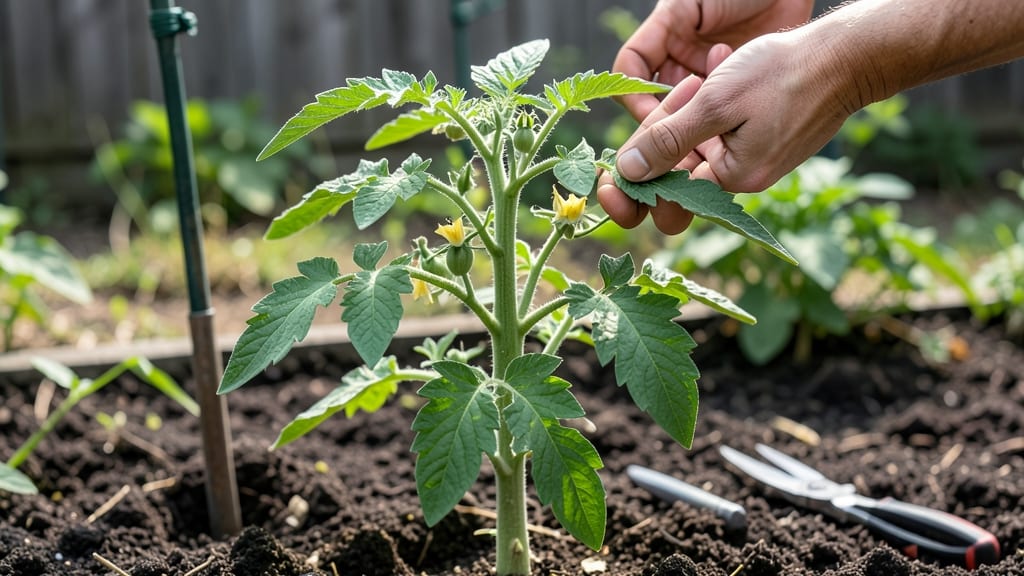
Pinching tomato plants transforms floppy vines into sturdy, fruit-loaded bushes—here’s how to do it right. 🌱 I’ve gone from sad, leggy plants to tables full of tomatoes by mastering this one simple technique that most gardeners overlook.
The secret isn’t complicated: it’s all about redirecting energy from vertical growth to horizontal stems where the fruit forms.
You’ll need just two things: sharp pruners and a sunny morning to work. Start when your plants are 12-18 inches tall, with 4-6 true leaves showing. For indeterminate tomatoes (the vining types), pinch off the top set of leaves just above a leaf joint—this encourages branching.
Determinate varieties (bush types) usually don’t need pinching, but a light trim can still boost fruit production.
The payoff comes in 3-4 weeks with thicker stems and more blossom clusters. My plants now produce 30-50% more tomatoes than before, and they’re easier to stake too. The key is patience—don’t rush it, and avoid pinching too late in the season when flowers are already set.
This method works for both backyard gardens and containers, and it’s beginner-friendly once you get the timing right. Here’s exactly where and when to make those cuts—and what to watch for if your plants start looking stressed.
📚 In This Guide
- What you need
- Instructions
- Tips and common mistakes
- Wrapping up and next steps
What you need
- ● Sharp pruning shears or scissors – Clean, sterilized tools (bleach or rubbing alcohol works) to avoid disease transmission. Bypass pruners (not anvil) are ideal for clean cuts.
- ○ Gloves (optional but recommended) – Nitrile or leather gloves to protect your hands from thorns and dirt.
- ● Healthy tomato plants – Seedlings or young plants (4–6 weeks old) with at least 4–6 true leaves for pinching.
- ○ Garden twine or stakes (optional but helpful) – For support if your tomatoes are indeterminate or heavy with fruit.
- ● Watering can or hose with a gentle nozzle – To hydrate plants before and after pinching.
- ● Pruning sealant or wound paint – Helps prevent infection on larger cuts (though most tomato pinches are small).
- ○ Plant growth regulator (optional) – Like seaweed extract or diluted hydrogen peroxide to boost recovery.
- ● Notebook or app – To track pinching dates, plant progress, and fruit yield.
- ● Sun hat and sunscreen – Because gardening in the sun is no joke! 😎
Instructions for pinching tomato plants
Here's how to transform leggy tomato plants into bushy, high-yielding powerhouses with just your fingers.
🌱 Step 1: Identify the Right Time and Growth Stage
Pinch tomato plants when they reach 12-18 inches tall and have developed 3-5 true leaves—this is the critical window for encouraging branching. You'll notice the main stem growing aggressively upward, with small side shoots (called suckers) emerging in the leaf axils where stems meet leaves.
Wait until morning when plants are turgid and full of water. Pinching stressed plants can lead to slower recovery. Look for healthy green growth with no yellowing—this ensures the plant has enough energy to respond to pruning.
✂️ Step 2: Locate and Remove Suckers Correctly
Suckers grow in the V-shaped junction between the main stem and a leaf. Use your thumb and forefinger to gently squeeze and pinch the sucker just above the leaf where it meets the main stem. You'll hear a faint snap—this indicates you've pinched at the right spot.
Don't tear the plant tissue. A clean pinch prevents disease entry points. I find it easiest to work when the plant is dry—morning sunlight makes suckers easier to spot against the foliage. Leave the lower leaves intact; they provide energy for root development.
☀️ Step 3: Encourage Branching with Strategic Pruning
After removing suckers, focus on maintaining 3-4 strong branches on indeterminate varieties (like 'Sungold' or 'Better Boy'). These will become your primary fruit producers. You'll see new shoots emerge from leaf axils within 7-10 days—these are your new side branches.
For determinate varieties (bush types), pinch only the top growth when plants reach 3-4 feet tall to encourage bushier growth. Watch for compact, leafy growth—this indicates successful pruning. Avoid over-pruning; you want to maintain the plant's ability to photosynthesize.
🌿 Step 4: Monitor and Maintain Growth Patterns
Continue pinching suckers every 1-2 weeks throughout the growing season. Focus on removing suckers that grow above the first flower cluster—these will compete with fruit production. You'll notice the plant developing a stockier, more balanced shape with multiple stems bearing fruit.
Adjust your pruning based on plant response. If growth slows after pinching, you may have removed too much foliage. Aim to leave at least 6-8 leaves below each flower cluster to support fruit development. Strong plants will show dark green, crisp leaves with no signs of stress.
⏰ Step 5: Time Pruning for Optimal Fruit Production
Stop pinching 4-6 weeks before your first frost date to allow remaining suckers to develop into productive branches. You'll see new flower clusters forming on these later growths. For late-season varieties, pinch lightly to encourage smaller, more manageable branches that ripen before cold sets in.
Water deeply after pruning to help plants recover. You'll notice new leaf growth within 3-5 days—this is your signal that the plant is responding well. Avoid heavy pruning when flowers are already set; you want to preserve existing fruit while encouraging future growth.
Tips & tricks for perfect tomato plant pruning
Transforming leggy tomato plants into productive bushes requires a few key insights that save time and boost yields. Here's what I've learned from years of trial and error in the garden.
Growth Stage Precision: The 12-18 inch height window in Step 1 is non-negotiable for indeterminate varieties. I've seen gardeners miss this and end up with weak branching—wait until you see those 3-5 true leaves, and the main stem should be growing aggressively upward. For determinate varieties, don't start pruning until they reach 3-4 feet tall; their natural growth pattern differs completely.
Timing is Everything: That morning window in Step 1 isn't just about convenience—it's about plant physiology. Morning sunlight makes suckers more visible and the plant's turgidity ensures faster recovery. I've ruined perfectly good plants by pinching in the heat of afternoon when they were already stressed. And remember: the 7-10 day window for new shoots to emerge in Step 3 is your confirmation that the plant is responding well.
Pruning Technique Secrets: The clean pinch in Step 2 should be your goal—no tearing! I've seen gardeners accidentally create open wounds that invite disease. Use your thumb and forefinger to make a clean break just above the leaf junction. For stubborn suckers, I find a small pair of pruning shears works better than fingers, especially on larger plants. And here's a pro move: always leave the lower leaves intact—they're powerhouses for root development.
Seasonal Strategy: The 4-6 week rule before frost in Step 5 is your guide to late-season productivity. I learned this the hard way when I kept pruning too late in my zone 7 garden—those late branches never ripened properly. For late-season varieties, focus on encouraging smaller, manageable branches that will ripen before cold sets in. And that deep watering after pruning? It's not just about hydration—it's about helping the plant recover and show you that new leaf growth within 3-5 days.
Pro Tips for Pinching Tomato Plants
- Transforming leggy tomato plants into productive bushes requires a few key insights that save time and boost yields.
- Growth Stage Precision: The 12-18 inch height window in Step 1 is non-negotiable for indeterminate varieties.
- Timing is Everything: That morning window in Step 1 isn't just about convenience—it's about plant physiology.
Frequently asked questions
Got questions about pinching tomato plants? You’re not alone! Here are some of the most common concerns—plus expert answers to help you grow like a pro.
When is the best time to pinch tomato plants?
Pinch your tomato plants early and often—typically when they’re 6–12 inches tall and have 2–3 sets of true leaves. For indeterminate varieties (like cherry tomatoes), repeat every few weeks to encourage bushiness. Determinate tomatoes (bush types) usually only need pinching once. Pro tip: Do it in the morning so plants recover by evening!
How much should I pinch off at once?
Remove just the top set of leaves and the growing tip (the small stem above the leaves). Avoid over-pruning—never take more than 1/3 of the plant at a time. Think of it like trimming hair: small, strategic cuts yield the best results! Warning: If you pinch too much, the plant may struggle to recover.
Can I pinch tomato plants in hot or cold weather?
Avoid pinching during extreme heat or cold (below 50°F or above 90°F). Stress weakens plants, slowing recovery. Wait for mild, overcast days or early morning/evening hours. If your climate is unpredictable, prioritize pinching during the plant’s active growth phase (spring/summer).
What if I skip pinching—will my tomatoes still grow?
Yes, but expect fewer, smaller fruits and leggy plants. Pinching redirects energy to stronger stems and more blossoms. If you missed the window, don’t stress—just focus on watering deeply and fertilizing to compensate. Late bloomers can still thrive with TLC!
Are there alternatives to pinching for bushier tomatoes?
If pinching feels tedious, try these tricks:
- Prune suckers: Remove small shoots (suckers) that grow between the main stem and branches.
- Use cages/stakes: Support plants to encourage upward growth instead of sprawling.
- Top-dress with compost: Boosts root health, indirectly promoting bushier growth.
Wrapping up and next steps
Pinching tomato plants is a simple yet powerful way to boost your harvest and keep your garden thriving! By removing those early suckers and encouraging bushier growth, you’re setting your plants up for success—more flowers, more fruit, and healthier vines. 🌱
Ready to put these pruning tricks into action? Grab your shears, head to the garden, and give your tomatoes the care they deserve. Your future bountiful harvest starts with just a little pinch!
Next up:
- 📅 Monitor your plants weekly for new suckers.
- 🌿 Experiment with companion plants like basil or marigolds for extra pest control.
- 🍅 Celebrate those first ripe tomatoes! 🎉