
How To
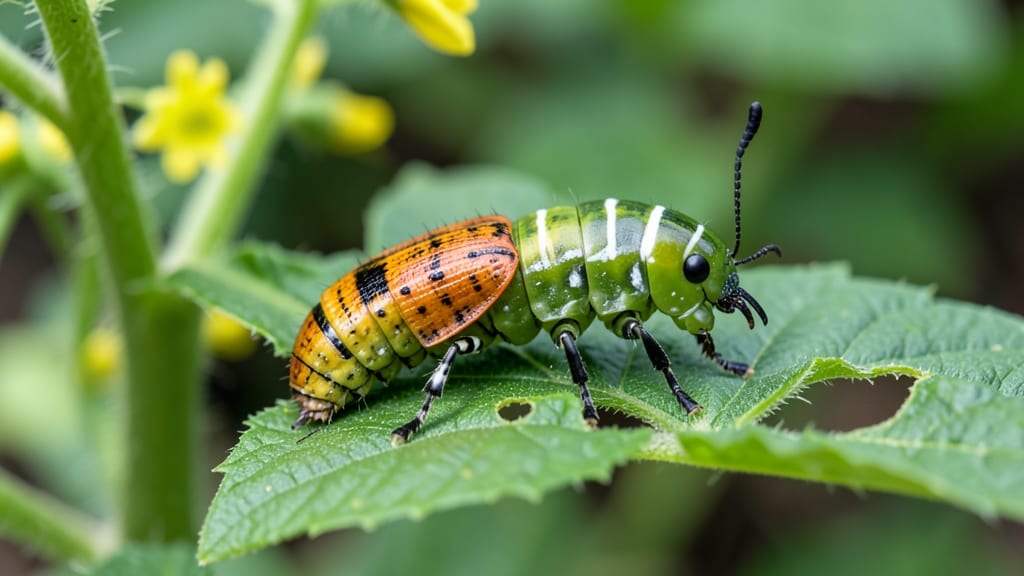
Insects that eat tomato leaves include hornworms, aphids, and spider mites, which can devastate plants by chewing foliage or sucking sap. Identify them early to use organic sprays like neem oil or introduce natural predators like ladybugs for control.
When these pests invade your tomato plants, they don't just nibble—they can strip leaves overnight. Hornworms leave jagged holes and skeletonized foliage, while aphids cluster on undersides, excreting sticky honeydew that attracts mold. Spider mites spin fine webs and cause stippling that weakens the plant's ability to photosynthesize.
The damage compounds quickly because many of these pests reproduce exponentially during warm weather, turning a few stragglers into a full-blown infestation within weeks. 🌿
Catching them early is your best defense, but even then, you'll need a multi-pronged approach. For instance, I've found that a soapy water spray works well for aphids in the morning when they're most active, while neem oil disrupts the life cycle of spider mites.
Introducing beneficial insects like ladybugs or lacewings creates a natural balance, but you'll need to monitor their populations closely to ensure they stick around. The key is consistency—pests rarely surrender after a single treatment.
💡 In This Article
- How Tomato Leaf-Eating Insects Damage Plants
- Natural Solutions for Tomato Leaf Pest Control
How tomato leaf-eating insects damage plants
Hornworms are the heavy artillery of tomato leaf destruction. These green caterpillars can grow up to 4 inches long and devour entire leaves overnight, leaving behind jagged edges and skeletonized foliage. Their feeding mechanism involves chewing through leaf tissue, which disrupts the plant's ability to photosynthesize.
A single hornworm can consume 20 leaves in just one night, and their rapid growth cycle—from egg to adult in about 30-45 days—means infestations explode during warm seasons. 🌱
Aphids take a different approach by inserting their needle-like mouthparts into plant cells to suck out sap. This feeding creates tiny yellow spots on leaves and leaves behind a sticky residue called honeydew, which attracts mold and sooty mold fungi.
What's particularly damaging is how aphids weaken the plant's vascular system, reducing nutrient transport. A colony of 50-100 aphids can completely stifle a young tomato plant's growth within 2-3 weeks, making them one of the most insidious pests.
Spider mites operate at a microscopic level, spinning fine webs between leaves while using their piercing mouthparts to extract chlorophyll-rich cell contents. The result is a stippled, bronze-colored appearance on leaves that eventually turn yellow and crisp.
These pests thrive in dry conditions and can multiply 50-fold in just 3 weeks, creating a feedback loop where weakened plants attract even more mites. The webbing they produce also blocks sunlight, further stressing the plant.
Each pest's damage mechanism creates distinct symptoms that help with identification. Hornworms leave obvious holes and frass (droppings), while aphids create curled leaves and honeydew trails. Spider mites reveal themselves through fine webbing and stippling patterns that become more pronounced as the infestation grows.
The key difference lies in their feeding habits: chewers (hornworms) cause immediate structural damage, while sap-suckers (aphids, mites) weaken plants gradually through systemic stress.
What most gardeners don't realize is how these pests work together. For example, aphids' honeydew creates a perfect breeding ground for sooty mold, which further reduces photosynthesis by 30-50%. Meanwhile, hornworms' defoliation removes the plant's protective barrier, making it more vulnerable to spider mites.
This synergistic damage explains why tomato plants can go from healthy to struggling within just 10-14 days when multiple pests are present. The rapid reproduction rates of these insects mean that by the time you notice visible damage, the population has likely already reached critical mass.
Understanding these mechanisms helps explain why early intervention is crucial. A single hornworm egg can hatch into a caterpillar that will consume 80 square inches of leaf area in its lifetime, while a single female spider mite can produce 200-300 eggs during her lifespan.
The exponential growth patterns mean that what starts as a few isolated pests can become an uncontrollable outbreak within 3-4 weeks under ideal conditions. 🌿