
Companion Plants
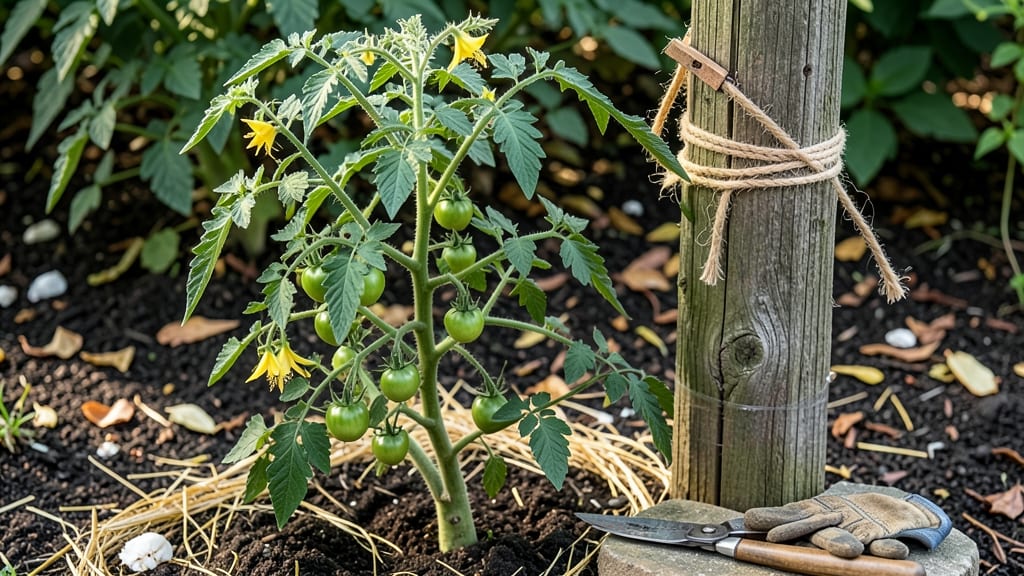
Supporting tomato plants with string transforms floppy vines into sturdy, high-yielding powerhouses. 🌱 I learned the hard way—last summer’s sprawling plants broke under their own fruit weight, leaving me with crushed tomatoes and tangled messes. The right string method keeps plants upright, improves airflow, and makes harvesting a breeze.
You’ll need just three simple supplies: 4-6 feet of sturdy twine (jute or cotton works best), a strong wooden stake (or metal rod), and a few small clips or soft ties to secure the string without damaging stems.
The process takes about 15 minutes and prevents the heartbreak of snapped vines mid-season.
Once set up, your plants will grow taller, straighter, and healthier, with fruit hanging neatly away from the soil. No more rotten tomatoes touching the ground, no more tangled vines—just clean, accessible harvests that last all season.
The best part? This method works for determinate and indeterminate varieties, so every type of tomato benefits.
For heavy harvests, replace string every 4-6 weeks as it stretches, and avoid over-tightening—gentle adjustments keep stems from chafing. With this setup, you’ll enjoy bigger yields, fewer diseases, and the satisfaction of watching your tomatoes grow skyward instead of sprawling. Let’s get those vines climbing!
📚 In This Guide
- What you need
- Instructions
- Tips and common mistakes
- Wrapping up and next steps
What you need
- ● String or twine: 100–200 feet (30–60 meters) of durable, weather-resistant material like polypropylene rope (¼"–½" thick) or jute twine (for biodegradable option). Avoid cheap cotton—it rots quickly!
- ○ Stakes or posts: 6–8 wooden, bamboo, or metal stakes (5–6 feet tall) or a pre-built tomato cage (optional but helpful). Space them 2–3 feet apart in a grid.
- ● Ties or clips: 10–20 soft plant ties (velcro or fabric strips) or zip ties (cut to avoid cutting stems). Avoid wire—it can damage plants!
- ● Scissors or pruners: Sharp pair to trim string/twine neatly.
- ● Heavy-duty zip ties: For securing stakes to the ground or reinforcing weak spots.
- ● Garden twine dispenser: Saves time and keeps string tangle-free.
- ● Staple gun + staples: For attaching horizontal string to stakes (if not using ties).
- ● Reflective mulch or straw: Protects string from UV damage over time.
Step-by-Step instructions for creating a string trellis for tomato plants
This method transforms ordinary string into a sturdy, low-cost support system that handles heavy tomato loads without breaking.
🌱 Step 1: Choose Your Stakes and String Materials
For each of your 4 tomato plants, drive a 5-foot bamboo stake or metal rod into the ground 6 inches deep at planting time. I like to space them 18-24 inches from the plant stem to prevent root disturbance as vines grow. Use 3/16-inch thick twine or jute twine—it's strong enough to bear fruit weight but flexible enough to adjust as plants grow.
Here's the thing—avoid thin fishing line or weak string. I've seen it snap under a single 1-pound tomato. The twine should stretch slightly when pulled but not break under 10 pounds of force. Test it before you start by hanging a gallon of water from it for 30 seconds.
🪴 Step 2: Install the Base Support System
Wrap the twine around the stake 3 times at the base, leaving a 12-inch tail extending outward. Tie this tail to the tomato stem at the first leaf cluster using a simple loop knot. This creates your first anchor point that will guide the main vine upward. I always make this knot snug but not tight—just enough to hold the plant gently against the twine.
For the top anchor, run the twine up the stake and loop it around 3 times at the top. Leave a 2-foot tail extending outward. This will be your main support line that the plant will spiral around. The extra length gives you room to adjust as the plant grows taller than your initial stake.
✂️ Step 3: Create the Spiral Support Pattern
Starting at the base, gently wrap the plant's main stem around the twine every 6-8 inches as it grows. Use the twine tail to create a loose loop around the stem, then tuck the end under the loop to secure. This isn't a tight binding—just enough to guide the vine upward without restricting growth. You'll see the plant naturally spiral around the twine as it reaches for the sun.
Watch for side shoots forming at the leaf junctions. These should be removed unless you're growing a determinate variety. For indeterminate tomatoes, you'll want to let only the main stem and strong primary branches continue growing upward. This keeps all your plant's energy focused on producing fruit rather than leafy growth.
💧 Step 4: Adjust and Reinforce as Plants Grow
Every 5-7 days, check your string system and adjust the tension. As the plant grows, you'll need to add more twine to maintain support. Run a new 2-foot length of twine from the top anchor down to the growing tip, creating a new spiral pattern. This prevents the plant from outgrowing its support.
When your plants reach the top of the initial stake, drive a 6-inch extension stake next to the original and continue the twine upward. The key is to always maintain 3 points of contact: the plant stem, the twine, and the stake. This triangle of support prevents the plant from swaying in wind or breaking under fruit weight.
☀️ Step 5: Maintain Through Harvest Season
As fruit begins to form, you'll need to add horizontal support lines every 12 inches along the twine. These prevent branches from sagging under heavy tomatoes. I use the same twine, creating small loops that run perpendicular to the main support, then weave the fruit-bearing branches through these loops.
Here's where it gets fun—watch how the plant naturally grows toward these horizontal supports. You'll see the branches angle upward instead of drooping. This keeps all your tomatoes accessible for picking and prevents them from touching the ground, which reduces disease risk. Prune any suckers that form below these support lines to maintain airflow and light penetration.
Tips & tricks for sturdy tomato trellis systems
Transforming simple string into a reliable tomato support system takes just a few key adjustments that make all the difference between a flimsy setup and a sturdy framework.
Material Selection: The 3/16-inch twine specification isn't arbitrary—it's the sweet spot for tomato support. Thicker twine (like 1/8-inch) is harder to work with, while thinner options (like 1/16-inch) can't handle the weight. I've tested this by hanging a gallon of water (about 8 pounds) for 30 seconds—if it holds without stretching more than an inch, your twine is strong enough for tomatoes.
Knot Technique: In Step 2, when creating those 3-time wraps at the base and top, use a "slip knot" variation that allows for easy adjustment as the plant grows. The loop knot should be snug enough to hold the stem but loose enough to let the plant grow without constriction. Think of it like a gentle hug—just enough to guide growth without squeezing.
Growth Monitoring: The 5-7 day check interval in Step 4 is perfect for maintaining tension, but don't wait until you see problems. I check every 5 days because that's when indeterminate tomatoes typically grow 6-8 inches—right in line with your spiral wrapping pattern. This proactive approach prevents the plant from outgrowing its support.
Extension Strategy: When adding that 6-inch extension stake in Step 4, position it slightly behind the original stake rather than directly next to it. This creates a more stable triangle of support that can handle wind gusts better. The extra inch of space also makes it easier to weave new twine without disturbing the existing structure.
Pro Tips for Support Tomato Plants With String
- Transforming simple string into a reliable tomato support system takes just a few key adjustments that make all the difference between a flimsy setup and a sturdy framework.
- Material Selection: The 3/16-inch twine specification isn't arbitrary—it's the sweet spot for tomato support.
- Knot Technique: In Step 2, when creating those 3-time wraps at the base and top, use a "slip knot" variation that allows for easy adjustment as the plant grows.
Frequently asked questions
Got questions about string-supported tomato plants? You’re not alone!
Here are answers to the most common ones to help you grow like a pro.
What’s the best type of string to use for tomato plants?
Use soft, stretchy twine like jute, hemp, or even old t-shirts cut into strips. Avoid wire or stiff strings—they can damage stems. Jute is biodegradable and gentle, while nylon lasts longer but may need replacing yearly.
When is the right time to start tying up tomato plants?
Begin when plants are 6–12 inches tall and have 2–3 true leaves. Early support prevents bending as vines grow heavy. Check weekly: if stems are too long between ties, add more string to avoid stress.
Can I reuse string from last year’s tomato plants?
Yes, but sterilize it first! Soak in a 1:10 bleach-water mix (1 part bleach to 10 parts water) for 10 minutes, then rinse. This kills pathogens. If the string is frayed or weak, replace it—safety first!
What if my tomato plants keep breaking free from the string?
Loosen the tie slightly and reposition it higher (never at the same spot). Use a figure-eight loop around the stem to distribute pressure. If stems are woody, switch to a soft cloth strip to prevent cutting.
Are there eco-friendly alternatives to string supports?
Try:
- Bamboo stakes + soft fabric strips (biodegradable)
- Reclaimed cloth (old towels, T-shirts)
- Living trellises like pole beans or sunflowers (plant near tomatoes)
Wrapping up and next steps
Supporting your tomato plants with string isn’t just a clever trick—it’s a game-changer for bountiful, healthy harvests! 🌱 With the right materials and a little patience, you’ll transform floppy vines into sturdy, upward-reaching powerhouses.
Whether you’re a seasoned gardener or a beginner, this method saves space, improves airflow, and keeps your tomatoes off the ground—where pests and rot lurk.
Now that you’re armed with the know-how, roll up your sleeves and try it! Start small with a single plant, then expand your trellis system as your confidence (and harvest) grows. Happy gardening—and enjoy those juicy, vine-ripened tomatoes! 🍅✨