
Size
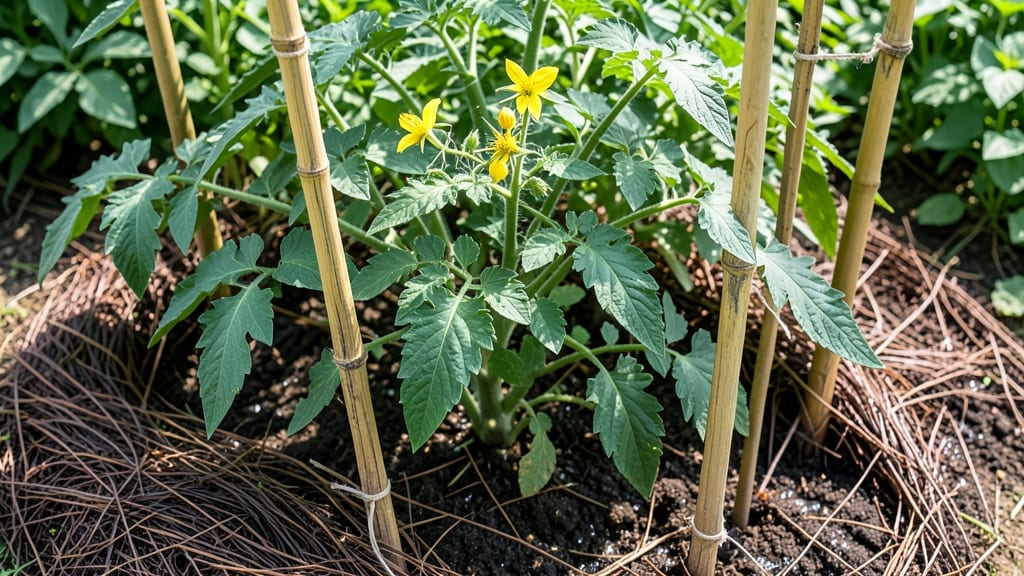
To make tomato plants grow tall and productive, sunlight is your secret weapon—6+ hours of direct light daily transforms leggy seedlings into sturdy, fruit-laden giants. 🌞 I’ve watched my own plants double in height just by adjusting their position midday, and the difference in fruit size is shocking.
Most gardeners overlook how much light matters, but it’s the single biggest factor in strong stems and heavy yields.
Start with well-draining soil mixed with compost (a 50/50 blend works best) and plant deep—bury stems up to the first leaves so roots establish faster. Water consistently at the base (never overhead) to prevent disease, and use cage supports early to guide growth upward.
The key is balance: too much water weakens stems, but drought stress stunts plants entirely.
By midseason, you’ll notice thicker vines and clusters of blooms—this is your reward for proper care. Prune suckers (those little shoots between stems) regularly to focus energy on fruit production, and feed every 2-3 weeks with a balanced fertilizer.
The payoff? Plants that reach 6-8 feet tall with tomatoes so heavy they bend branches.
This method works for both bush and indeterminate varieties, and even container growers see dramatic results. The trick is patience—tall plants take time, but the harvest makes it worth every effort. Ready to grow tomatoes that steal the show?
📚 In This Guide
- What you need
- Instructions
- Tips and common mistakes
- Wrapping up and next steps
What you need
- ● Tomato seeds or seedlings: Choose disease-resistant varieties (like 'Celebrity' or 'Roma') or opt for organic heirloom seeds. Quantity: 2–4 plants per person (or 1 per pot if container-growing).
- ● Well-draining potting soil: A mix of 60% compost, 30% peat moss/coco coir, and 10% perlite (or buy pre-mixed "tomato soil"). Quantity: 1–2 bags (18–20 lbs each) for in-ground planting; 1 bag for containers.
- ○ Containers (optional but helpful): 5-gallon pots or fabric grow bags (if space is limited). Specs: Minimum 12" deep with drainage holes.
- ● Fertilizer: Balanced starter fertilizer: 10-10-10 or 5-5-5 (for seedlings). Quantity: 1 lb.
- ● Tomato-specific fertilizer: High in phosphorus/potassium (e.g., 5-10-10 or 3-4-6). Quantity: 2–3 lbs for the season.
- ● Mulch: Straw or shredded leaves to retain moisture and suppress weeds. Quantity: 2–3 inches per plant.
- ● Support system: Cages or stakes: 5–6 ft tall (for indeterminate varieties).
- ● Trellis: For vertical growth (e.g., A-frame or tomato towers).
- ○ Watering can or hose with nozzle: A soaker hose or drip irrigation (optional but ideal for deep watering).
- ● Pruning shears: Sharp, clean tools to trim suckers and dead leaves.
- ● pH test kit: To check soil acidity (ideal range: 6.0–6.8).
- ● Growth booster: Compost tea, fish emulsion, or mycorrhizal fungi for root health.
- ● Shade cloth: 30–50% coverage for seedlings if temps exceed 85°F.
- ● Plant markers: Labels to track varieties (especially if growing multiple types).
- ● Row covers: Lightweight fabric to protect from pests (e.g., flea beetles).
- ● Epsom salt: 1 tbsp per gallon of water (monthly spray for magnesium boost).
Step-by-Step guide to maximizing tomato plant growth through light
Sunlight isn’t just fuel—it’s the foundation for robust tomato vines and heavy yields.
☀️ Step 1: Position Plants for Maximum Sun Exposure
Tomatoes thrive in 6-8 hours of direct sunlight daily, but 8+ hours produces the most vigorous plants. Place them in the sunniest spot possible—south-facing windows or the southern half of your yard. If you're using containers, rotate them quarter turns weekly so all sides receive even light exposure.
Watch for signs of insufficient light: pale green or yellowing leaves, weak stems that bend toward the light, and slow growth. If your plants start stretching (called "legginess"), they're desperate for more light. This is your cue to move them closer to the sun or supplement with grow lights.
🌱 Step 2: Supplement Light When Natural Sun Falls Short
If your garden receives less than 6 hours of direct sun, add a full-spectrum LED grow light positioned 2-4 inches above the plants. Keep lights on for 14-16 hours daily to mimic summer sunlight. I use a timer to automate this—no need to remember to turn it on and off.
Notice how leaves respond: strong, dark green foliage means your light is sufficient. If leaves look pale or grow toward the light source, adjust the height or duration. Avoid keeping lights too close—within 1 inch can burn tender leaves, leaving brown or crispy spots.
💧 Step 3: Balance Watering for Optimal Light Absorption
Water deeply every 2-3 days until the top 2 inches of soil feel moist—but not soggy. Overwatering in full sun leads to weak stems and fungal diseases. I check soil moisture by sticking my finger in; if it feels dry, it’s time to water.
Morning watering is best—it gives plants time to dry before evening, reducing humidity-related issues. Watch for wilting during peak afternoon sun; this is normal and usually recovers by evening. If leaves stay wilted, your plants may need more water or shade during the hottest hours.
✂️ Step 4: Prune for Better Airflow and Light Penetration
Prune suckers (the small shoots growing between the main stem and branches) to direct energy toward fruit production. Remove leaves that shade the lower fruit clusters—this ensures even ripening and prevents disease. I prune in the morning so plants recover during the day.
Strong airflow from pruning also reduces humidity around the plant, which is critical for preventing fungal diseases like blight. You’ll see thicker, sturdier stems and more robust growth as light reaches all parts of the plant. Avoid over-pruning—leave enough foliage to provide shade for developing fruit.
🌿 Step 5: Monitor and Adjust for Seasonal Light Changes
As seasons shift, so does sunlight intensity. In spring and fall, supplement with grow lights if days shorten. In summer, provide afternoon shade if temperatures exceed 90°F—this prevents sunscald on fruit and leaf burn.
Pay attention to fruit development: green tomatoes exposed to too much heat may fail to ripen. Use shade cloth or move containers to a slightly shadier spot if needed. Adjust pruning frequency—plants grow faster in summer, so you may need to prune more often to maintain airflow and light access.
Tips & tricks for perfect tomato plant growth
Light is the game-changer for tomato plants—here's how to leverage it like a pro while avoiding common pitfalls.
Light Positioning Precision: In Step 1, when positioning your plants for 6-8 hours of direct sunlight, pay special attention to the angle of your sun exposure. South-facing windows or southern yard locations work best because they capture the sun's arc throughout the day. I've noticed that plants in containers often need extra attention—rotate them quarter turns weekly to prevent uneven growth toward the light source. This simple rotation ensures all sides of the plant receive balanced sunlight, which prevents that telltale "leggy" growth where stems stretch desperately toward the light.
Grow Light Technique: When supplementing light in Step 2, the 2-4 inch distance from plants to full-spectrum LED grow lights is critical. I recommend using a small ruler to measure this distance precisely—any closer than 1 inch risks burning tender leaves, while anything over 4 inches might not provide sufficient intensity. The 14-16 hour daily light requirement mimics summer sunlight perfectly, but remember that LED lights should be on a timer. I've ruined perfectly good plants by forgetting to turn them off, so automate this step to avoid over-lighting, which can actually stress your tomatoes.
Watering Strategy: The 2-3 day watering schedule in Step 3 works wonders, but timing matters just as much as frequency. Watering in the morning gives plants time to dry before evening, which is crucial for preventing fungal diseases like blight. I've learned this the hard way—wet foliage sitting overnight creates the perfect environment for fungal spores to thrive. When checking soil moisture, stick your finger in about 2 inches deep; if it feels dry at that depth, that's your cue to water deeply until moisture reaches those lower levels.
Pruning Insight: In Step 4, when pruning suckers and lower leaves, focus on creating an open canopy that allows light to penetrate to the lower fruit clusters. I've found that removing just the leaves shading these clusters—rather than over-pruning—makes a dramatic difference in fruit quality and disease prevention. The key is to maintain enough foliage to provide shade for developing fruit while still allowing light to reach the lower parts of the plant. Think of it like giving your tomatoes a natural air conditioning system through improved airflow.
Pro Tips for Make Tomato Plants Grow
- Light is the game-changer for tomato plants—here's how to leverage it like a pro while avoiding common pitfalls.
- Light Positioning Precision: In Step 1, when positioning your plants for 6-8 hours of direct sunlight, pay special attention to the angle of your sun exposure.
- Grow Light Technique: When supplementing light in Step 2, the 2-4 inch distance from plants to full-spectrum LED grow lights is critical.
Frequently asked questions
Got questions about growing towering tomato plants? You’re not alone!
Here are answers to the most common queries—from sunlight struggles to troubleshooting woes—so you can cultivate a thriving harvest with confidence.
How much sunlight do tomato plants really need?
Tomatoes thrive with 6–8 hours of direct sunlight daily. If your garden gets less, opt for cherry or dwarf varieties (they tolerate partial shade better) or use a reflective surface (like white walls) to maximize light. Morning sun is ideal—it dries dew quickly, reducing disease risk.
When is the best time to plant tomatoes?
Plant after the last frost when soil reaches 60°F (15°C). For most regions, this is late spring (May–June). Use black plastic mulch to warm the soil faster if needed. Seedlings can go in 2–3 weeks after your last frost date—just avoid transplanting when nights are still chilly!
Why are my tomato leaves turning yellow?
Yellow leaves often signal overwatering, nutrient deficiency, or disease. Check the soil—it should be damp but not soggy. Lack of nitrogen (lower leaves yellow) or magnesium (yellow between veins) can also cause this. Test your soil or amend with compost. Fungal issues (like early blight) may need fungicide.
Can I grow tomatoes in containers?
Use a 5-gallon pot or larger (bigger = better for indeterminate varieties). Ensure it has drainage holes and fill with well-draining potting mix. Dwarf or bush varieties (like ‘Tiny Tim’ or ‘Patio’) are perfect for containers. Place pots in full sun and fertilize every 2–3 weeks with a balanced tomato fertilizer.
What should I do if my tomato plants stop growing?
Stunted growth often means poor soil, pests, or root issues. First, check for root-bound plants (if in pots) or compacted soil (loosen roots gently). Feed with phosphorus-rich fertilizer (like bone meal) to encourage root and fruit development. Pests like aphids can sap energy—spray with neem oil if needed.
| Quick Fixes | When to Use |
|---|---|
| Epsom salt (1 tbsp/gallon) | Yellowing leaves between veins (magnesium deficiency) |
| Prune lower leaves | Improve airflow (prevents disease) and focus energy on fruit |
| Café grounds in soil | Boost acidity and deter pests (like slugs) |
Still stumped? Snap a photo of your plants and share it with a local gardening group—they’re full of pro tips!
Wrapping up and next steps
Growing lush, thriving tomato plants is all about sunlight, patience, and a little know-how—and you’ve got the tools to make it happen! 🌞 By selecting the right varieties, optimizing sunlight exposure, and troubleshooting common issues, you’re well on your way to a bountiful harvest. Remember: even the smallest adjustments—like pruning or mulching—can make a big difference.
Now that you’re armed with these sunlight secrets, it’s time to roll up your sleeves and put your plan into action. Start with one healthy plant, track its progress, and soon you’ll be sharing your homegrown tomatoes with pride! 🍅✨