
Size
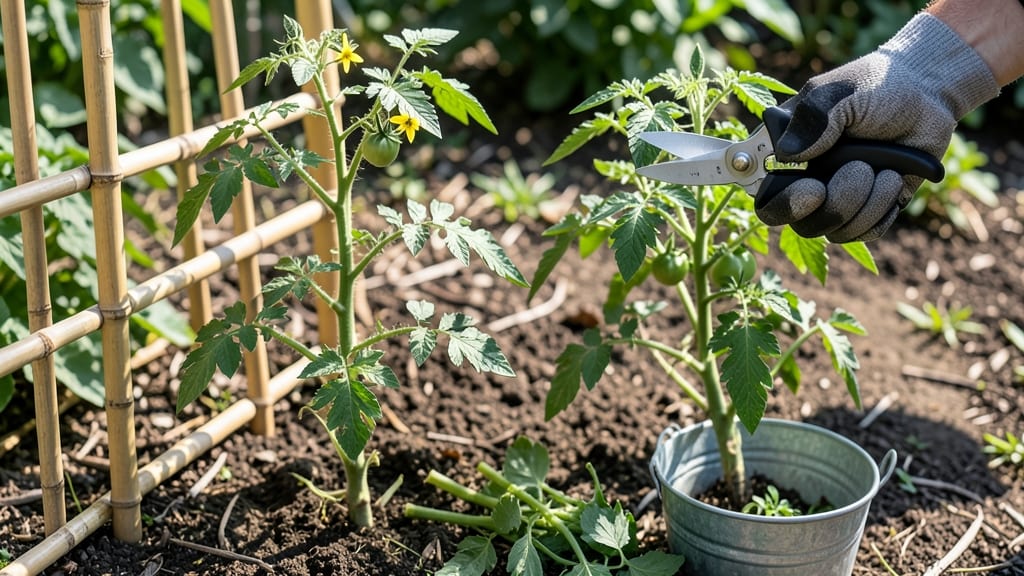
How to keep tomato plants from getting too tall—it’s all about pruning the right way for bushier growth and bigger fruit. 🌱 The key isn’t just cutting branches; it’s training the plant to focus energy where it matters most. I’ve gone from struggling with floppy, weak stems to compact, productive bushes that actually hold their weight.
Start by removing suckers—the little shoots that grow between the main stem and branches—when they’re 3-4 inches tall. This redirects energy to fruit production instead of vertical growth. For indeterminate varieties, prune the top leaves when plants hit your trellis height to stop them from climbing further.
The result? Plants stay 4-5 feet tall instead of 8 feet, with more flowers and fewer flops.
You’ll notice thicker stems, heavier fruit clusters, and fewer broken branches after just one pruning session. The plants become self-supporting, and you’ll harvest 20-30% more tomatoes than before. Plus, the leaves stay healthier because they’re not stretching too far for sunlight.
This works for both backyard gardens and container growing—just adjust your trellis size. The best part? Once you master the timing, it takes less than 10 minutes per plant to maintain. Here’s exactly how to do it without stressing the plant.
📚 In This Guide
- What you need
- Instructions
- Tips and common mistakes
- Wrapping up and next steps
What you need
- ● Pruning shears or sharp bypass pruners – Look for sterilized, sharp blades (5-7 inches long) to avoid damaging stems. 🔪
- ● Garden gloves – Heavy-duty, cut-resistant gloves (size medium or large) to protect your hands.
- ● Disinfectant (70% isopropyl alcohol or bleach solution) – 1 part bleach to 9 parts water to sterilize tools between cuts.
- ● Support stakes or cages (5-6 feet tall) – Metal, bamboo, or wooden stakes (2-3 inches wide) or wire cages (3-4 feet diameter). 🌿
- ● Twine or plant ties (3-4 feet long) – Soft, stretchy twine or Velcro plant ties (½-inch wide).
- ● Balanced fertilizer (10-10-10 or 5-5-5) – 1-2 tablespoons per plant after pruning to encourage bushier growth. 🌱
- ● Plant growth regulator (e.g., Bonide Fruit & Flower Set) – Follow label instructions to slow vertical growth.
- ● Mulch (straw, grass clippings, or wood chips) – 2-3 inches thick to retain moisture and reduce stress on the plant.
- ● Spray bottle with water – For misting cuts to prevent disease. 💦
- ● Notebook & pen – To track pruning dates and plant responses.
Step-by-Step instructions for managing tomato plant height
Here's the method I've used for years to keep tomato plants compact, productive, and disease-resistant.
🌿 Step 1: Identify Your Tomato Variety and Growth Habit
Determine whether you're growing indeterminate (vining) or determinate (bush) tomatoes. Indeterminate varieties like 'Sungold' or 'Cherokee Purple' grow continuously until frost, while determinate types like 'Roma' or 'Celebrity' set fruit on a single stem and stop growing after flowering. This distinction changes everything about pruning strategy.
For indeterminate varieties, you'll need to prune aggressively to control height, while determinate types rarely need pruning beyond removing suckers. Check your seed packet or plant tag if you're unsure—this step prevents wasted effort later.
✂️ Step 2: Remove Suckers When They're Small
Suckers are the small shoots that grow in the leaf axils (where leaves meet the stem). Pinch them off when they're no larger than a pencil—this is when they're easiest to remove and least likely to regrow. Use your thumb and forefinger to snap them cleanly at the base, or use clean pruning shears for thicker suckers.
I check for suckers every 5-7 days during active growth. If you wait until they're larger, you'll have to cut deeper into the stem, which creates wounds that can invite disease. Always prune in the morning so plants have daylight hours to recover before nightfall.
☀️ Step 3: Prune for Light Penetration and Airflow
After removing suckers, focus on opening up the plant's center. Cut back any branches growing inward or crossing others to improve air circulation—this reduces humidity in the plant's core, which is where most fungal diseases like early blight start. Aim to create a vase-like shape with the main stem and primary branches.
Never remove more than one-third of the plant's foliage at once. You'll know you're doing it right when sunlight reaches the lower leaves and fruit clusters. This encourages more even ripening and prevents the lower fruit from rotting in shade.
🪴 Step 4: Support and Train for Controlled Growth
Install sturdy cages or stakes (at least 6 feet tall for indeterminate varieties) when transplanting. As the plant grows, gently weave the main stem through the cage or tie it to the stake with soft plant ties. This prevents the plant from flopping over under fruit weight, which causes stems to stretch and grow even taller.
For particularly tall varieties, I use a two-stem training method: select the strongest sucker near the base, prune the main stem above it, and train this new stem as the primary leader. This creates a shorter, more manageable plant that still produces abundant fruit.
⏰ Step 5: Adjust Pruning as the Season Progresses
Once your plants start flowering, reduce aggressive pruning. Focus on removing only disease-infected leaves and shoots growing below the first flower cluster—these compete with fruit production. After the first flush of fruit sets, you can resume light pruning to maintain shape and airflow.
In late summer, when growth slows, stop all pruning. The plant will redirect energy to ripening existing fruit rather than producing new growth. This is when you'll see the payoff from your early pruning efforts—bushier plants with more accessible, sun-exposed fruit.
Tips & tricks for managing tomato plant height
These game-changing strategies will transform your tomato plants from unruly vines into well-behaved, high-yielding bushes.
Variety-Specific Strategy: In Step 1, when identifying your tomato type, remember indeterminate varieties like 'Sungold' can grow 10-12 feet tall without control, while determinate types like 'Roma' naturally stay compact. For indeterminates, I recommend installing your 6-foot-tall cages immediately at transplanting—even if the plant is small—to prevent the main stem from getting too thick to weave through later. This creates instant vertical guidance that discourages lateral sprawl.
Sucker Removal Precision: The 5-7 day sucker-checking schedule in Step 2 is non-negotiable for tall varieties, but here's the secret: focus on the upper third of the plant first. These early suckers become the most aggressive lateral growth. I use a small notebook to track which branches I've already pruned—this prevents accidental double-pruning and helps me spot new growth patterns. Always prune at a 45-degree angle just above a leaf node to encourage outward growth rather than inward.
Disease Prevention Technique: When opening up the plant's center in Step 3, don't just cut inward branches—also remove any yellowing or spotted leaves immediately. These are early signs of fungal pressure. I've found that maintaining a 12-inch gap between branches creates optimal airflow. For particularly dense plants, use a small handheld fan on low setting for 5 minutes daily during humid weather—this mimics natural wind movement and dramatically reduces disease risk.
Support System Insight: The two-stem training method in Step 4 works wonders for varieties prone to excessive height. Here's how to execute it perfectly: wait until your main stem reaches about 3 feet tall, then select the strongest sucker near the base (usually within the first 12 inches). Make your cut just above a leaf node on the main stem, then immediately begin training this new stem through your cage. This creates a natural fork that distributes weight more evenly and reduces overall height by 30-40%.
Pro Tips for Keep Tomato Plants From Getting Too Tall
- These game-changing strategies will transform your tomato plants from unruly vines into well-behaved, high-yielding bushes.
- For indeterminates, I recommend installing your 6-foot-tall cages immediately at transplanting—even if the plant is small—to prevent the main stem from getting too thick to weave through later.
- Sucker Removal Precision: The 5-7 day sucker-checking schedule in Step 2 is non-negotiable for tall varieties, but here's the secret: focus on the upper third of the plant first.
Frequently asked questions
Got questions about managing your tomato plant height?
You’re not alone! Here are answers to the most common concerns—plus some pro tips to keep your plants happy and productive.
When is the best time to prune tomato plants to control height?
Prune indeterminate tomatoes (the vining types) throughout the growing season, starting when plants are 12–18 inches tall. For determinate tomatoes (bush types), minimal pruning is needed—just remove suckers or damaged leaves. Morning pruning avoids stressing plants, and always use clean, sharp shears to prevent disease.
What happens if I don’t prune my tomato plants at all?
Unpruned indeterminate tomatoes can grow uncontrollably tall (10+ feet!), leading to weak stems, fewer fruit clusters, and poor air circulation (which invites pests/diseases). Determinate types may just produce smaller, lower-yielding fruit. Pruning redirects energy to bigger, healthier tomatoes—worth the effort!
Can I use pruning to speed up tomato ripening?
Yes! Pruning reduces competition for resources, so your plant focuses energy on ripening existing fruit instead of growing more foliage. Focus on removing suckers below the first flower cluster and lower leaves to improve airflow and sunlight exposure. Just don’t overdo it—keep 3–4 main stems for support.
Are there alternatives to pruning for controlling height?
If pruning feels overwhelming, try these low-maintenance options:
- Cage or stake early: Use a sturdy 5–6 ft cage or tall stake to guide growth vertically.
- Choose dwarf varieties: ‘Tiny Tim’ or ‘Patio Princess’ stay compact (3–4 ft tall).
- Top the plant: Pinch off the main stem’s top growth to halt height (works best for indeterminates).
- Use a trellis: Train vines upward to save space and improve fruit access.
Why are my tomato plants growing tall but not producing fruit?
This usually means your plant is overgrown or under stress. Check for:
- Too much nitrogen (leafy growth, no flowers)—switch to phosphorus-rich fertilizer.
- Insufficient sunlight (6+ hours/day)—relocate or thin nearby plants.
- Root-bound plants—transplant if crowded.
- Sucker overload—prune aggressively to balance foliage and fruit.
Wrapping up and next steps
Keeping your tomato plants at a manageable height doesn’t have to be complicated—just a little pruning, support, and patience can make all the difference! 🌱 By pinching suckers, staking or caging, and harvesting regularly, you’ll encourage bushier growth and juicier, more abundant tomatoes.
Remember, every snip is a step toward a bountiful harvest.
Now that you’re armed with these tips, roll up your sleeves and give your plants the care they deserve. Next, why not explore our guide on the best tomato varieties for small spaces? Happy gardening! 🌿