
Watering
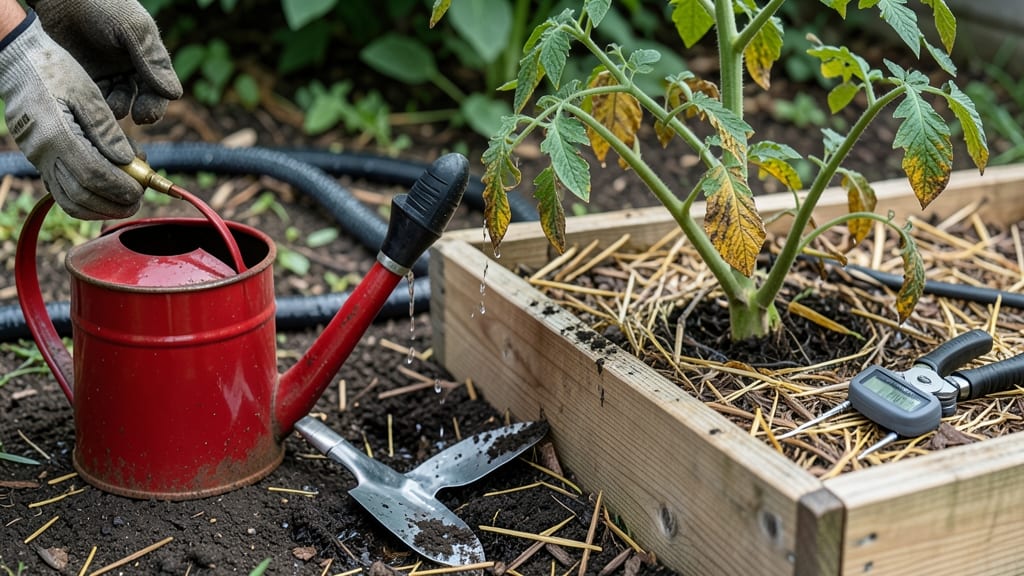
How to fix overwatered tomato plants looks like they’re drowning—not wilting from thirst, but from too much love. 🌱 The moment you see yellow leaves or mushrooms sprouting from soil, you’ve got a root rot emergency on your hands. But here’s the good news: with the right moves, you can nurse them back to health in just a few weeks.
The first step is stopping the flood—cut back watering immediately and let the soil dry out between drinks. If your plants are in pots, check the drainage holes (they’re not optional).
For in-ground tomatoes, consider mounding soil around the stems to encourage new root growth. This isn’t just about saving the plant; it’s about giving it a second chance to thrive.
Once the soil’s dry, it’s time to boost recovery with a balanced fertilizer (like 10-10-10) and a handful of compost mixed into the top inch of soil. Prune any blackened or mushy stems, and keep an eye out for pests that love stressed plants.
Within 2-3 weeks, you’ll start seeing fresh green leaves—proof your tomatoes are fighting back.
Long-term, upgrade your soil with organic matter (think compost or aged manure) to improve drainage, and stick to a watering schedule that matches your climate. A moisture meter becomes your best friend—no more guessing. With these fixes, you’ll have tomatoes that not only survive but outperform last season’s plants.
Root Causes of Overwatered Tomatoes
Overwatering your tomato plants might seem like an act of love—after all, who doesn’t want their greens thriving? 🌱 But too much water can actually strangle your plants, leading to yellowing leaves, wilting, and even root rot.
Understanding why this happens is the first step to saving your crop. Let’s break down the science behind the soggy soil syndrome.
Tomatoes thrive in well-draining soil, but if your garden beds or containers lack proper drainage, excess water pools around the roots instead of seeping away. Here’s how it plays out:
- Compacted soil: Heavy clay or tightly packed dirt blocks water movement, trapping moisture like a sponge. Roots suffocate because they can’t access oxygen.
- No gravel or sand layers: In containers, soil without a drainage layer (like pebbles or perlite) acts as a water trap, leading to anaerobic conditions.
- Low organic matter: Soil rich in compost or peat holds water better, but if it’s too dense, water doesn’t evaporate or drain efficiently.
Actionable fix: Test your soil’s drainage by digging a hole, filling it with water, and timing how long it takes to drain. If it sits for more than 30 minutes, amend with sand, perlite, or organic matter.
Watering on a strict schedule—even if it’s “just in case”—can drown roots faster than you think. Tomato plants need consistent moisture but not saturation. Here’s what goes wrong:
- Frequent shallow watering: Light sprinkles keep the topsoil wet but don’t encourage deep root growth. Roots stay near the surface, where they’re more prone to rot.
- Ignoring weather conditions: Watering every day during rain or high humidity creates a waterlogged environment, cutting off oxygen to roots.
- Using the wrong method: Overhead watering (like sprinklers) wets leaves, promoting fungal diseases that weaken plants and make them more sensitive to overwatering.
Actionable fix: Water deeply 2–3 times per week (adjust for climate) and always at the base of the plant. Use a moisture meter to check soil levels before watering.
If your tomato plants already have compromised roots—from transplant shock, pests, or disease—they’re far more vulnerable to overwatering. Here’s why:
- Transplant shock: Newly planted tomatoes with disturbed roots struggle to establish themselves. Overwatering in this phase can drown them before they adapt.
- Root-knot nematodes or fungi: These pests create lesions on roots, reducing their ability to absorb water and oxygen. Extra moisture worsens the damage.
- Old or stressed plants: Mature tomatoes with heavy fruit loads or nutrient deficiencies can’t regulate water uptake efficiently, leading to waterlogging.
Actionable fix: Harden off seedlings before transplanting, treat soil for pests, and avoid watering until the top 1–2 inches of soil are dry. For stressed plants, reduce water slightly and boost organic matter.
Potted tomatoes are high-risk for overwatering because containers dry out faster—but they’re also prone to sudden waterlogging if not managed correctly. Common pitfalls:
- Small pots with no drainage holes: Water has nowhere to go, leading to root rot within days. Even “self-watering” pots can fail if overfilled.
- Plastic or glazed pots: These materials retain moisture longer than fabric or terracotta, increasing the risk of soggy roots.
- Overpotting without amendments: Pure garden soil in containers compacts easily, trapping water. Without perlite or coconut coir, roots suffocate.
Actionable fix: Use pots with drainage holes, elevate containers to improve airflow, and mix in 20–30% perlite or vermiculite to improve drainage. Check soil moisture daily in small pots.
Now that you know the root causes (pun intended), the next step is reviving your plants—starting with proper drainage and adjusted watering habits. 🌿
Quick Revival Steps for Drowning Tomatoes
Overwatered tomato plants can feel like a lost cause, but with the right moves, you can nurse them back to health—and even boost their resilience for next time. The key is acting fast, diagnosing the damage, and applying targeted fixes.
Below, we break down cause-specific solutions with step-by-step action plans and prevention tips to keep your plants thriving.
Cause: Soggy soil cuts off oxygen, leading to root suffocation and fungal rot.
How to Fix It:
- 🔥 Emergency Drainage
- Stop watering immediately and move your pot (if applicable) to a dry, shaded spot.
- For in-ground plants, mound soil around the base to create airflow and prevent water pooling.
- 🍳 Soil Rescue Mission
- Gently loosen the top 4–6 inches of soil with a fork or trowel to aerate roots.
- Mix in perlite or coarse sand (1 part to 3 parts soil) to improve drainage. Avoid heavy amendments like compost—they’ll worsen the problem.
- 👨🍳 Fungal Defense
- Sprinkle copper fungicide or a baking soda solution (1 tsp baking soda + 1 quart water + few drops of dish soap) on the soil to combat rot.
- Remove any black, mushy roots with sterilized pruners.
- 🥘 Watering Reset
- Wait 3–5 days before watering again, then switch to the "finger test"—only water when the top 1–2 inches of soil feel dry.
- Use drip irrigation or soaker hoses to deliver water at the roots, not the leaves.
💡 Prevention Tip:
- Test your soil with a moisture meter or stick your finger in—if it’s damp after 24 hours, you’re overdoing it.
- Raise pots on feet or use self-watering containers with drainage holes to prevent soggy bottoms.
Cause: Overwatering after transplanting stresses roots, causing them to collapse temporarily.
How to Fix It:
- ⏰ Wait & Observe
- Wilting from overwatering usually fades within 24–48 hours if the soil dries slightly. Avoid touching the plant—stress worsens recovery.
- 🌡️ Support & Shade
- Prop up drooping stems with tomato cages or stakes to reduce strain.
- Move plants to partial shade (50% sunlight) for 3–5 days to slow transpiration while roots recover.
- 🎯 Hydration Balance
- Once wilting stops, water deeply but infrequently—aim for 1–1.5 inches per week, including rain.
- Use mulch (straw or grass clippings) to retain moisture without smothering roots.
💡 Prevention Tip:
- Acclimate seedlings to outdoor conditions for 7–10 days before planting (harden them off).
- Water deeply at transplanting (not daily) to encourage root growth into the soil.
Cause: Excess moisture creates anaerobic conditions, inviting bacteria and mold.
How to Fix It:
- 🔪 Root Pruning & Soil Swap
- Remove the plant, rinse roots with water to clear sludge, and trim any black/mushy roots.
- Replace the top 6 inches of soil with a sterilized mix (50% potting soil + 50% perlite/pumice).
- 🧼 Sanitize the Pot
- For container plants, scrub pots with 10% bleach solution (1 part bleach to 9 parts water), then rinse thoroughly.
- In-ground areas? Add hydrogen peroxide (3%) to water (1:10 ratio) to kill pathogens.
- 🌿 Boost Beneficial Microbes
- Sprinkle mycorrhizal fungi or compost tea around the roots to outcompete harmful bacteria.
- Avoid chemical fertilizers until the plant shows new growth (stick to fish emulsion or worm castings).
💡 Prevention Tip:
- Rotate crops—never plant tomatoes in the same spot two years in a row.
- Avoid overhead watering (use drip lines) to prevent fungal spores from splashing onto leaves.
If your plant is beyond saving but has green stems and leaves, try propagating cuttings:
- 🍃 Snip a 4–6 inch stem just below a leaf node, using sterilized scissors.
- 🌿 Dip in rooting hormone (optional but helpful) and plant in sandy, sterile soil.
- 💧 Keep humid (use a plastic bag or propagator) and place in bright, indirect light.
- 🌱 Roots should form in 2–4 weeks—transplant once established!
✨ Pro Tip: Overwatered tomatoes often bounce back faster than you’d expect. Patience is key—focus on airflow, drainage, and gradual hydration. Before you know it, you’ll be harvesting juicy, homegrown tomatoes again! 🍅🔥
Frequently asked questions
How do I tell if my tomato plant is overwatered vs. underwatered?
Check the soil and leaves: overwatered plants have yellowing lower leaves, mushy stems, and soil that stays damp for days. Underwatered plants show crispy brown edges on leaves and dry soil pulling away from pot edges. A simple finger test works—if the top 1-2 inches of soil are still wet after 24 hours, you're overwatering.
Can I save a tomato plant with root rot?
You can try! First, remove the plant and trim away all black, mushy roots with sterilized scissors. Replant in fresh, well-draining soil mixed with perlite (50/50 ratio) and avoid watering for 5-7 days. Use a copper fungicide to prevent further rot. Success depends on how much healthy root remains.
How often should I water tomato plants after fixing overwatering?
Start with the "finger test": only water when the top 1-2 inches of soil feel dry. For most climates, 2-3 times per week with 1-1.5 inches of water total (including rain) is ideal. Use drip irrigation to deliver water directly to roots and avoid wetting leaves.
Will my overwatered tomatoes still produce fruit?
Possibly, but recovery depends on how severe the damage is. If the plant shows new green growth within 2-3 weeks, it can still produce fruit—just expect a smaller harvest. Focus on saving the plant first, then adjust care for optimal fruiting. Prune any remaining damaged leaves to redirect energy to fruit production.
What's the best way to prevent overwatering in containers?
Use pots with multiple drainage holes and elevate them on feet to improve airflow. Mix 20-30% perlite or vermiculite into your potting soil, and always check soil moisture before watering. Consider self-watering containers with moisture sensors to automate watering and prevent soggy soil.