Planting
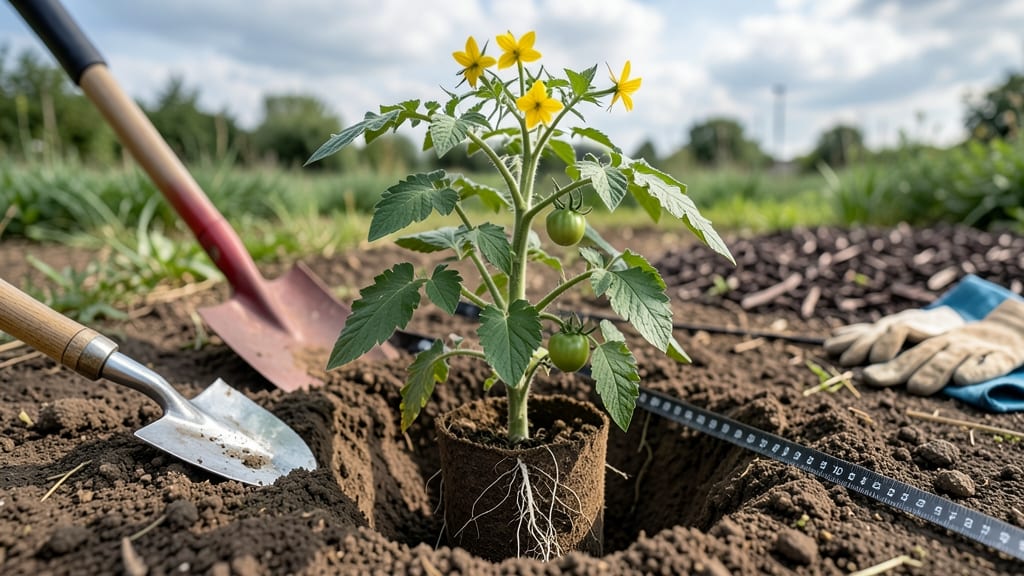
To grow a thriving tomato plant 🍅, you need to plant it deep enough—at least two-thirds of the stem buried in soil—to encourage strong roots and bigger harvests.
Struggling with stunted tomato plants or poor yields? The secret might be hiding underground—literally. Most gardeners focus on sunlight and water, but root depth is the silent game-changer that determines whether your tomatoes thrive or just survive.
Tomatoes aren’t just picky about sunlight—they demand space below ground to develop a sturdy root system. Planting too shallow can leave your plants weak, while burying them too deep risks suffocating the stem.
I’ll walk you through the exact depth for in-ground and container planting, plus how to prep your soil for maximum root growth.
By the end, you’ll know how to plant your tomatoes for stronger stems, faster growth, and a bountiful harvest—no guesswork required.
The ideal root depth for tomato plants: science-backed guidelines
Tomato plants need 12-18 inches of root depth to thrive, but many gardeners unknowingly stunt their growth by planting too shallowly. The roots of a healthy tomato plant spread wide and deep, accessing water and nutrients that shallow planting simply can't provide.
Without proper depth, your plants will struggle to support heavy fruit loads, leading to weak stems and poor yields.
Most gardeners focus on sunlight and water, but the underground ecosystem is where the magic happens. Tomato roots grow best in loose, well-draining soil that allows them to expand freely. If your soil is compacted or rocky, roots will struggle to penetrate, limiting nutrient uptake and overall plant vigor.
The key is to create an environment where roots can explore both horizontally and vertically.
Soil type matters—clay soils restrict root growth, while sandy soils drain too quickly. Even in perfect conditions, tomato roots need at least 12 inches of depth to establish properly. For container-grown tomatoes, this means choosing pots with a minimum 18-inch depth to accommodate the root system as it matures.
| Factor | Ideal Specification | Why It Matters |
|---|---|---|
| Root Depth (In-Ground) | 12-18 inches | Allows roots to access moisture and nutrients |
| Container Depth | 18+ inches (minimum) | Prevents root binding and supports larger varieties |
| Soil Type | Loamy, well-draining | Encourages root expansion and aeration |
| Planting Depth | ⅔ of stem buried | Promotes stronger root growth and stability |
| Spacing (In-Ground) | 18-24 inches apart | Reduces competition for root space |
When planting, bury ⅔ of the stem—this encourages roots to grow along the buried portion, creating a stronger, more stable plant. Many gardeners make the mistake of planting too shallow, leaving the stem exposed.
This weakens the plant and can lead to blossom end rot or poor fruit set. For container-grown tomatoes, use a 5-gallon pot minimum to ensure roots have room to expand.
Tomato varieties also play a role in root depth needs. Indeterminate varieties, like 'Sungold' or 'Brandywine,' develop deep root systems to support their vining growth, while determinate varieties, like 'Roma' or 'Celebrity,' have shallower roots but still need at least 12 inches of depth.
If you're growing in containers, choose dwarf or bush varieties to match the limited root space.
Another critical factor is mulching. A 2-3 inch layer of organic mulch helps retain moisture and encourages roots to grow deeper in search of water. Without mulch, surface roots develop, making plants more susceptible to drought stress.
For in-ground planting, use straw or shredded leaves, while container-grown tomatoes benefit from coconut coir or peat moss.
If your soil is naturally shallow or compacted, consider raised beds. They allow you to create the perfect root environment with loose, nutrient-rich soil. Fill raised beds with a mix of compost, perlite, and topsoil to ensure roots have plenty of space to explore.
This method is especially useful in urban gardens or areas with poor native soil.
Watch for signs of root stress, such as yellowing leaves or stunted growth. These often indicate insufficient root depth or poor soil conditions. If you notice these symptoms, amend the soil with compost or consider transplanting to a deeper container.
Remember, healthy roots equal healthy plants—and that means bigger, tastier tomatoes for you!
For best results, test your soil's depth before planting. Use a trowel or soil probe to check how far roots can grow naturally. If you find hardpan or rocks, break them up or add organic matter to improve root penetration.
With the right depth and care, your tomato plants will reward you with a bountiful harvest all season long.
How to prepare your soil for maximum tomato root growth
Healthy tomato roots need 12-18 inches of loose, nutrient-rich soil to thrive—but many gardeners unknowingly create barriers that stunt growth. Compacted clay, shallow topsoil, or poor drainage can leave roots struggling, even with perfect sunlight and watering.
The good news? With a few targeted soil prep steps, you can transform even the toughest soil into a root-friendly environment that supports bigger plants and heavier harvests.
Start by testing your soil's depth and structure. Use a trowel or soil probe to check how far down roots can easily penetrate. If you hit hardpan (compacted soil) or rocks within 6-8 inches, your tomatoes will suffer.
The solution? Break up barriers through amending, tilling, or choosing the right planting method. For example, raised beds give roots instant depth, while organic matter additions like compost loosen tight clay naturally.
Step-by-Step Soil Prep for Tomato Roots
-
Step 1: Test Soil Depth
Dig a hole 12-18 inches deep and check for compaction or rocks. If roots can't spread freely, amend or use raised beds. -
Step 2: Loosen Compacted Soil
For clay: Mix in 3-4 inches of compost or aged manure. For rocky soil, till in coarse sand or perlite to improve drainage. -
Step 3: Build Raised Beds (If Needed)
Use 12-inch-deep beds filled with a mix of topsoil, compost, and coconut coir for ideal root expansion. -
Step 4: Mulch Heavily
Apply 3-4 inches of straw or wood chips to retain moisture, regulate temperature, and prevent soil compaction from foot traffic. -
Step 5: Avoid Over-Tilling
Disturb soil only 6-8 inches deep to preserve beneficial microbes and prevent root damage.
One of the biggest mistakes gardeners make is burying tomato stems too deep during planting. While it might seem logical to cover the stem, this can suffocate the plant and encourage rot. Instead, plant seeds or transplants so that only ⅓ of the stem is buried.
For seedlings, remove lower leaves up to the first leaf cluster to prevent disease and improve airflow at the base.
Mulching isn’t just about weed control—it’s a root growth hack. A thick layer of organic mulch (like straw or shredded leaves) keeps soil temperatures stable, reduces water evaporation, and prevents compaction from rain or foot traffic.
For container-grown tomatoes, use mulch sparingly to avoid smothering roots in limited space, but always apply it around the base to protect soil structure.
Finally, monitor your soil’s health throughout the season. If you notice yellowing leaves or stunted growth, it could signal poor drainage or nutrient deficiencies. Amend the soil again with compost or a balanced fertilizer (like 10-10-10) and consider adding mycorrhizal fungi to boost root development naturally.
With the right prep, your tomatoes will send roots deep and reward you with vibrant plants and bumper crops.
🌱