
How To
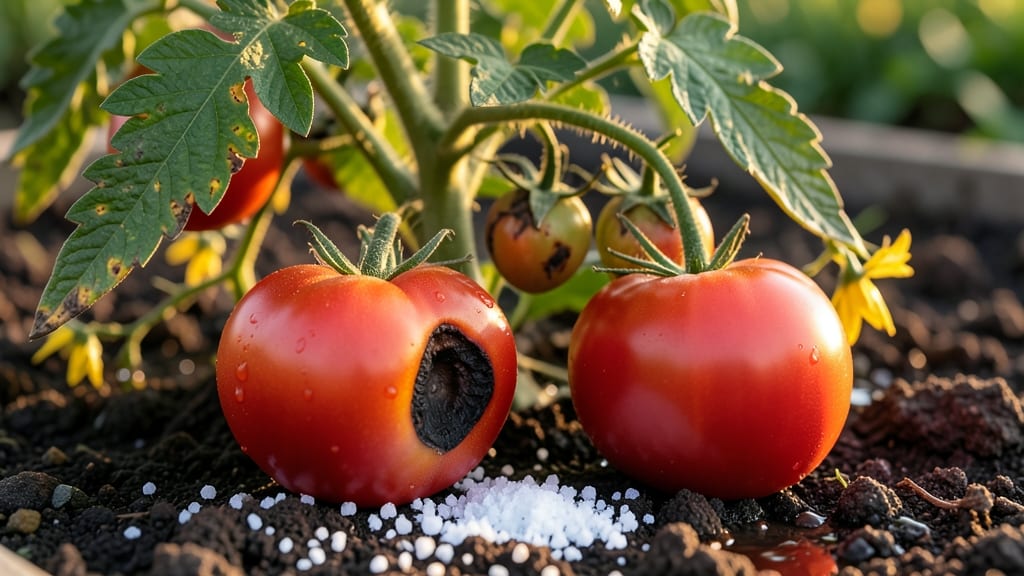
Blossom end rot of tomato is due to a deficiency of calcium, caused by uneven water absorption or poor soil conditions that prevent root uptake despite adequate calcium in the soil.
This calcium deficiency isn't about the plant lacking calcium in the soil—it's about the roots struggling to absorb what's already there. 🌱 When watering is inconsistent, the plant can't maintain steady calcium flow to developing fruit, especially at the blossom end where new cells form.
Think of it like a plumbing issue: even if your pipes are full of water, clogs or leaks will still leave you high and dry.
What makes this tricky is that other nutrient deficiencies often look similar, but calcium deficiency specifically targets the youngest, fastest-growing parts of the plant. The classic dark, sunken spots on tomato fruit appear because those cells can't properly develop their cell walls without enough calcium.
The good news? This is one of the easiest garden problems to fix once you understand the root cause.
💡 In This Article
- How Calcium Deficiency Triggers Blossom End Rot
- Preventing Blossom End Rot with Calcium Solutions
How calcium deficiency triggers blossom end rot
Calcium acts as a structural cement in plant cell walls, particularly in areas of rapid growth like new fruit development. When tomatoes form, the blossom end—the side opposite the stem—is the youngest tissue, requiring constant calcium supply to strengthen its cell walls.
Without enough calcium, these cells become weak and collapse under the fruit's natural pressure, creating those telltale dark, sunken lesions. 🌱 Think of it like building a skyscraper with weak foundation blocks—the entire structure fails when pressure is applied.
The problem isn't always low soil calcium—it's the plant's inability to absorb what's available. Roots absorb calcium through a process called mass flow, where water movement carries dissolved calcium to growing tissues.
Uneven watering (drought followed by heavy watering) disrupts this flow, creating calcium "traffic jams" in the plant's vascular system. Even if your soil tests show adequate calcium, inconsistent moisture levels can starve developing fruit of this critical mineral.
This deficiency differs from other nutrient issues because calcium is immobile within the plant. Unlike nitrogen or potassium, calcium can't be redistributed from older leaves to new growth. Once a fruit shows symptoms, it's already too late for that plant to save it—prevention through consistent calcium availability is key.
The blossom end's vulnerability stems from its rapid cell division rate, which outpaces the plant's ability to deliver calcium when watering patterns fluctuate.
What makes diagnosis tricky is that symptoms often appear 5-7 days after pollination, long after the calcium deficiency began. The dark, leathery spots start small but expand as the fruit grows, sometimes covering half the blossom end.
Unlike fungal infections, these spots remain dry and don't spread to other parts of the fruit. The surrounding tissue may appear slightly discolored but remains firm—a key visual clue for gardeners.
Interestingly, this condition affects other crops too, including peppers, cucumbers, and squash, all of which share similar calcium transport challenges. The physiological mechanism is identical: rapid growth areas (like fruit ends) demand more calcium than the plant can supply under stress conditions.
This explains why blossom end rot appears even in nutrient-rich soils when environmental factors disrupt calcium uptake.
Understanding this process helps explain why traditional "fixes" like adding more fertilizer often fail. The solution isn't about increasing calcium in the soil—it's about ensuring the plant can consistently absorb what's already there through proper watering techniques and soil conditions.
The plant's vascular system has limited capacity, and calcium transport becomes the weak link when growth demands outpace supply.