
Companion Plants
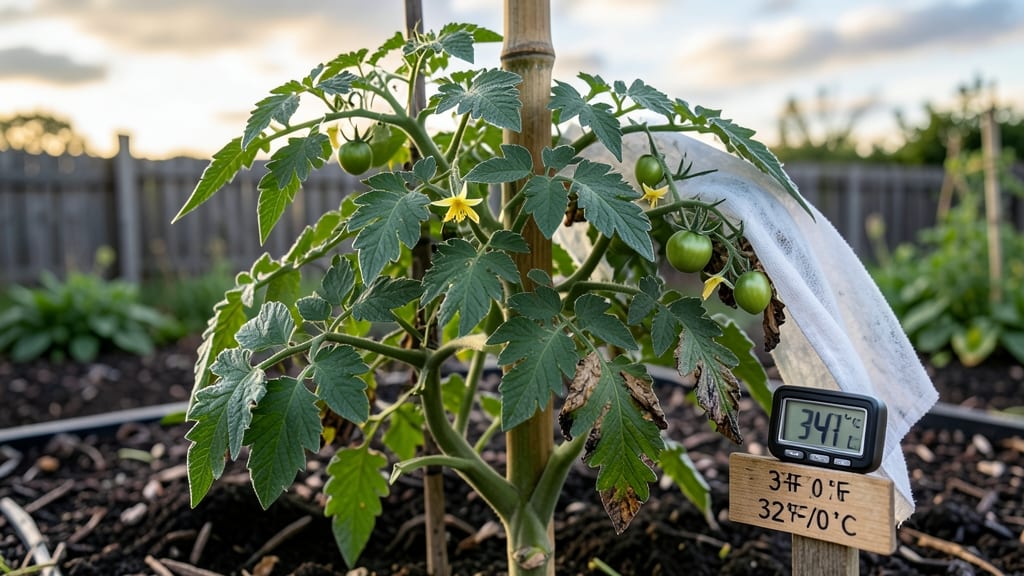
How cold can tomato plants get before frost damage sets in? They can survive brief dips to 32°F but suffer serious damage below 28°F, with seedlings especially vulnerable.
Picture this: your 🍅 plants thriving in 6a sunshine, then a late spring frost rolls in overnight. By morning, the leaves look crispy, and you’re panicking—was it too late? The answer depends on how cold it got, how long the chill lasted, and whether your plants are seedlings or fruiting.
Most gardeners assume tomatoes are frost-sensitive, but the truth is more nuanced. Young plants can handle a 28–32°F night with the right protection, while mature plants might bounce back from 30°F if the cold doesn’t linger.
Below that, irreversible damage sets in, and even the hardiest varieties like 'Mountain Merit' won’t recover.
In this guide, I’ll break down the exact temperature thresholds by growth stage, share fast recovery tricks to save chilled plants, and reveal which varieties actually perform in cooler climates—so you can keep your harvest on track, no matter what Mother Nature throws your way.
Tomato plant cold tolerance by growth stage: critical temperature limits
Tomatoes thrive in warmth, but their cold tolerance varies dramatically by growth stage. Seedlings are the most delicate, while mature plants can handle brief dips into the 40s°F—but only if they’re healthy and acclimated. Understanding these temperature thresholds helps you protect your plants and avoid irreversible damage.
Even a few hours below 50°F (10°C) can stall growth, while frost (32°F/0°C) will kill most varieties instantly. Let’s break down the science-backed limits by stage.
Young tomato seedlings (under 4 weeks old) are especially vulnerable. Temperatures below 55°F (13°C) slow their growth, and anything under 50°F (10°C) risks stunted development or death. This is why gardeners often start seeds indoors—seedling trays need consistent warmth, ideally 70–80°F (21–27°C) during the day.
Once hardened off, young plants can tolerate 45°F (7°C) for short periods, but prolonged exposure weakens their roots and leaves.
During the flowering stage, tomatoes need warmth to pollinate effectively. Temperatures below 50°F (10°C) cause blossom drop, where flowers fall off before fruiting. This is why gardeners in cooler climates use row covers or plant early-maturing varieties like ‘Stupice’ or ‘Mountain Merit.’
Even brief dips into the 40s°F can reduce fruit set by up to 50%, so monitor nighttime temps closely.
Once tomatoes start fruiting, they become slightly more cold-hardy but still struggle below 55°F (13°C). Cold stress at this stage can lead to fruit cracking or uneven ripening.
If temperatures drop near 40°F (4°C), harvest any ripe tomatoes immediately and protect the plant with mulch or cloches to insulate the roots. Never let soil temps fall below 50°F (10°C), as this disrupts nutrient uptake.
Mature tomato plants can survive brief exposure to 40°F (4°C), but frost (32°F/0°C) will kill them outright. The key to extending your harvest is protecting the roots, which are more sensitive than
5 Fast recovery tricks to save cold-stressed tomato plants
When unexpected frost hits your tomato plants, their leaves may turn black or wilt—but don’t toss them just yet! Cold stress often causes temporary dormancy, and with the right care, your plants can bounce back.
The key is acting fast to prevent permanent damage and giving them a fighting chance to recover.
Even mature tomato plants can survive brief dips to 32°F (0°C), but prolonged exposure below 40°F (4°C) will slow growth and reduce yields. If your plants look shocked but not dead, try these 5 recovery tricks to nurse them back to health before the next harvest.
-
1. Warm the Soil
Use black plastic mulch or a row cover to raise soil temps by 10–15°F within 24 hours. Place a thermometer in the soil to monitor progress. -
2. Prune Damaged Leaves
Snip off blackened or mushy leaves with sterilized shears to reduce disease risk. Focus on lower foliage first to improve airflow. -
3. Mulch Thickly
Add 4–6 inches of straw or grass clippings around the base to insulate roots. Avoid wet mulch, which can rot stems. -
4. Fertilize Lightly
Mix ½ tsp Epsom salt (magnesium sulfate) into water and apply to revived leaves to boost recovery. Skip heavy nitrogen—it stresses weak plants. -
5. Create a Mini Greenhouse
Drape a clear plastic tunnel or cloche over plants to trap heat. Remove it during the day to prevent overheating or fungus buildup.
Start with soil warming first—cold roots are the biggest hurdle to recovery. If your plants are still upright but sluggish, they’ll likely rebound within 3–5 days with consistent care. Avoid overwatering, as soggy soil slows root recovery.
For severe frost damage (e.g., 30°F or below for hours), focus on root protection. Bury a 5-gallon bucket filled with warm water near the base—this radiates heat into the soil overnight. Combine this with mulching for best results.
Monitor your plants daily for new growth signs, like unfurling leaves or green stems. If no recovery occurs after 7 days, consider replanting or redirecting energy to undamaged plants. With these tricks, you’ll maximize your chances of a second flush of tomatoes later in the season!