
Size
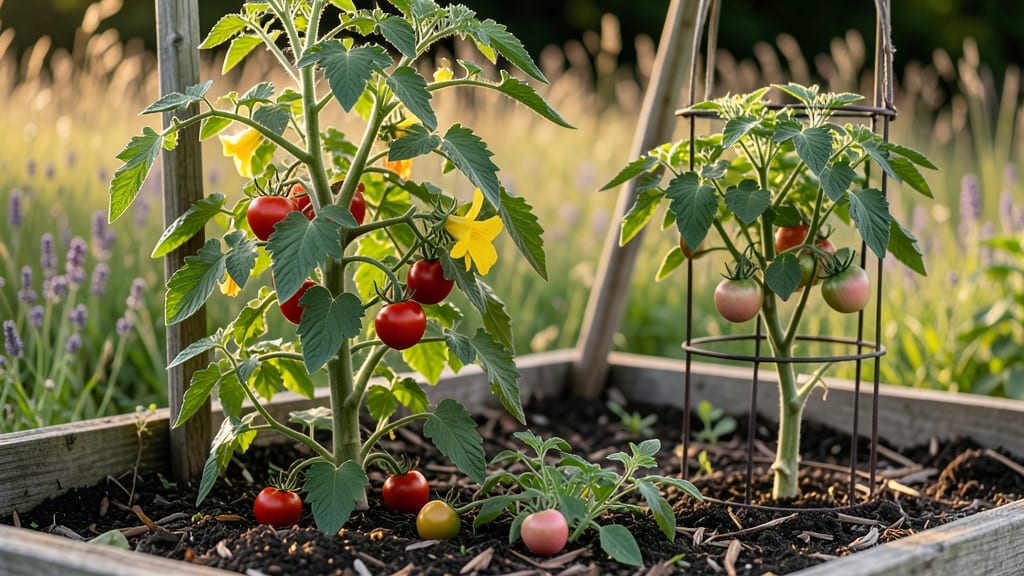
Tomato plants grow from compact bushes to towering vines—knowing their size saves you space and frustration before you plant. 🌱 Determinate varieties stay under 4 feet tall, perfect for small gardens, while indeterminate types can climb to 10 feet or more without pruning.
The difference isn’t just height—it’s how you’ll train, support, and harvest your plants all season long.
Most gardeners underestimate how quickly indeterminate tomatoes grow—without a sturdy trellis, they’ll sprawl across your yard like unruly vines. Determinate types, like Roma or Bush Early Girl, stay bushy and compact, making them ideal for containers or tight spaces.
Even the smallest varieties need 18-24 inches between plants to prevent crowding and disease, so plan your layout before buying seeds.
You’ll end up with heavier yields when you match plant size to your space. Indeterminate varieties produce fruit all season long, but their sprawling growth demands vertical support. Determinate types ripen all at once, which is great for canning but requires careful spacing to avoid competition for sunlight and water.
Here’s the game-changer: pruning indeterminate plants keeps them manageable while boosting fruit production. Even determinate types benefit from occasional trimming to improve airflow. Whether you’re working with a balcony container or a backyard plot, sizing up your tomatoes first means fewer surprises and more delicious results by harvest time.
📚 In This Guide
- What you need
- Instructions
- Tips and common mistakes
- Wrapping up and next steps
What you need
- ● Tomato Seeds or Seedlings: Choose variety-specific seeds (e.g., Roma for compact plants, Beefsteak for tall vines). Quantity: 1–5 seeds/seedlings per plant (or 1 plant per container).
- ● Growing Containers or Garden Space: Containers: 5-gallon pots minimum (bigger for indeterminate varieties). Garden beds: 18–24 inches of space per plant (or trellis for vertical growth).
- ● Potting Soil: 1–2 bags of high-quality, well-draining soil (mix with compost for nutrients).
- ● Fertilizer: Balanced organic fertilizer (e.g., 10-10-10) or compost tea.
- ● Stakes or Trellis: 6–8 ft tall for indeterminate varieties (e.g., Sungold), 3–4 ft for determinate types.
- ● Pruning Shears: Sharp, clean pair for trimming suckers and dead leaves.
- ● Mulch (straw or shredded leaves) to retain moisture.
- ● Drip irrigation system or watering can with a long spout.
- ● Plant ties or soft twine to secure vines to stakes.
- ● Garden gloves for easy handling.
- ● Shade cloth (30–50%) for seedlings if temps exceed 85°F.
Understanding tomato plant growth: height expectations by variety
Tomato plants vary wildly in size—some stay compact enough for windowsills, while others reach skyward like small trees. Here’s how to plan your garden space based on what to expect from each type.
🌱 Step 1: Identify Your Tomato Variety’s Growth Habit
Tomato plants fall into three main height categories: determinate (bush), indeterminate (vining), and semi-determinate (a mix). Determinate varieties like Roma or Celebrity typically max out at 3-5 feet tall, making them ideal for containers or small gardens. Indeterminate types such as Brandywine or Sungold can grow 6-12 feet tall (or taller!) if left unpruned, requiring sturdy stakes or trellises.
Semi-determinate varieties like Better Boy or Early Girl strike a balance, reaching 4-6 feet tall with controlled branching. Always check seed packets or plant tags—this is the first step to avoiding overcrowded or under-supported plants. I’ve seen gardeners accidentally plant indeterminate tomatoes in small pots, only to watch them sprawl out of control by midsummer.
☀️ Step 2: Plan Vertical Support Based on Expected Height
For determinate varieties, a 3-foot cage or 4-foot stake suffices, but I recommend 5-foot cages for semi-determinates to account for fruit weight. Indeterminate tomatoes need 6-foot stakes or 8-foot trellises—anything shorter risks snapping stems under the weight of heavy fruit. Bury stakes at least 18 inches deep and secure with soft plant ties (nylon stockings work great) to avoid damaging stems as they grow.
Watch for first flower clusters—this is your cue to install support immediately. Leggy stems without support will flop over, leading to cracked fruit or disease from soil contact. I’ve lost entire harvests because I waited too long to stake indeterminate plants. Pro tip: Use galvanized metal stakes for heavy varieties like Beefsteak—they won’t rust like wood in wet climates.
✂️ Step 3: Prune for Height Control (If Needed)
Indeterminate tomatoes benefit from suckering (removing side shoots) to direct energy upward rather than outward. Pinch off suckers (the small shoots growing between main stems and branches) when they’re no larger than a pencil eraser. This keeps plants 3-4 main stems wide and encourages vertical growth. Determinate varieties rarely need pruning—their natural bush shape prevents overgrowth.
For semi-determinates, light pruning helps manage height. Remove lower leaves up to 12 inches from the ground to improve airflow and reduce disease risk. Stop pruning 4-6 weeks before your first frost—new growth won’t harden off in time. I’ve seen gardeners over-prune, leaving plants too exposed to sun scald on hot afternoons.
🪴 Step 4: Adjust Spacing for Mature Plant Size
Determinate tomatoes thrive with 18-24 inches between plants and 2-3 feet between rows. Semi-determinates need 24-30 inches of space to avoid shade competition. Indeterminate varieties require 36-48 inches apart—their sprawling vines need room to stretch without crowding neighbors. Overcrowding leads to poor air circulation, which invites fungal diseases like early blight or powdery mildew.
In containers, determinates fit in 5-gallon pots, while indeterminates need at least 7 gallons (bigger is better for root stability). I’ve grown Sungold in 10-gallon fabric pots with vertical trellises—they produced fruit all season without flopping. Remember: root-bound plants grow slower and produce less fruit, so upgrade containers if vines start circling the edges.
⏰ Step 5: Monitor Growth and Adjust Support as Needed
Check plant height weekly after the first flowers appear. Indeterminate varieties can grow 6-12 inches per week in ideal conditions. If vines outgrow their support, add a second stake or tie to a nearby structure (like a fence or pergola) to prevent toppling. Use soft, flexible ties—metal wire can gouge bark and attract pests.
By mid-summer, indeterminate tomatoes may need additional pruning to remove suckers that formed earlier in the season. Watch for fruit weight—if branches sag excessively, add more ties or a temporary support sling made from old pantyhose. I’ve seen 10-pound tomatoes snap stems clean off the vine when support was inadequate. Stay ahead by reinforcing stakes every 4-6 weeks as plants grow.
Tips & tricks for managing tomato plant heights
Between us, understanding tomato plant growth habits saves you from the heartbreak of overcrowded plants or snapped stems. Here’s how to work with nature—and not against it—to get the most out of your garden.
Variety-Specific Staking Strategy: For indeterminate varieties like Sungold or Brandywine, I can’t stress enough how critical it is to install 6-foot stakes or 8-foot trellises at planting. These plants can grow 6-12 inches per week in ideal conditions, so their support needs to be in place from day one. I’ve seen gardeners try to add stakes later, only to watch their plants flop over mid-season. For semi-determinates like Better Boy, upgrade to 5-foot cages—the extra height prevents sagging under fruit weight.
Pruning Precision: When suckering indeterminate tomatoes, focus on removing shoots no larger than a pencil eraser. This keeps plants 3-4 main stems wide while directing energy upward. For semi-determinates, limit pruning to removing lower leaves up to 12 inches from the ground—this improves airflow without compromising the plant’s natural structure. And remember: stop pruning 4-6 weeks before your first frost to allow new growth time to harden off.
Container Size Matters: Determinate varieties fit comfortably in 5-gallon pots, but indeterminates need at least 7 gallons—and bigger is always better. I’ve grown Sungold tomatoes in 10-gallon fabric pots with vertical trellises, and they thrived without flopping. Root-bound plants grow slower and produce less fruit, so upgrade containers if you notice vines circling the edges. This is especially important for heavy-fruited varieties like Beefsteak.
Weekly Growth Checks: After the first flowers appear, get into the habit of checking plant height weekly. Indeterminate varieties can outgrow their support quickly, so be prepared to add a second stake or reinforce ties if needed. Watch for fruit weight—if branches sag excessively, add more ties or create a temporary sling using old pantyhose. I’ve seen 10-pound tomatoes snap stems clean off the vine when support was inadequate, so stay ahead by reinforcing stakes every 4-6 weeks.
Pro Tips for How Big Do Tomato Plants Get
- Between us, understanding tomato plant growth habits saves you from the heartbreak of overcrowded plants or snapped stems.
- Variety-Specific Staking Strategy: For indeterminate varieties like Sungold or Brandywine, I can’t stress enough how critical it is to install 6-foot stakes or 8-foot trellises at planting.
- Pruning Precision: When suckering indeterminate tomatoes, focus on removing shoots no larger than a pencil eraser.
Frequently asked questions
Got questions about tomato plant sizes? You’re not alone! Here are some of the most common queries gardeners have when planning their tomato-growing space—plus quick answers to help you grow like a pro.
How tall do indeterminate vs. determinate tomato plants get?
Indeterminate varieties (like ‘Better Boy’ or ‘Sungold’) can grow 6 to 10+ feet tall with proper support, while determinate types (e.g., ‘Roma’ or ‘Celebrity’) max out at 3 to 5 feet. Indeterminate plants keep producing fruit until frost, but determinate ones yield all at once—choose based on your space and harvest goals!
When do tomato plants reach their full height?
Most tomato plants reach their mature height 60 to 90 days after transplanting, but growth slows as they focus on fruiting. Indeterminate types may keep stretching until fall, while determinate varieties stop growing once they set fruit. Prune regularly to manage height and encourage bushier growth.
Can I grow tomato plants in containers if my space is limited?
Dwarf or bush varieties (like ‘Tiny Tim’ or ‘Patio’) thrive in 5-gallon containers, while larger types need 15+ gallons. Use lightweight potting mix, provide sturdy cages or stakes, and place pots in full sun (6+ hours/day). Just ensure containers have drainage holes to prevent root rot.
Why is my tomato plant growing too tall but not producing fruit?
Overly leggy plants often lack sunlight, nutrients (like phosphorus), or proper pruning. Check for shady spots, adjust fertilizer (use a 5-10-10 blend), and prune suckers (side shoots) to redirect energy to fruit production. Also, ensure your plant gets at least 8 hours of direct sunlight daily.
Are there compact tomato varieties for small gardens or balconies?
Yes! Try these space-saving picks:
- ‘Tiny Tim’: 18–24 inches tall, cherry tomatoes.
- ‘Balcony Red’: 12–18 inches, great for pots.
- ‘Micro Tom’: Dwarf (6–12 inches), ultra-fast producer.
- ‘Roma VF’: Determinate, 3–4 feet, disease-resistant.
Wrapping up and next steps
Now that you know how big tomato plants grow—from compact cherry varieties to towering indeterminate giants—you’re ready to pick the perfect fit for your garden!
Whether you’re working with limited space or dreaming of a lush vertical oasis, the right choice will reward you with bountiful harvests and happy plants. 🌱
Ready to plant with confidence? Start by sketching your garden layout—consider spacing, support structures, and companion plants to maximize your space. Happy growing! 🍅✨