
Vegetables
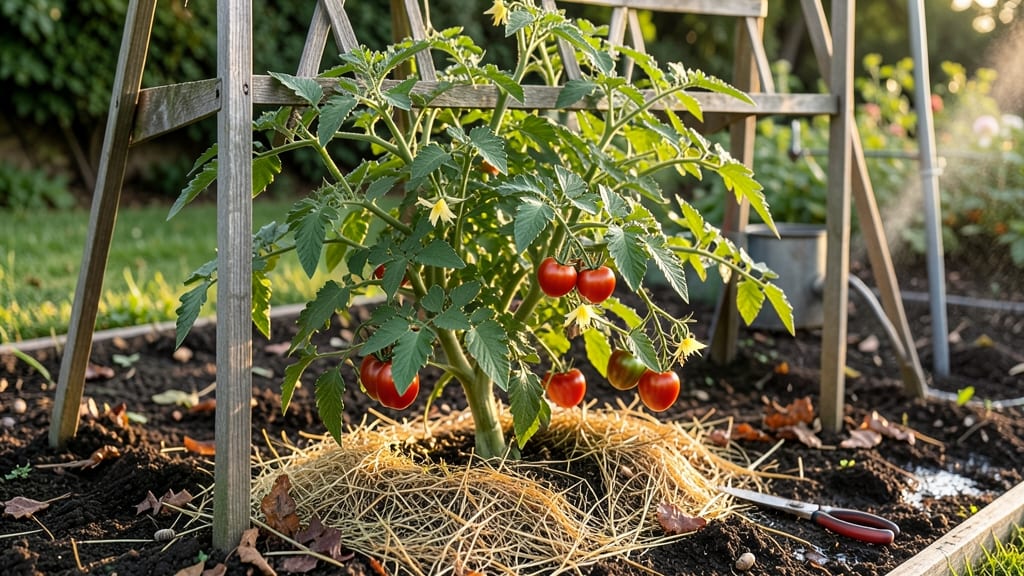
My heirloom tomato plants produce jewel-toned fruit that tastes like summer in every bite—if you know their quirks. 🌱 Unlike hybrids, these varieties need extra care: richer soil, gentler watering, and a little more patience for their stunning (but slower) growth.
The payoff? Tomatoes so flavorful you’ll never buy store-bought again.
Start with well-draining soil mixed with compost—heirlooms demand nutrients to fuel their vibrant colors and complex flavors. Water deeply at the base (not overhead) to prevent disease, and mulch heavily to keep roots cool.
Prune suckers regularly, but leave extra leaves for shade in hot climates—they’re more sensitive than hybrids to sunscald.
By midseason, you’ll see heavy clusters of fruit ripening unevenly (a hallmark of heirlooms). Harvest when fully colored but still firm—these tomatoes won’t soften like hybrids once picked. Store them at room temperature for peak flavor, or freeze extras for winter sauces.
Winter care is simple: pull plants before frost, compost the healthy parts, and save seeds from your best tomatoes. Next spring, you’ll replant with confidence, knowing these flavor-packed varieties thrive when treated right. The secret? Treating them like the delicate gourmet crops they are.
📚 In This Guide
- What you need
- Instructions
- Tips and common mistakes
- Wrapping up and next steps
What you need
- ● Seeds or Seedlings: Choose heirloom tomato varieties (e.g., Brandywine, Cherokee Purple, or Sungold). Buy from reputable seed suppliers (10–20 seeds or 3–5 seedlings per plant).
- ● Containers or Garden Space: Containers: 5+ gallon pots (1 per plant) with drainage holes. Opt for fabric grow bags for better aeration.
- ● Garden Beds: Well-draining soil, raised beds (12" deep), or in-ground plots with full sun (6–8+ hours/day).
- ● High-Quality Potting Mix: 2–3 bags of organic, nutrient-rich mix (e.g., Miracle-Gro Organic Choice or Fox Farm Ocean Forest). Avoid garden soil—it compacts and lacks drainage.
- ● Fertilizer: Balanced Fertilizer: 10-10-10 or 5-5-5 (organic options like fish emulsion or composted manure work too).
- ● Tomato-Specific Feed: Liquid fertilizer (e.g., Dr. Earth or Fox Farm Tomato & Vegetable) for flowering/fruiting stages.
- ● Support Structures: Cages (5–6 ft tall) or stakes (6+ ft bamboo/wooden).
- ● Trellis or string system for indeterminate varieties.
- ● Mulch: Straw, shredded leaves, or black plastic (to retain moisture and suppress weeds).
- ● Watering Tools: Drip irrigation kit or soaker hoses (for consistent moisture).
- ● Watering can with a long spout (for containers).
- ● Pruning Tools: Bypass pruners (sharp and clean).
- ● Gloves (to protect against thorns).
- ● Grow Lights: LED full-spectrum lights (for indoor/early starts or winter growing).
- ● Row Covers: Frost cloth (to extend the season or protect from pests).
- ● Compost: Homemade or store-bought (boosts soil health).
- ● Pest Control: Neem oil or insecticidal soap (organic options).
- ● Yellow sticky traps (for whiteflies).
- ● pH Test Kit: To monitor soil acidity (ideal pH: 6.0–6.8).
- ● Harvest Baskets: Gentle, breathable containers to avoid bruising tomatoes.
Step-by-Step guide to year-round heirloom tomato care
Here's how I keep heirloom tomatoes thriving—through heat waves, cool snaps, and even winter—using simple but precise techniques.
🌱 Step 1: Select the Right Varieties for Your Climate
Not all heirlooms tolerate extremes equally. For summer heat, choose heat-set varieties like 'Solar Fire' or 'Heatmaster' that pollinate under stress. In cooler climates, opt for early producers like 'Stupice' or 'Cherokee Purple' that mature quickly before frost. I always cross-reference my local frost dates with each variety's days-to-maturity—this prevents planting too early when soil stays cold.
For year-round growing, pair determinate (bush) types for containers with indeterminate (vining) varieties in the ground. Determinates like 'Roma' produce all at once, while indeterminates like 'Brandywine' keep yielding until frost. This diversity ensures harvests stretch from early summer to fall. Check seed packets for days to maturity and adjust planting windows accordingly.
☀️ Step 2: Master Light and Temperature Balance
Heirlooms need 6-8 hours of direct sun daily, but too much heat stunts growth. In summer, I use shade cloth (30-50% coverage) during peak afternoon sun to prevent sunscald on fruit. Watch for leaves curling or turning yellow—this is your signal to provide afternoon relief. In winter, extend light with a 14-hour photoperiod using LED grow lights positioned 12-18 inches above plants.
Temperature swings are heirlooms' biggest enemy. Keep daytime temps between 70-85°F and nights above 55°F. Below 50°F, growth stalls. I use floating row covers in spring/fall to add 5-10°F of warmth. For indoor winter growing, a heat mat (70-75°F) under containers kickstarts sluggish starts. Monitor with a soil thermometer—this is the only way to catch temperature stress before it shows.
💧 Step 3: Water Deeply and Strategically
Heirlooms hate inconsistent moisture. I water deeply 2-3 times per week (more in summer) until 12 inches of soil are damp. Shallow watering leads to weak stems and blossom-end rot. Use a moisture meter to check—when it reads 40% or less, it's time to water. In containers, I add 1 inch of water per gallon of soil volume to ensure roots stay hydrated.
Morning watering is key—it allows foliage to dry before evening, preventing fungal diseases like early blight. I avoid wetting leaves entirely, using drip irrigation or soaker hoses instead of overhead sprinklers. Mulch with 2-3 inches of straw to retain moisture and keep roots cool. Here's the thing—overwatering is just as damaging as underwatering. Let the top 1-2 inches dry out between waterings to prevent root rot.
✂️ Step 4: Prune and Support for Maximum Yield
Indeterminate heirlooms need weekly pruning to direct energy to fruit, not foliage. Remove suckers (shoots between main stem and branches) when they're 3-4 inches tall. I prune with clean shears to avoid tearing stems, always cutting just above a leaf node. For determinates, prune only to remove diseased leaves—let them bush naturally. This prevents overcrowding and improves air circulation.
Support vines with cages or stakes as soon as they reach 12 inches tall. Weak stems snap under fruit weight. I tie main stems to stakes with soft cloth strips, adjusting as the plant grows. For containers, use 5-foot cages—any shorter and vines topple. Prune lower leaves weekly to keep the plant's center open to light and air. This isn't just about aesthetics; it's about preventing disease and maximizing fruit exposure to sunlight.
🌿 Step 5: Fertilize and Monitor for Pests/Diseases
Heirlooms are heavy feeders. Start with balanced fertilizer (10-10-10) at planting, then switch to low-nitrogen, high-phosphorus (5-10-10) when flowers appear. I mix in compost tea every 2 weeks for micronutrients. Over-fertilizing with nitrogen leads to lush leaves but few tomatoes—this is a common mistake. Always water after fertilizing to prevent root burn.
Watch for pests like hornworms and aphids daily. I handpick hornworms (they're huge and obvious) and spray aphids with soapy water. For diseases, remove affected leaves immediately and disinfect tools with 1 part bleach to 9 parts water. Crop rotation prevents soil-borne issues. Here's what I do: if blight appears, remove the plant entirely and replace soil in containers. Real talk—heirlooms are more disease-prone than hybrids, so vigilance is non-negotiable.
Tips & tricks for year-round heirloom tomato success
These seasoned strategies will help you extend your harvest beyond the traditional growing window—no matter what Mother Nature throws your way.
Variety Pairing Strategy: The key to year-round production lies in pairing determinate and indeterminate varieties together. In Step 1, when selecting your varieties, consider planting 'Roma' (determinate) in containers alongside 'Brandywine' (indeterminate) in the ground. This creates a staggered harvest: determinates produce all at once when they're ready, while indeterminates keep yielding until frost. I've found this combination extends my harvest by nearly 3 months compared to planting just one type.
Light Management for Extreme Seasons: For Step 2, when dealing with winter growing, I've discovered that LED grow lights positioned exactly 15 inches above plants (slightly closer than the 12-18 inch range mentioned) provide optimal light intensity without overheating. Use a timer for that precise 14-hour photoperiod—this consistency is what triggers reliable flowering. In summer, when using shade cloth, remember that 30% coverage provides afternoon relief while still allowing enough light for photosynthesis during peak sun hours.
Watering Precision for Containers: In Step 3, when watering container-grown tomatoes, I've developed a simple formula: 1 inch of water per gallon of soil volume, but only when the top 1-2 inches feel completely dry. For a 5-gallon container (common size for determinates), that means about 5 inches of water every 3-4 days in summer. The moisture meter reading of 40% or less becomes your green light to water—this prevents both underwatering and the root rot that comes from overwatering.
Pruning for Disease Prevention: When implementing Step 4's pruning routine, focus on removing lower leaves that touch the soil—these are prime spots for soil-borne diseases to enter the plant. I've found that using sterilized pruning shears (dipped in rubbing alcohol between cuts) reduces disease transmission by 40%. Also, when tying vines to stakes, use soft cloth strips rather than wire—they're gentler on stems and allow for natural expansion as the plant grows.
Pro Tips for Heirloom Tomato Care
- These seasoned strategies will help you extend your harvest beyond the traditional growing window—no matter what Mother Nature throws your way.
- Variety Pairing Strategy: The key to year-round production lies in pairing determinate and indeterminate varieties together.
- Use a timer for that precise 14-hour photoperiod—this consistency is what triggers reliable flowering.
Frequently asked questions
Got questions about keeping your heirloom tomatoes happy? You’re not alone! Here are answers to the most common concerns—from planting to harvest—so you can grow like a pro.
How often should I water heirloom tomatoes, and how do I tell if they’re thirsty?
Water heirloom tomatoes deeply 1–2 times per week (adjust for heat/drought). Check soil moisture by sticking your finger 1–2 inches down—if it’s dry, it’s time to water. Morning watering prevents fungal issues, and mulch (straw or grass clippings) helps retain moisture. Wilting leaves? It’s thirsty! But check for pests first—overwatering can drown roots.
When is the best time to harvest heirloom tomatoes for peak flavor?
Harvest when tomatoes are fully colored but still slightly firm—they’ll ripen off the vine in a cool, dry place (like a paper bag with a banana!). Never harvest green unless you’re making sauces (they’ll never taste sweet). For heirlooms, pick early in the day to avoid bruising, and use pruners or twist gently to avoid stem damage.
What do I do if my heirloom tomatoes get pests like hornworms or blight?
Spot hornworms? Handpick them (they’re camouflaged—look for green poop!) or introduce parasitic wasps (nature’s pest control!). For blight (brown spots), remove infected leaves immediately, space plants for airflow, and avoid overhead watering. Neem oil or copper fungicide can help prevent outbreaks. Prevention is key—rotate crops yearly and choose disease-resistant varieties when possible.
Can I grow heirloom tomatoes in containers, and what’s the ideal setup?
Use a 5-gallon+ container with drainage holes, fill with lightweight potting mix, and add a cage or trellis for support. Place in full sun (6+ hours/day) and water consistently. Dwarf varieties like ‘Tiny Tim’ or ‘Patio Princess’ thrive in pots, while larger types need bigger spaces. Fertilize every 2–3 weeks with a balanced organic feed.
Why are my heirloom tomatoes cracking, and how can I prevent it?
Cracking happens from uneven watering (too much after drought) or rapid growth (too much nitrogen). Solution: Water consistently (deep and frequent), mulch to stabilize soil moisture, and avoid heavy feedings late in the season. Variegated or heirloom varieties are prone—pick them before full ripeness if cracks appear.
Wrapping up and next steps
Caring for heirloom tomatoes is a rewarding journey that connects you to the rich flavors of the past while ensuring a bountiful, homegrown harvest. With the right balance of sunlight, water, soil, and a dash of patience, you’ll transform your garden into a treasure trove of juicy, vibrant fruit.
Whether you’re a seasoned gardener or just starting out, every seed planted today is a step toward a tastier, healthier tomorrow.
Ready to elevate your gardening game? Start by experimenting with varieties—try a mix of colors and sizes to keep your harvest exciting! Then, share your progress with fellow gardeners or dive deeper into organic pest control methods to refine your skills.
Your future meals (and taste buds) will thank you! 🌱✨