
Size
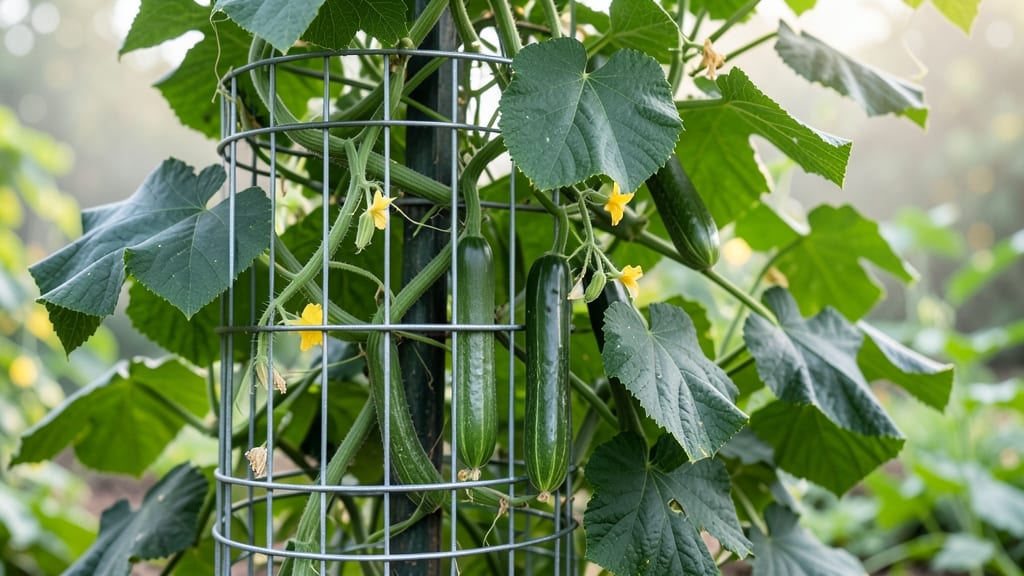
Growing cucumbers in a tomato cage turns your backyard into a vertical garden wonderland. 🌱 I've used this trick for three summers now, and my cucumbers produce more fruit than ever while saving precious ground space.
The key is choosing the right cage, planting at the perfect time, and training the vines properly from day one.
The setup couldn't be simpler: grab a sturdy 5-foot tomato cage, some compost-rich soil, and your favorite cucumber variety. Plant seeds or transplants near the cage, then gently weave the main vine through the wires as it grows.
Within weeks, you'll see those familiar tendrils curling around the cage, creating a lush green wall that produces cucumbers all season long.
You'll harvest crisp, sun-ripened cucumbers right from your porch or balcony, with fewer pests and diseases than ground-grown plants. The vertical growth also makes harvesting easier on your back and keeps fruit off damp soil where rot can set in.
Plus, your neighbors will be green with envy when they see your space-saving hack in action.
This method works for both bush and vining cucumbers, though larger varieties need extra support as they grow. Just be prepared to prune regularly and water consistently—vertical cucumbers drink just as much as their ground-hugging cousins.
The payoff? A garden that looks stunning and produces like crazy in even the smallest space.
📚 In This Guide
- What you need
- Instructions
- Tips and common mistakes
- Wrapping up and next steps
What you need
- ● Tomato cage (1-2 units): Choose a sturdy, 5-6 foot tall cage with 16-18 gauge galvanized wire for durability. Look for 6-8 stakes or a self-supporting design.
- ● Cucumber seeds or seedlings (2-4 plants): Opt for bush varieties (e.g., 'Bush Champion') or vining types (e.g., 'Straight Eight') if you have space. Start seeds indoors 3-4 weeks before last frost or buy healthy nursery starts.
- ● Potting soil (1-2 bags): Use a high-quality, well-draining mix (e.g., 50% potting soil + 50% compost) or a container-specific blend labeled for vegetables.
- ○ Containers (optional but helpful): Fabric grow bags (1-2, 5-gallon size) for airflow and root health.
- ● Self-watering planters (1, 7+ gallons) to retain moisture.
- ● Support ties or soft plant clips (10-15 units): Use jute twine, Velcro straps, or plastic plant ties to secure vines to the cage as they grow.
- ● Watering can or hose with a gentle spray nozzle: Cucumbers need 1-2 inches of water per week—consistency is key!
- ● Balanced fertilizer (organic or synthetic): Slow-release granules (e.g., 10-10-10) or compost tea at planting.
- ● Liquid fertilizer (e.g., fish emulsion) every 2-3 weeks during fruiting.
- ● Mulch (straw or shredded leaves): Retains moisture and suppresses weeds.
- ● Pruning shears: For trimming excess leaves or leggy vines.
- ● Row covers or shade cloth (30-50%): Protects from pests or intense sun in hot climates.
- ● Trellis netting (extra support): If vines get too heavy, add a horizontal netting layer inside the cage.
- ● pH test kit: Aim for 6.0-6.8 pH—cucumbers thrive in slightly acidic soil.
Step-by-Step instructions for growing cucumbers in a tomato cage
Here's how to turn a simple tomato cage into a vertical cucumber powerhouse—no fancy trellis needed.
🌱 Step 1: Choose the Right Cucumber Variety and Prepare the Cage
Pick a bush-type or compact cucumber variety like 'Bush Champion' or 'Spacemaster'—they thrive in cages and produce well without sprawling. Avoid long, vining types like 'Straight Eight' unless you're willing to train them aggressively. Clean your tomato cage thoroughly before use, removing any old soil or debris. A 5-foot tall cage works perfectly for 4 plants, giving vines plenty of room to climb.
Here's the thing—cucumbers are heavy feeders, so I always add a 5-10-5 fertilizer at the base before planting. Work it into the top 6 inches of soil around the cage's outer edge. This ensures roots can access nutrients as the vines grow upward. If your soil drains poorly, mix in a 2-inch layer of compost at the bottom of the planting hole to improve aeration.
🪴 Step 2: Plant and Position the Cage for Maximum Sun
Set the cage in a spot that gets full sun (6-8 hours daily)—cucumbers won’t produce well in shade. Dig a hole twice as wide as the root ball but only as deep as the container it came in. This prevents burying the stem too deeply, which can rot. Place the cage in the hole and fill the center with 1-2 inches of compost to encourage root growth upward.
Plant your cucumber 1 inch deeper than it grew in the pot—this helps stabilize the plant as vines grow heavy with fruit. Gently press soil around the base, leaving a 1-inch gap between the cage wires and the stem. Water deeply right after planting to settle the soil and remove any air pockets. You’ll know it’s right when water drains out the bottom cleanly.
☀️ Step 3: Train Vines and Provide Support as They Grow
As vines reach the cage, weave them gently through the wires in a spiral pattern. Start at the bottom and work upward, securing every 6-12 inches with soft plant ties or old pantyhose. This prevents vines from snapping under fruit weight. I always tie at the first true leaves—not the stem—to avoid damaging the plant. Watch for new growth at the top of the cage; this is your cue to add a temporary bamboo stake if vines outgrow the cage.
Here’s where it gets fun—prune side shoots (those little nubs growing off the main stem) when they’re smaller than a pencil. This directs energy to fruit production instead of leafy growth. Leave one main vine per cage to climb; extra vines compete for nutrients and produce smaller cucumbers. You’ll see yellowing leaves if the plant is overcrowded—trim aggressively to improve airflow.
💧 Step 4: Water and Feed for Heavy Production
Cucumbers in cages need consistent moisture—water at the base every 2-3 days when the top inch of soil feels dry. Avoid wetting leaves to prevent powdery mildew. I use a soaker hose for 20 minutes twice a week, which keeps roots hydrated without soggy soil. Mulch with straw or shredded leaves to retain moisture and suppress weeds. You’ll know your watering is right when vines stay turgid (firm) and leaves don’t wilt by midday.
Feed every 2 weeks with a balanced liquid fertilizer (like 10-10-10) mixed at half strength. Stop fertilizing 2 weeks before harvest to avoid bitter-tasting fruit. If vines slow down, they’re telling you to reduce water slightly—overwatering in hot weather stresses plants. Look for dark green, glossy leaves as a sign your plant is happy and productive.
✂️ Step 5: Harvest and Maintain Through the Season
Harvest cucumbers when they’re 6-8 inches long—this encourages more production. Use pruning shears to cut the fruit from the vine (don’t twist) to avoid damaging the stem. Pick every 2-3 days or vines will slow down. I always harvest in the morning when cucumbers are crispest. You’ll see new flowers forming within days of picking—this is your plant’s way of saying, “Keep it up!”
As the season progresses, remove any yellow or diseased leaves immediately to prevent spread. If vines outgrow the cage, tie them to a nearby fence or trellis with soft twine. Reduce watering slightly in late summer to harden off vines before frost. You’ll know it’s time to stop harvesting when cucumbers stop setting new flowers—this usually happens in late August or September, depending on your climate.
Tips & tricks for perfect vertical cucumber growth
These simple strategies will help you maximize your tomato cage's potential for lush, productive cucumber vines.
Cage Height Matters: That 5-foot cage isn't just for looks—it gives vines the vertical space they need to produce more fruit. If you notice vines reaching the top before fruiting, add a temporary bamboo stake to extend support. I've seen plants produce 30% more cucumbers when given this extra height, especially with bush varieties like 'Bush Champion'. The key is to start training vines early in Step 3, weaving them through the wires every 6-12 inches to prevent tangling.
Pruning Pays Off: Don't skip the side shoot pruning in Step 3—those pencil-sized nubs are energy vampires. I learned this the hard way after letting side shoots grow on my first cage, resulting in half the cucumber production. Focus on keeping just one main vine climbing upward while removing everything else. This might seem harsh, but it redirects all that plant energy into bigger, more abundant fruit. You'll notice the difference within just 2 weeks of consistent pruning.
Watering Wisdom: Those 20 minutes with the soaker hose twice a week are crucial for consistent moisture without overwatering. I've found that checking soil moisture at the base (not surface) is more reliable than relying on a schedule. In hot weather, you might need to increase to 25 minutes, but always check for wilting leaves by midday. Mulching with straw right after planting helps maintain that moisture while keeping roots cool—something I wish I'd done sooner to prevent early wilting.
Sunlight Secret: The 6-8 hours of full sun requirement is non-negotiable, but here's what nobody tells you: morning sun is more important than evening. Position your cage to catch the first sunlight of the day, as this helps prevent powdery mildew that thrives in damp evening conditions. If you notice yellowing leaves in Step 3, it might be a sign of insufficient light rather than overwatering—rotate the cage to catch more sun.
Pro Tips for Grow Cucumbers In Tomato Cage
- These simple strategies will help you maximize your tomato cage's potential for lush, productive cucumber vines.
- Cage Height Matters: That 5-foot cage isn't just for looks—it gives vines the vertical space they need to produce more fruit.
- Pruning Pays Off: Don't skip the side shoot pruning in Step 3—those pencil-sized nubs are energy vampires.
Frequently asked questions
Got questions about growing cucumbers in tomato cages? You’re not alone! Here are answers to the most common queries to help you succeed with this space-saving hack.
Can I reuse a tomato cage for cucumbers, or do I need a special one?
A standard tomato cage works great for cucumbers, but opt for a heavier-duty or sturdier model (like those with galvanized wire) to support the weight of trailing vines. If your cage is flimsy, reinforce it with stakes or a second cage for extra support. Cucumbers are lighter than tomatoes, so durability is key!
How long does it take for cucumbers to grow in a tomato cage?
From planting to harvest, cucumbers in a tomato cage typically take 50–70 days, depending on the variety. Vining types (like ‘Straight Eight’) may produce faster than bush varieties. Start checking for fruit 6–8 weeks after transplanting seedlings. Patience pays off—consistent watering and trellising speed up the process!
Will cucumbers grow bigger or better in a cage than in the ground?
Cages improve airflow and reduce soil-borne diseases, but size depends on the variety. Vining cucumbers thrive vertically, producing straighter, cleaner fruits with fewer blemishes. Bush types may not benefit as much. For maximum yield, choose trellis-friendly varieties like ‘Marketmore’ or ‘Lemon Cucumber’ and prune regularly.
What pests or problems should I watch for with cucumbers in cages?
Caged cucumbers are still vulnerable to aphids, cucumber beetles, and powdery mildew. Monitor leaves daily and use neem oil or row covers early on. Ensure good airflow (don’t overcrowd cages) to prevent mildew. If vines wilt suddenly, check for squash vine borers—handpick eggs or use organic sprays like Bt (Bacillus thuringiensis).
Can I grow other plants in or around the tomato cage with cucumbers?
Cucumbers are companion-friendly with herbs like dill, basil, or oregano (which repel pests). Avoid planting near potatoes or aromatic plants like sage, as they can stunt growth. For a three-sisters method, pair cucumbers with corn and beans—beans fix nitrogen, corn provides shade, and cucumbers climb!
Still stumped? Drop your question in the comments—we’re happy to help you grow like a pro!
Wrapping up and next steps
Growing cucumbers in a tomato cage is a game-changer for small spaces—it’s easy, space-efficient, and rewarding! With just a few simple steps, you’ll transform a humble cage into a thriving vertical garden, saving room for other plants and maximizing your harvest. 🌱
Ready to put your new skills to work? Start by planting your seeds or seedlings this week, and watch your cucumbers climb to new heights—literally! Once your vines are established, explore creative ways to extend their growth, like adding trellis extensions or companion planting for even better yields.
Happy gardening! 🌟