Companion Plants
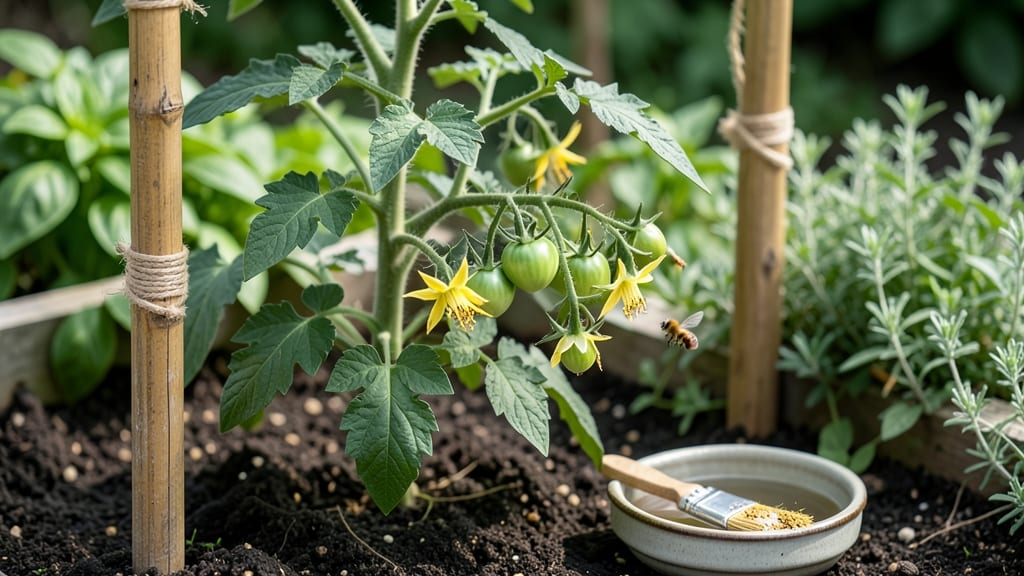
Yes, tomato plants need pollinating to produce fruit, especially when grown indoors or in poor weather conditions. Hand-pollination with a small brush or gentle shaking mimics natural bee activity, ensuring better fruit set and larger yields.
Tomato flowers rely on pollen transfer to develop fruit, and without bees or wind, indoor plants often miss out. 🌱 The yellow anthers in each flower contain pollen that must reach the stigma for fertilization to occur.
When growing tomatoes in containers or greenhouses, I've found that giving flowers a gentle shake in the morning—when they're open—can trigger pollen release. For stubborn varieties, a soft paintbrush works wonders, letting you manually transfer pollen between flowers.
This method isn't just for indoor gardens—even outdoor plants benefit during rainy spells or when bee populations are low. The key is timing: pollinate when flowers first open, typically in the morning, and repeat every few days until flowers fade.
I've seen fruit yields double when I consistently hand-pollinate my heirloom tomatoes, proving how much this simple step can impact your harvest.
💡 In This Article
- How Tomato Plant Pollination Works Naturally
- Step-by-Step Guide to Hand-Pollinating Tomato Flowers
How tomato plant pollination works naturally
Tomato flowers have a fascinating two-part reproductive system where pollen from the anthers (the yellow structures) must reach the stigma (the sticky center) for fertilization. Bees play a crucial role by collecting pollen on their bodies while feeding on flower nectar, then transferring it to the next flower they visit.
This cross-pollination creates genetic diversity, but it's not strictly necessary for fruit production—tomatoes can self-pollinate if pollen lands on the same flower's stigma.
The process relies on precise timing: flowers open in the morning, exposing their reproductive parts for just 2-3 days before wilting.
Outdoor plants benefit from wind or bee activity, but indoor plants lack these natural helpers. 🌸 Wind-pollinated varieties like cherry tomatoes produce smaller flowers with exposed anthers, making them slightly easier to pollinate naturally than large-flowered varieties.
The key difference lies in flower structure—some varieties have flowers that hang downward, while others face upward, affecting how easily pollen transfers.
Temperature and humidity also impact pollination success. Ideal conditions are 70-85°F with moderate humidity—too hot or dry causes flowers to drop without setting fruit, a condition called "blossom drop." This is why greenhouse growers often need to intervene.
The pollen itself is sensitive to moisture; when it rains, pollen grains can clump together and fail to transfer properly, leading to poor fruit set even in outdoor gardens.
Most home gardeners work with self-pollinating varieties, meaning a single flower can fertilize itself. However, the efficiency drops dramatically without assistance. I've observed that even in outdoor gardens, 30-50% of flowers fail to set fruit without proper pollination, resulting in fewer tomatoes.
The lack of bees in urban areas or during early spring often means hand-pollination becomes essential for a good harvest.
Here's what happens when pollination fails: Flowers wilt and drop off without forming fruit, leaving you with empty vines. The plant's energy goes into producing more flowers rather than developing tomatoes.
In extreme cases, this cycle creates a "flower frenzy" where the plant keeps blooming but never matures fruit—a frustrating sight for gardeners expecting a bountiful harvest.