
Companion Plants
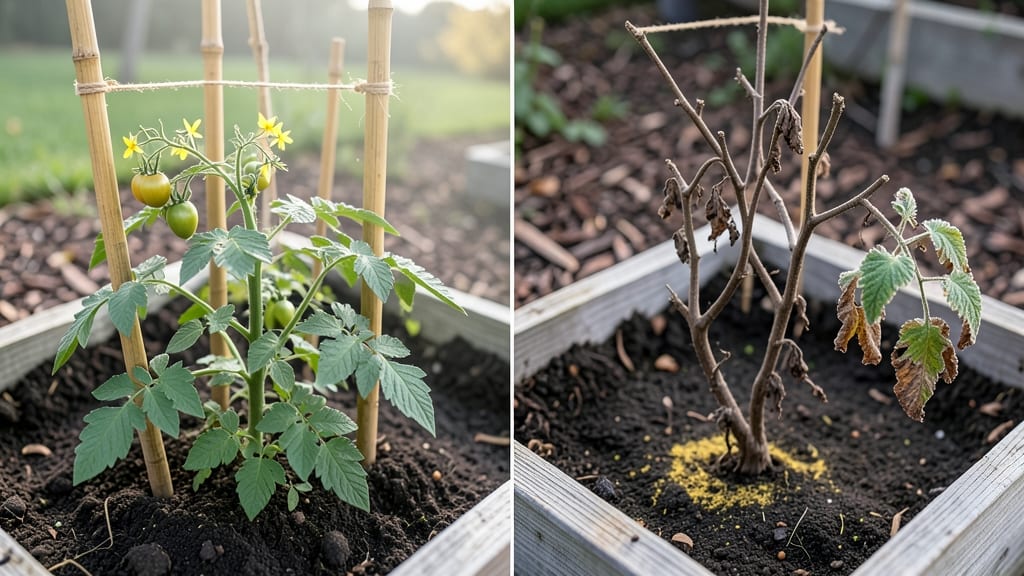
Tomato plants don't naturally come back each year in most climates because they're annuals that complete their life cycle and die after fruiting. However, you can extend their lifespan by overwintering them in warm zones or saving seeds for replanting.
Most gardeners treat tomato plants as annuals because they're sensitive to frost and cold temperatures, which kill the plant's above-ground growth. 🌱 In warmer climates like USDA zones 10 and above, tomatoes can sometimes survive winter as perennials, but even then, they often produce less fruit the following year.
The key to getting tomatoes back in your garden is either saving seeds from your best plants or carefully overwintering mature plants indoors or in greenhouses. This way, you can maintain the exact varieties you love rather than starting from scratch each season.
For those in cooler regions, seed-saving becomes the most practical approach. After your tomatoes ripen, let a few stay on the vine until they're fully mature, then scoop out the seeds, ferment them in water for a few days, and dry them for storage.
Next spring, you'll have fresh seeds ready to plant, preserving the plant's genetics and potentially even improving its traits over time. This method also lets you experiment with heirloom varieties that aren't always available commercially.
💡 In This Article
- Why Tomato Plants Die Annually in Most Climates
- How to Overwinter Tomato Plants for Next Year’s Harvest
Why tomato plants die annually in most climates
The reason tomato plants (Solanum lycopersicum) don't return year after year in most regions comes down to their biological classification as cool-season annuals. This means their entire life cycle—from seed germination to flowering, fruiting, and death—typically completes within 6-8 months during a single growing season.
After producing fruit, the plant's energy shifts toward seed production, and its above-ground growth naturally declines as temperatures drop or daylight shortens.
Frost is the primary killer for garden tomatoes, as even light freezes (32°F or below) trigger cellular damage in the plant's delicate tissues. The roots may survive briefly in mild winters, but the stems and leaves blacken and die back within hours.
In tropical climates (USDA zones 10-12), tomatoes can sometimes persist as perennials because they're shielded from frost, but they often produce smaller yields the following year due to reduced vigor. The trade-off? They avoid the need for replanting entirely.
Here's what happens botanically: As temperatures dip below 50°F, tomato plants stop producing chlorophyll efficiently, causing leaves to yellow and drop. The plant's natural defense mechanism kicks in, redirecting nutrients to the roots and crown—essentially preparing for dormancy.
However, unlike true perennials (such as asparagus or rhubarb), tomatoes lack the hardy underground structures to regenerate fully. Their crowns may survive in protected microclimates, but they rarely produce the same vigor as fresh seedlings.
Another factor is daylight sensitivity. Tomatoes are short-day plants, meaning they flower more readily when daylight hours shorten (a signal for winter). In colder climates, this triggers a premature end to the growing season.
Even if you protect the plant from frost, the lack of proper winter dormancy means it won't rebound like a true perennial. 🌱 The solution? Either grow them as annuals or take proactive steps to extend their lifespan, like overwintering or seed-saving.
For comparison, consider eggplants or peppers, which are also annuals but can sometimes survive mild winters in warm zones. Tomatoes, however, are more frost-sensitive due to their thinner stems and larger leaf surface area, which makes them more vulnerable to rapid temperature drops.
This is why gardeners in zones 8-9 often treat tomatoes as annuals unless they take special precautions.
What most gardeners don't realize is that even in warm climates, tomatoes won't reliably return year after year without human intervention. The plant's energy is focused on reproduction, not survival. Without protection or seed-saving, you're essentially starting from scratch each season—just like planting new seeds.
This is why heirloom varieties, which rely on seed-saving, are often preferred by gardeners who want to maintain specific traits.