
Flowers
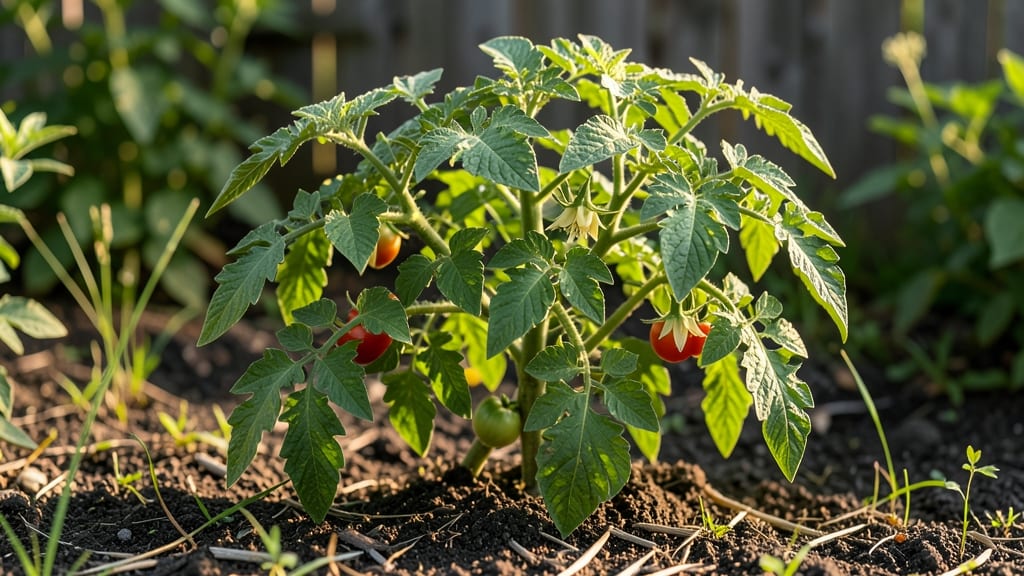
The difference between male and female tomato flowers comes down to their reproductive anatomy: male flowers lack an ovary at their base, while female flowers develop a small green fruit (the ovary) beneath their petals. This fundamental distinction directly influences how well your plants will produce fruit.
The key visual difference lies in the flower's base structure.
Male blooms feature long, yellow pollen sacs (anthers) but no ovary, while female flowers have that distinctive green bulb at their center where fruit will form. 🌱 Understanding this helps gardeners strategize pollination—especially for greenhouse growers or when dealing with wind-sensitive varieties.
The ovary's presence in female flowers is what eventually swells into your tomatoes, making their identification crucial for maximizing harvest potential.
This anatomical difference also explains why some tomato plants produce more fruit than others. Determinate varieties naturally prioritize female flowers for compact harvests, while indeterminate types may need occasional male flower removal to redirect energy toward fruit development.
The timing of female flower appearance often correlates with peak fruiting periods, giving gardeners a natural cue for pruning or fertilizing adjustments.
💡 In This Article
- How to Identify Male vs Female Tomato Flowers Visually
- Why Female Tomato Flowers Matter for Fruit Production
How to identify male vs female tomato flowers visually
Male tomato flowers are the simplest to spot—they lack any ovary structure at their base. Instead, you'll notice five elongated yellow pollen sacs (anthers) hanging prominently beneath the petals, resembling tiny bananas. These anthers produce pollen that fertilizes female flowers, but they won't develop into fruit.
Female flowers, however, feature that telltale green bulb at their center, which is the ovary where future tomatoes form. This ovary appears as a small, rounded bump just beneath the petals, often with a tiny white tip indicating the stigma.
The ovary in female flowers typically measures about 3-5 millimeters in diameter when first visible, growing slightly as the flower matures.
In contrast, male flowers have no such structure—their entire focus is on pollen production. 🌿 What's fascinating is how this difference becomes more obvious as flowers age: male flowers often drop their petals completely after pollination, while female flowers may retain their petals longer as the ovary develops.
This persistence helps gardeners track which flowers are actively contributing to fruit production.
Gardeners often confuse young female flowers for male blooms because the ovary may not be immediately visible. The key is to look closely at the flower's base—hold it between your fingers and gently separate the petals to check for that telltale green bump.
A magnifying glass (or even your phone's camera with 2x zoom) can reveal details that are invisible to the naked eye. This visual inspection becomes especially critical when dealing with greenhouse-grown tomatoes, where natural pollinators like bees may be absent.
Another visual clue lies in the flower's overall shape. Male flowers tend to have slightly longer, more slender petals that create a more "open" appearance, while female flowers often appear slightly fuller due to the developing ovary.
The petals of female flowers may also show slight yellowing at their edges as the ovary matures, a sign that fertilization has occurred. This subtle color change serves as nature's way of signaling that fruit development is underway.
For gardeners working with heirloom varieties, this identification process becomes even more important. Some heirloom tomatoes produce flowers with both male and female characteristics (called "perfect" flowers), which can confuse even experienced growers.
In these cases, the presence of both pollen sacs and an ovary at the base confirms the flower's dual nature. Understanding these variations helps explain why certain heirloom varieties may produce fruit more sporadically than hybrid counterparts.
Timing also plays a role in identification. Early in the growing season, tomato plants often produce mostly male flowers to establish strong vines. As the plant matures, the ratio shifts toward female flowers—this transition typically occurs when the plant reaches about 12-18 inches in height, depending on the variety.
Recognizing this pattern helps gardeners anticipate their plant's fruiting potential and adjust care accordingly.