
Light Requirements
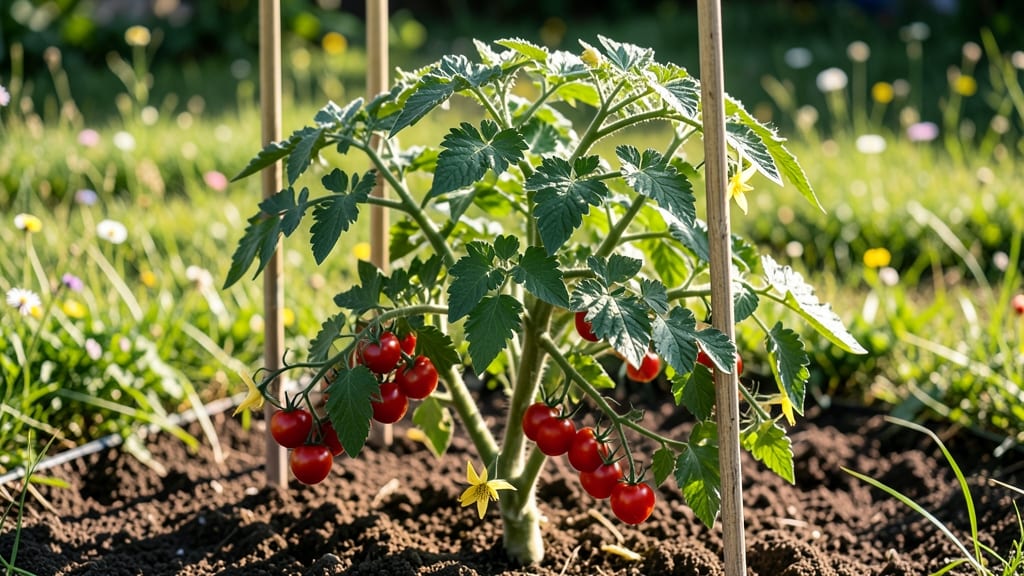
Six hours of sunlight meets the cherry tomato sun requirements to turn ordinary cherry tomatoes into bursting, sweet explosions of flavor—my plants went from bland to showstopping after I finally nailed this rule. 🌞 The difference isn’t just in the size; it’s in the sugar content, the color intensity, and how long they stay firm on the vine.
Too little sun, and you’ll get mealy, pale fruits that crack under their own weight.
Most gardeners overshoot or undershoot the mark. Six hours isn’t a strict minimum—it’s the baseline for consistent production. In hot climates, afternoon shade prevents sunscald, while containers need rotating to ensure even exposure.
I’ve seen cherry tomatoes thrive in partial shade (4-6 hours) by choosing compact varieties like 'Sweet 100' or 'Tiny Tim,' but they’ll never reach their full sweet potential.
Watch for these clues: leaves turning yellow or curling? That’s too much sun. Fruits staying small and green? Not enough. The sweet spot is bright, indirect light in the morning with gentle afternoon shade—especially in summer.
Prune suckers regularly to improve airflow, and water deeply at the base to prevent leaf scorch.
This works for ground beds, containers, or even greenhouses—just adjust the growing space to match your sunlight patterns. With the right balance, you’ll harvest pint-sized sunbeams from July through frost. Let’s get those vines soaking up the light!
Sunlight Shortfalls Explained
Understanding why cherry tomatoes struggle with sunlight—or thrive when they get it—boils down to photosynthesis, plant physiology, and environmental stress. When your plants aren’t basking in enough sun, a cascade of biological reactions (or lack thereof) kicks in.
Here’s why insufficient light leads to weak, flavorless, or even failing cherry tomatoes—and how to spot the signs before they spiral.
Cherry tomatoes are sun-hungry powerhouses—they need 6+ hours of direct sunlight daily to fuel their growth. When they don’t get enough light, their chloroplasts (the tiny solar panels in leaves) can’t produce enough glucose through photosynthesis.
This leads to: - Stunted growth: Without energy, plants divert resources to survival mode, prioritizing leaf production over fruit development. - Weak stems: Less glucose means lignin (the structural compound in stems) production drops, leading to floppy, leggy plants that snap under their own weight. - Pale, yellowing leaves: A classic sign of chlorosis, where chlorophyll breaks down due to lack of light.
💡 Pro Tip: If your tomatoes are stretching toward the light (a condition called etiolation), they’re desperate for more photons. Rotate pots or move containers every few days to encourage even growth.
Sunlight isn’t just about light—it’s also about heat regulation. Cherry tomatoes thrive in warmth (70–85°F) but struggle in cool, shady conditions. Here’s how insufficient sun creates a domino effect: - Poor pollination: Tomatoes rely on bees and warm air to transfer pollen.
Cool, cloudy days mean fewer visitors, leading to blossom drop or small, misshapen fruit. - Delayed ripening: Without enough UV light, lycopene (the pigment that gives tomatoes their red color and sweetness) doesn’t develop properly.
Result? Green, tart, or bland tomatoes that never fully ripen. - Fungal risks: Shady, damp conditions create the perfect breeding ground for blight and mold, weakening plants further.
✨ Science Note: Studies show tomatoes exposed to full sun develop 30–50% more sugar than those in partial shade—explaining why sun-grown tomatoes taste burstingly sweet!
Even if your tomatoes could get sun, physical barriers might be blocking their light.
Common culprits: - Tall structures: Fences, trees, or buildings casting hard shadows for 3+ hours a day. - Overcrowding: Other plants (like corn or sunflowers) stealing light via competition. - Wrong location: Containers on north-facing patios or under eaves get minimal sunlight, especially in short-day seasons (fall/winter).
🔥 Quick Fix: Use a sunlight tracker (like a solar pathfinder) to map your garden’s light exposure. If shadows linger past noon, relocate or prune obstructions.
Cherry tomatoes are warm-season plants—they need both sun AND heat to thrive.
When light is low: - Cooler soil temps slow root growth, reducing water and nutrient uptake. - Metabolic slowdown: Enzymes that convert starches to sugars (like phosphofructokinase) work 50% slower in cool conditions. - Dormancy triggers: Some varieties pause flowering if they don’t sense consistent warmth + light, leading to fewer fruit sets.
🎯 Actionable Insight: Use black plastic mulch or row covers to absorb and retain heat, mimicking ideal growing conditions even in partial shade.
Here’s the kicker: Light deprivation directly impacts nutrient availability.
Without enough photosynthesis: - Nitrogen uptake drops: Plants can’t convert nitrates into amino acids, leading to yellowing leaves (first on older foliage). - Potassium & magnesium deficiencies: These minerals, crucial for fruit development, become locked in leaves instead of moving to tomatoes. - Calcium struggles: Weak stems can’t transport calcium to developing fruit, causing blossom-end rot (a common sun-deprivation symptom).
💪 Fix It: If your tomatoes show these signs, side-dress with compost or use a balanced fertilizer (10-10-10) to compensate—but only after ensuring they get more light.
Cherry tomatoes planted in early spring or late summer face extra challenges because:
- Shorter daylight hours: In northern climates, days may only hit 10–12 hours of light—far below the 14+ hours they crave.
- Lower sun angle: In winter/summer solstices, sunlight hits at a shallow angle, reducing photosynthetic efficiency by up to 40%.
- Cloud cover: Overcast skies (common in Pacific Northwest or UK gardens) can block 50–70% of UV light, mimicking shade.
🌍 Solution: Extend the growing season with grow lights (LED or fluorescent) for 4–6 hours daily if natural light falls short. Full-spectrum bulbs (12,000–15,000 Kelvin) mimic sunlight best.
Fixing Sunlight Struggles for Cherry Tomatoes
Growing cherry tomatoes is a rewarding experience, but when they don’t get enough sunlight, their flavor and yield suffer. Below are practical, step-by-step solutions to ensure your plants thrive under the right light conditions—plus tips to keep them happy long-term.
If your cherry tomatoes are leggy, pale, or producing small, bland fruit, they’re likely light-deprived. Here’s how to fix it:
🔥 Move Plants to a Sunnier Spot
- Check your garden’s sunlight map: Use a sunlight tracker app (like Sun Surveyor) to identify the sunniest areas of your yard.
- Rotate containers weekly: If growing in pots, rotate them 180° every few days to ensure even sun exposure.
- Prioritize south-facing spots (in the Northern Hemisphere) or north-facing (in the Southern Hemisphere) for 6+ hours of direct sun.
🏠 Extend Sunlight Indoors or in Greenhouses
- Use grow lights if natural light is limited:
- LED grow lights (full-spectrum) are energy-efficient and mimic sunlight.
- Place lights 6–12 inches above plants and provide 12–16 hours of light daily.
- Adjust light schedules to match daylight hours (e.g., turn on at dawn, off at dusk).
- Reflective surfaces help: Line shelves with white or silver foil to bounce light onto plants.
🌱 Prune for Better Airflow & Light Penetration
- Remove lower leaves (up to 12 inches from the ground) to allow sunlight to reach the fruit clusters.
- Thin out overcrowded plants—space them 18–24 inches apart for optimal air circulation and light access.
If leaves turn yellow, crispy, or bleached, your plants may be getting too much direct sun (especially in hot climates). Try these fixes:
🌿 Provide Light Shade During Peak Hours
- Use shade cloth (30–50%) during midday (11 AM–3 PM) when the sun is harshest.
- Plant near taller crops (like corn or sunflowers) to create natural shade.
- Avoid plastic sheets—they trap heat and can damage plants.
💧 Increase Watering (But Smartly!)
- Water deeply in the morning to help roots absorb moisture before the heat sets in.
- Mulch with straw or wood chips to retain soil moisture and cool roots.
- Avoid wetting leaves at night to prevent fungal issues.
🌱 Choose Heat-Tolerant Varieties
If you’re in a hot climate, opt for heat-resistant cherry tomato varieties like:
- Solar Fire (handles heat well)
- Heatmaster (produces in high temps)
- Black Cherry (more drought-tolerant)
Once you’ve fixed the sunlight issue, keep these habits to maintain healthy cherry tomatoes:
✅ 📅 Plant at the right time: Start seeds 4–6 weeks before the last frost and transplant after soil warms to 60°F (15°C). ✅ 🌱 Use containers with wheels: Easy to reposition if sunlight shifts (e.g., due to tree growth). ✅ 🌿 Monitor leaf color: Dark green = healthy, yellow = too much sun or water stress, purple = not enough light. ✅ 🍅 Harvest regularly: Picking ripe tomatoes encourages more production and prevents shade from overripe fruit. ✅ 🔄 Rotate crops yearly: Prevents soil depletion and disease buildup.
Pro Tip: 💡 If you’re growing in a small space, consider vertical gardening—trellises or cages let you grow more plants in less area while maximizing sunlight exposure!
Frequently asked questions
What happens if cherry tomatoes get less than 6 hours of sun?
They’ll grow leggy, produce small fruit with poor flavor, and may develop pale leaves. Without enough light, plants can’t photosynthesize properly, leading to weak stems and fewer tomatoes. The sweetness and color intensity also suffer—expect bland, underdeveloped fruit instead of vibrant, juicy cherries.
Can cherry tomatoes grow in partial shade?
Yes, but with limitations. Varieties like 'Sweet 100' or 'Tiny Tim' tolerate 4-6 hours of sun better than others. In partial shade, expect smaller yields and less flavor. For best results, place containers on a sunny windowsill or rotate them daily to maximize light exposure.
How do I know if my cherry tomatoes are getting too much sun?
Watch for crispy, yellowing leaves or bleached patches—signs of sunburn. In hot climates, afternoon shade (especially between 11 AM–3 PM) helps prevent damage. Use shade cloth (30-50%) if your plants look stressed during peak sunlight hours.
What’s the best time of day for cherry tomato sunlight?
Morning sun (before 11 AM) is ideal—it’s bright but not scorching. Afternoon shade helps prevent leaf burn. In containers, rotate plants every few days to ensure even exposure. This balance maximizes growth while protecting delicate foliage.
Can I use grow lights for cherry tomatoes?
LED grow lights with full-spectrum bulbs (12,000–15,000 Kelvin) work best. Place them 6–12 inches above plants and provide 12–16 hours of light daily. This mimics natural sunlight, especially useful in greenhouses or indoor setups.