
Neem Oil
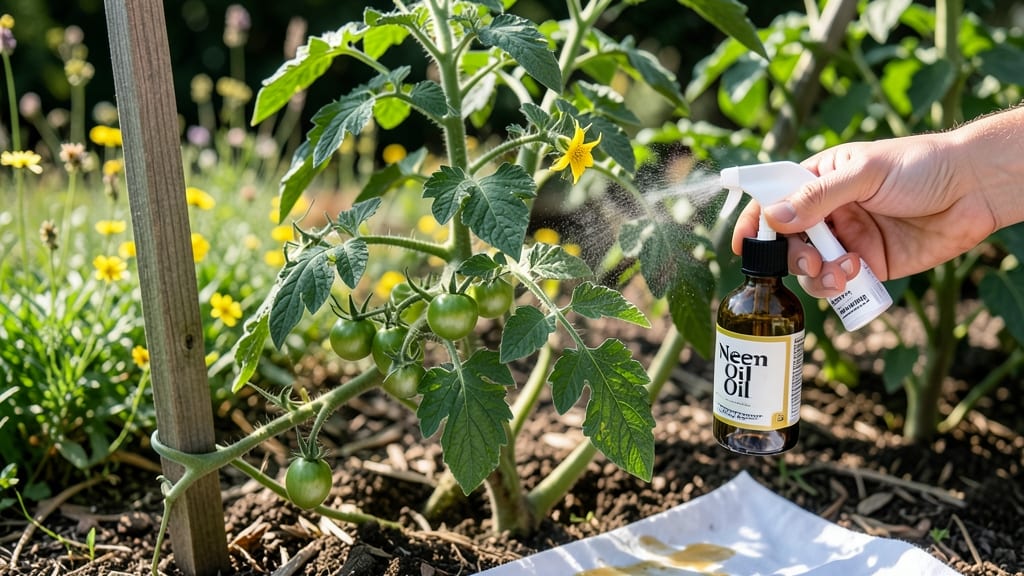
Neem oil can be used on tomato plants as a natural fungicide and insect repellent, but apply it only during early morning or late evening to avoid harming bees and beneficial insects. Use a diluted solution of 1-2 tablespoons per gallon of water and reapply every 7-14 days as needed, avoiding direct contact with flowers or fruit.
Neem oil works wonders for tomato plants by targeting pests like aphids and whiteflies while preventing fungal infections such as early blight. 🌱 The active compounds in neem oil—like azadirachtin—disrupt insect feeding and reproduction, while its antifungal properties inhibit spore growth.
For best results, mix 1-2 tablespoons of neem oil per gallon of water with a drop of dish soap to help it stick to leaves. Always test a small area first, as some tomato varieties may react sensitively to neem oil.
When applying, focus on the undersides of leaves where pests often hide, and avoid spraying during peak sunlight to prevent leaf burn. 🌿 If you notice any yellowing or wilting after application, dilute the mixture further or reduce frequency.
For organic gardeners, neem oil is a go-to solution because it's non-toxic to humans and pets when used correctly—just keep it away from blooming flowers to protect pollinators.
💡 In This Article
- How Neem Oil Protects Tomato Plants from Pests and Diseases
- Step-by-Step Guide to Safely Applying Neem Oil on Tomato Plants
How neem oil protects tomato plants from pests and diseases
Neem oil's protective power comes from its complex blend of natural compounds, with azadirachtin and nimbin leading the charge against tomato plant invaders.
Azadirachtin works by disrupting insect hormones, preventing pests like aphids and whiteflies from maturing properly—imagine their life cycle getting scrambled at the molecular level. 🌱 Studies show it can reduce aphid populations by up to 80% when applied correctly, while also repelling spider mites through its bitter taste.
The oil's antifungal properties inhibit spore germination in diseases like early blight and powdery mildew by altering cell membrane permeability in fungal pathogens.
What makes neem oil particularly effective is its multi-pronged approach. For insects, it acts as both a repellent and growth regulator—pests avoid treated plants, and those that feed on them experience stunted development or sterility.
The oil's fatty acids create a protective film on leaves that physically blocks fungal spores from attaching. 🔬 Research published in the Journal of Agricultural and Food Chemistry found neem oil reduced powdery mildew infections by 75% when applied preventatively.
The key is consistency: neem oil doesn't kill pests instantly but weakens them over time, making it ideal for organic gardening where long-term pest management matters more than quick fixes.
Tomato plants benefit from neem oil's systemic-like effects, though it's not truly systemic. The oil penetrates leaf surfaces to some extent, providing residual protection that lasts 7-14 days between applications.
This residual effect is crucial for preventing fungal diseases that spread rapidly in humid conditions. 🌿 The oil's natural properties also stimulate the plant's own defenses—some studies suggest treated plants develop thicker cell walls as a response.
However, this protection isn't unlimited: heavy infestations may require additional organic treatments like insecticidal soap or horticultural oil for complete control.
Understanding neem oil's limitations helps maximize its effectiveness. While it works against many common tomato pests, some insects like Colorado potato beetles have developed resistance.
The oil's efficacy also depends on proper formulation—pure neem oil is too concentrated for direct use and must be emulsified with water and a surfactant like dish soap (1 teaspoon per gallon) to adhere properly to leaves. 💧 Temperature matters too: neem oil works best between 60-90°F, with cooler temperatures enhancing its antifungal properties while warmer conditions may increase evaporation rates, reducing effectiveness.
The science behind neem oil's safety for edible plants is equally important. When used correctly, residues break down within 24-48 hours of application, making it safe for harvest.
The oil's selective toxicity means it targets pest systems that differ from mammals, though some gardeners report mild leaf yellowing with overapplication. 🌿 To prevent this, always use the recommended 1-2 tablespoons per gallon ratio and conduct a patch test on a few leaves before full application.
The oil's broad-spectrum activity makes it particularly valuable in integrated pest management systems where chemical resistance is a growing concern.
For gardeners dealing with specific tomato problems, neem oil's versatility shines. Against fungal diseases, it's most effective when applied at the first sign of infection—think of it as creating an invisible shield that fungal spores can't penetrate.
For pests, the timing of application matters: early morning treatments allow the oil to dry before afternoon heat, while evening applications prevent UV degradation. 🌅 The oil's natural origin means it breaks down harmlessly in the environment, making it an excellent choice for organic gardeners who want to maintain ecosystem balance while protecting their crops.