
Pests and Diseases
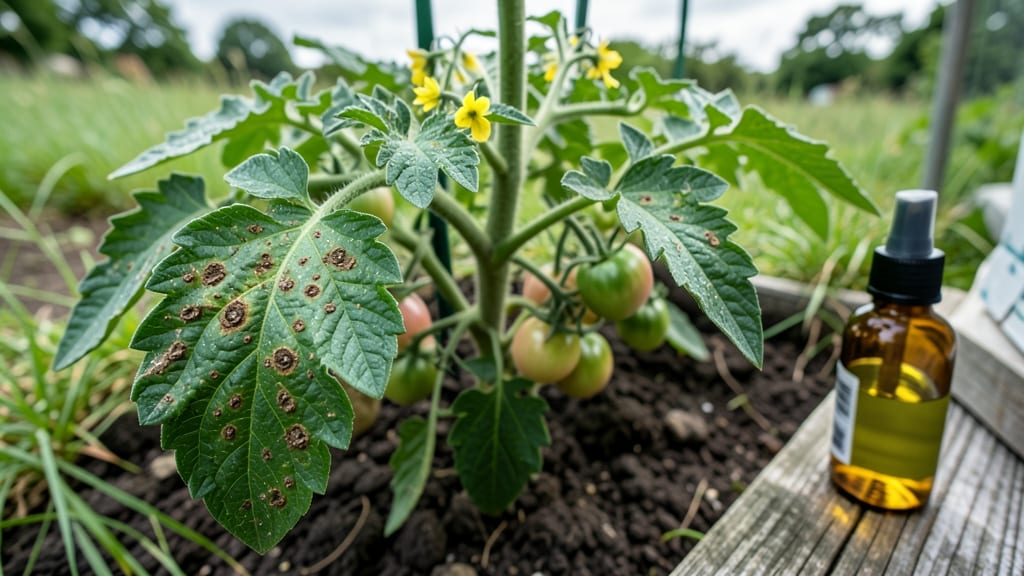
Those stubborn brown specks on your tomato leaves aren’t just unsightly—they’re a fungal warning sign that could cut your harvest short if ignored. 🌱 I’ve battled early blight and septoria leaf spot in my own garden, and the difference between saving plants and losing them often comes down to acting fast with the right organic fixes.
The culprits? Wet foliage, crowded plants, and old debris all create the perfect storm for fungal spores to spread. Early blight starts at the bottom leaves with concentric rings, while septoria shows up as tiny dark specks with yellow halos.
The good news? Both respond to copper sprays, proper spacing, and removing infected leaves before they drop to the soil.
You’ll restore your plants’ health by pruning for airflow, applying a baking soda spray (1 tbsp per gallon of water with a drop of dish soap), and mulching to keep soil-borne spores at bay.
Within 2-3 weeks, new growth will emerge cleaner, and your tomatoes will rebound with stronger stems and bigger fruit.
Works for greenhouse tomatoes too—just adjust your watering schedule to avoid evening moisture on leaves. Here’s how to spot the difference between fungal spots and environmental stress, so you never waste time on the wrong cure again.
Root Causes Of Leaf Discoloration
When you spot those mysterious brown specks on your tomato leaves, it’s often a sign that something’s amiss in your garden’s ecosystem. Understanding the why behind these blemishes is the first step to restoring your plants’ health.
Below, we break down the most common culprits—each with its own story and solution.
Fungi are the most frequent offenders behind brown specks on tomato leaves. These microscopic organisms thrive in warm, humid conditions, turning your lush foliage into a buffet of decay. Here’s how they strike:
- Early Blight (Alternaria solani)
- How it spreads: Spores hitchhike on wind, water, or contaminated tools, landing on lower leaves first. They love crowded plants and poor air circulation.
- Tell-tale signs: Tiny, concentric brown rings (like bullseyes) that expand into larger, crusty lesions. Leaves may yellow and drop prematurely.
- Why it happens: Fungal spores germinate when leaf surfaces stay wet for 12+ hours—common after overhead watering or morning dew.
- Late Blight (Phytophthora infestans)
- How it spreads: A devastating relative of the potato blight, this fungus spreads via water splashes, infected plant debris, or even contaminated soil.
- Tell-tale signs: Dark, greasy-looking spots that rot the leaf tissue. Unlike early blight, it attacks both leaves and fruit, causing soft, brown lesions.
- Why it happens: Thrives in cool (60–75°F), wet conditions. A single infected plant can spread spores in 48 hours.
- Septoria Leaf Spot (Septoria lycopersici)
- How it spreads: Overwinters in plant debris and splashes up stems during watering.
- Tell-tale signs: Small, tan or brown specks with dark borders, often clustered. Leaves develop shot-hole patterns as tissue dies.
- Why it happens: Favors high humidity and frequent leaf wetness. Common in shady or densely planted tomato beds.
💡 Pro Tip: Fungal spores love moisture. Avoid watering leaves (use drip irrigation or soaker hoses) and space plants 18–24 inches apart for airflow.
Not all brown specks are fungal. Pests can also leave behind a trail of destruction, either by feeding directly or by spreading fungal hitchhikers. Here’s how:
- Spider Mites
- How they damage: These microscopic arachnids pierce leaves to suck sap, leaving behind stippled, bronze-brown specks. Severe infestations cause webbing.
- Why it happens: Thrive in dry, hot conditions (85°F+). They multiply exponentially when plants are stressed (e.g., drought or over-fertilization).
- Aphids & Whiteflies
- How they damage: Clusters of these sap-sucking insects excrete sticky honeydew, which fosters sooty mold—a black, fuzzy fungus that coats leaves in brownish-black specks.
- Why it happens: Attracted to new growth and soft, tender leaves. Outbreaks surge in warm, sheltered areas (like greenhouses or crowded plants).
- Flea Beetles
- How they damage: Tiny, jumping beetles chew irregular holes in leaves, leaving scattered brown specks (often near leaf edges).
- Why it happens: Most active in early spring when tomatoes are young. They prefer stressed or drought-prone plants.
🔥 Quick Fix: Blast pests off leaves with a forceful spray of water in the morning. Use neem oil or insecticidal soap for severe infestations.
Sometimes, the brown specks aren’t caused by pathogens or pests—but by environmental factors that weaken your tomatoes. Here’s what to watch for:
- Sunburn (Sunscald)
- How it looks: Dry, papery brown patches on leaves exposed to intense afternoon sun, especially after cool nights.
- Why it happens: Tomato leaves can’t adjust quickly to sudden temperature swings (e.g., 80°F days + 50°F nights).
- Water Stress (Over/Under-Watering)
- Drought stress: Leaves develop crispy, brown edges (a sign of wilting).
- Overwatering: Causes yellowing between veins followed by brown, mushy spots (root rot may be lurking).
- Why it happens: Tomato roots need consistent moisture but hate soggy soil. Use your finger to check soil depth—it should be dry 1–2 inches down between waterings.
- Chemical Burn (Fertilizer or Herbicide Drift)
- How it looks: Uniform brown or white patches along leaf edges or random spots, often mirroring spray patterns.
- Why it happens: Salt buildup from over-fertilizing (especially with high-nitrogen or synthetic fertilizers) or herbicide overspray.
✨ Prevention Tip: Mulch with straw or grass clippings to regulate soil temperature and reduce evaporation. For sunburn-prone plants, use shade cloth (30%) during peak heat.
Now that you know the why, the next step is identifying the exact cause and acting fast to save your tomato harvest! 🍅🚀
Fixing Tomato Leaf Spots Naturally
Now that you’ve identified the culprit behind those pesky brown specks on your tomato leaves, it’s time to take action!
Whether it’s fungal diseases like early blight, late blight, or septoria leaf spot, or environmental stressors like sunscald or nutrient deficiencies, here’s how to restore your plants to vibrant health—without harsh chemicals.
Fungal infections thrive in damp, warm conditions, so speed and prevention are key. Here’s how to tackle them:
🔥 Remove Infected Leaves Immediately
- Why? Fungi spread through spores, and infected leaves act as breeding grounds.
- How? Snip off only the affected leaves (not the whole branch) with sterilized pruners (wipe with rubbing alcohol between cuts).
- Pro Tip: 🌡️ Don’t compost infected plant material—toss it in the trash to prevent reinfection.
🍳 Homemade Fungicide Sprays (Safe & Effective)
Mix these in a spray bottle and apply early in the morning (when humidity is lower):
| Solution | Ingredients | How to Use |
|---|---|---|
| Baking Soda Spray | 1 tsp baking soda + 1 tbsp vegetable oil + 1 quart water | Spray every 7–10 days until new growth appears. |
| Neem Oil Mix | 1 tbsp neem oil + 1 tsp mild soap + 1 quart water | Shake well and spray undersides of leaves (where spores hide). Rotate with other sprays. |
| Copper Fungicide | 1 tsp copper sulfate + 1 gallon water | Use only as a last resort (follow package instructions). |
| Milk Spray | 1 part milk + 9 parts water | Spray weekly—milk contains proteins that inhibit fungal growth. |
> ⚠️ Warning: Avoid spraying directly on flowers or fruit—stick to leaves to prevent residue.
👨🍳 Improve Airflow & Light
- Space plants at least 18–24 inches apart to reduce humidity.
- Prune lower leaves to enhance airflow (but leave some foliage for photosynthesis).
- Water at the base (not overhead) to keep leaves dry.
🌱 Soil & Nutrient Fixes
- Add compost or worm castings to boost plant immunity.
- Avoid over-fertilizing with nitrogen—it encourages soft, fungus-loving growth. Instead, use a balanced 10-10-10 or organic fertilizer.
- Test your soil pH—most fungi prefer slightly acidic to neutral (6.0–7.0).
If your tomato leaves are showing brown, crispy specks from too much sun or heat stress:
🌿 Provide Shade Cloth or Dappled Light
- Use 30–50% shade cloth during peak sun (10 AM–4 PM) if growing in hot climates.
- Move containers to a spot with morning sun + afternoon shade.
💧 Water Deeply & Consistently
- Drought stress weakens plants, making them prone to sunscald.
- Water deeply 1–2 inches per week (check soil moisture with your finger—top inch should be dry).
- Mulch with straw or grass clippings to retain moisture and cool roots.
🎯 Adjust Mulch & Soil Moisture
- Avoid wetting leaves when watering (use drip irrigation or soaker hoses).
- Reflective mulch (like white plastic or aluminum foil) can reduce leaf burn in extreme heat.
Once your tomatoes are healthy, lock in their defenses with these habits:
- 💡 Rotate crops—don’t plant tomatoes (or nightshades like peppers/eggplants) in the same spot two years in a row.
- 🌱 Plant resistant varieties like ‘Mountain Merit’ (early blight-resistant) or ‘Defiant PhR’ (late blight-resistant).
- 🍅 Start seeds indoors and harden them off gradually to avoid transplant shock.
- 🌡️ Monitor weather forecasts—if rain is predicted, prune leaves and apply a preventative spray (like neem oil) 24 hours ahead.
- 🔥 Sterilize tools between plants to prevent cross-contamination.
Final Thought: 🌱 Patience is key—some fungal spots may leave scars, but with consistent care, your tomatoes will bounce back stronger. Happy growing! 🍅✨
Frequently asked questions
How can I tell if my tomato's brown specks are from early blight vs. septoria leaf spot?
Look closely at the pattern: early blight shows concentric rings (bullseyes) that expand into crusty brown patches, while septoria leaf spot appears as tiny dark specks with yellow halos that create shot-hole patterns. Early blight starts on lower leaves, while septoria often appears on upper leaves first.
Will my tomatoes still produce fruit if the leaves have brown specks?
Yes, but severe infections can reduce yield. Remove heavily infected leaves to redirect energy to fruit production. For fungal spots, focus on lower leaves first—healthy upper leaves will keep photosynthesizing. If pests like spider mites are the issue, treat them immediately to prevent further damage.
Can I use vinegar spray to treat brown specks on tomato leaves?
No, never use undiluted vinegar—it can burn leaves! A very diluted solution (1 tbsp white vinegar + 1 gallon water + 1 tsp dish soap) can help as a preventative fungicide, but it won't cure established infections. For existing spots, use baking soda spray or neem oil instead.
How often should I spray my tomatoes with neem oil to prevent brown specks?
Apply neem oil every 7–10 days during growing season, especially after rain or high humidity. For prevention, mix 1 tbsp neem oil + 1 tsp mild soap + 1 quart water and spray undersides of leaves (where spores hide). Always apply in the early morning for best results.
Are brown specks on tomato leaves contagious to other plants?
Fungal spots like early blight and septoria are highly contagious—spores spread via wind, water, and tools. Remove infected leaves immediately and sterilize pruners between cuts. Keep tomato plants 18–24 inches apart and avoid overhead watering to prevent cross-contamination to nearby plants.