
Vegetables
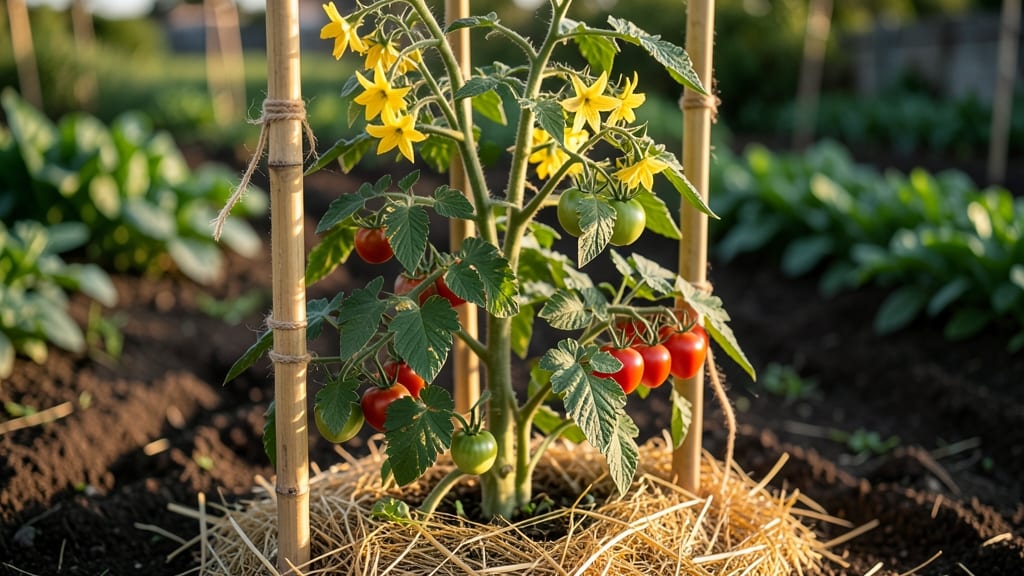
Growing a Brandywine tomato to its full 5-6 feet height is what turns a garden bed into a lush, productive jungle—if you let it.
If you’ve ever watched your Brandywine tomatoes sprawl across your garden bed like an unruly vine, you’re not alone. This heirloom variety thrives on climbing, but without the right support, its sprawling growth can lead to tangled fruit, missed harvests, and even disease.
The good news? With a few simple techniques, you can harness its natural height to maximize yield and keep your plants healthy.
Here’s the key: Brandywine tomatoes are indeterminate, meaning they don’t stop growing until frost. Their height isn’t just about genetics—it’s also shaped by your growing conditions, like sunlight, soil, and how you prune.
Whether you’re working with a 4-foot vine or a towering 8-footer, understanding these factors will help you guide its growth for the best harvest.
In this guide, I’ll break down what determines a Brandywine tomato’s height, how to control it with trellising and pruning, and why managing its size can mean the difference between a handful of tomatoes and a bucketful. Let’s get started!

Brandywine tomato height: genetic traits and natural growth patterns
The Brandywine tomato isn’t just famous for its sweet, beefsteak-sized fruit—it’s equally renowned for its indeterminate growth habit. Unlike bush varieties that stop growing at a fixed height, Brandywines keep climbing, often reaching 4 to 8 feet or more if left unchecked.
This genetic trait stems from their heirloom lineage, where vine length and leaf structure are hardwired for maximum photosynthesis and fruit production.
Genetically, Brandywines produce unlimited growth until frost or disease intervenes. Their main stem grows aggressively, while lateral branches (suckers) emerge below leaf nodes, creating a sprawling canopy.
This architecture isn’t just for show—it maximizes sun exposure for fruit ripening but also demands strategic management to prevent disease buildup in dense foliage.
📊 Key Genetic Factors Influencing Height:
- Indeterminate growth genes: No natural growth limit
- Vine length potential: 4–8+ feet in ideal conditions
- Leaf density: Broad leaves increase shade but also photosynthesis
- Fruit load: Heavy tomatoes can weigh vines downward
| Trait | Outdoor Growth (ft) | Controlled Environment (ft) | Impact on Yield |
|---|---|---|---|
| Indeterminate Growth | 4–8 ft | 3–6 ft (pruned) | Higher with support |
| Vine Length Potential | 6–12 ft (unrestricted) | 4–7 ft (trellised) | Compact = easier harvest |
| Leaf Structure | Large, broad leaves | Pruned for airflow | Disease risk increases |
| Fruit Load | Heavy clusters | Balanced with pruning | Overload = vine sagging |
In outdoor gardens, Brandywines often hit their peak height of 6–8 feet by midsummer, especially in warm climates like Zone 9.
However, in cooler Zone 5 regions, vines may max out at 4–5 feet due to shorter growing seasons. Controlled environments (greenhouses or containers) typically yield shorter vines—3–6 feet—because growers prune aggressively to optimize space and airflow.
This height variability directly affects fruit production. Taller vines produce more tomatoes but require staking or trellises to prevent breakage. Shorter, pruned vines ripen fruit faster and reduce disease pressure from humidity trapped in dense foliage.
For example, a 6-foot vine in a cage may yield 20–30 lbs of tomatoes, while an unpruned 8-footer could produce 30–40 lbs—but with higher disease risks.
Another critical factor is leaf structure. Brandywines have large, lobed leaves that create shade, slowing fruit ripening on lower branches. This is why vertical training (tying vines to stakes) exposes more fruit to sunlight.
Without intervention, the bottom 2–3 feet of a sprawling vine often produce underripe or blight-prone tomatoes, cutting potential yields by 30%.
For first-year growers, the 4–5 foot range is most common because young plants focus energy on root and vine growth before flowering. By year two, mature vines hit 5–6 feet and maintain that height unless pruned.
This pattern explains why container-grown Brandywines rarely exceed 4 feet—root-bound stress limits vertical growth, even if the plant is genetically capable of climbing higher.
Understanding these genetic limits helps you set realistic expectations. A Brandywine in a 5-gallon pot will never reach 8 feet, but a ground-planted vine in full sun will push those boundaries.
The key is balancing natural growth with human intervention—whether through pruning, trellising, or strategic fertilizing—to optimize both height and harvest.
🌱 Pro Tip: If you’re growing Brandywines in small spaces, prioritize early pruning to keep vines under 5 feet. This doesn’t reduce yield—it just makes fruit easier to reach and less prone to rot.
How to control Brandywine tomato height: pruning, trellising, and support techniques
Brandywine tomatoes are indeterminate giants, meaning they’ll keep growing until frost—often reaching 6-8 feet without intervention. While their sprawling habit produces heavy yields, unchecked growth leads to disease risks, poor air circulation, and fruit rot.
The key to managing height lies in three strategies: pruning, trellising, and support systems, each with trade-offs for yield and ease.
Pruning is your first tool—removing suckers (shoots between main stem and branches) redirects energy to existing fruit. However, aggressive pruning can reduce total yield by limiting flowering sites. Trellising, on the other hand, verticalizes growth while improving air flow, but improper setups can stress vines or snap under fruit weight.
Let’s break down the pros and cons of each method to help you decide what works for your garden.
🌱 Brandywine Tomato Height Control Methods
Pruning (Suckering & Topping)
- ✔ Improves air flow → reduces disease (blight, mildew)
- ✔ Directs energy to larger fruit
- ✔ Easier harvesting (less sprawl)
- ✖ Reduces total yield (fewer flowering sites)
- ✖ Time-intensive (weekly checks)
- ✖ Over-pruning stresses vines
Trellising (Cages, Stakes, Strings)
- ✔ Saves space (vertical growth)
- ✔ Better air circulation → fewer pests
- ✔ Easier maintenance (less weeding)
- ✖ Requires sturdy setup (vines can weigh 50+ lbs)
- ✖ Risk of stem breakage if overloaded
- ✖ Limited to certain methods (e.g., cages restrict pruning)
Support Systems (Stakes + Strings)
- ✔ Most flexible (adjust height as vine grows)
- ✔ Encourages upward growth (natural trellis)
- ✔ Works with pruning (complementary)
- ✖ Time to install (tie vines weekly)
- ✖ Wind risk (unstable without bracing)
- ✖ Less ideal for heavy fruit (may sag)
For pruning, focus on removing suckers (the shoots in the leaf axils) when they’re 2-3 inches tall.
Use clean, sharp shears to avoid damaging the main stem. Topping (cutting the main stem) is controversial—some gardeners swear by it to stop vertical growth, while others argue it reduces future yield. If you top, do it after the first fruit set to preserve early production.
When choosing a trellis system, consider your space and maintenance style. <