
Planting
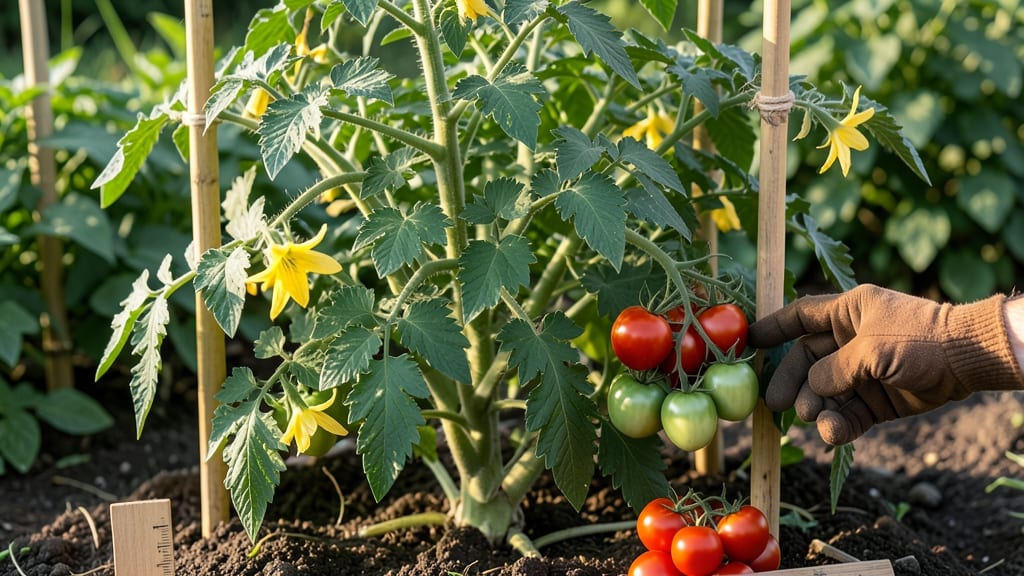
A tomato plant typically produces 6 to 12 pounds of tomatoes per season, with indeterminate varieties yielding more (up to 20+ pounds) and determinate types averaging 2 to 5 pounds. Factors like sunlight, soil quality, and pruning significantly impact output.
A tomato plant's yield depends entirely on its variety—indeterminate types like 'Sungold' or 'Brandywine' can keep producing all season long, while smaller determinate plants like 'Roma' focus energy on a single harvest. 🌱 The right growing conditions make all the difference: rich, well-draining soil packed with compost and consistent moisture (but never soggy) can double your expected harvest.
I've seen gardeners in warm climates like Florida get 30+ pounds from a single plant by using trellises and regular pruning to direct energy upward.
What many beginners overlook is how pruning affects yield—removing suckers (those little shoots between stems) actually encourages bigger, healthier fruit by letting the plant focus its energy. And don't forget about sunlight: plants in full sun (6+ hours daily) produce significantly more than those in partial shade.
For container growers, choosing compact varieties like 'Tiny Tim' can still deliver 2-3 pounds per plant when given proper care.
💡 In This Article
- Tomato Plant Yield Factors: Variety, Climate, and Care
- Maximizing Tomato Harvest: Pruning, Support, and Seasonal Tips
Tomato plant yield factors: variety, climate, and care
The difference between determinate and indeterminate tomato varieties isn't just about growth habit—it's a genetic blueprint for production. Determinate types like 'Roma' or 'Celebrity' grow to a fixed height (typically 3-5 feet) and produce fruit all at once, yielding about 2 to 5 pounds per plant.
Their bushy structure directs energy toward a single harvest window, making them ideal for canning or sauces. Indeterminate varieties like 'Sungold' or 'Cherokee Purple' grow continuously, vining up to 10+ feet with unlimited potential—some gardeners report 20+ pounds per plant when properly supported.
Climate plays a surprising role in yield potential. Tomatoes thrive in USDA zones 7-10, where warm days (75-85°F) and cool nights (55-65°F) create ideal conditions. In cooler zones (5-6), growers often use row covers or greenhouses to extend the season, but yields may drop by 30-50% without protection.
Soil quality matters just as much: plants in nutrient-dense soil with 1-2% organic matter produce 25-50% more fruit than those in poor soil. The key nutrients? Nitrogen for leaf growth, phosphorus for root development, and potassium for fruit production—think of it as the plant's energy drink.
Pruning isn't just about aesthetics—it's a yield multiplier. Removing suckers (those shoots between stems and branches) redirects energy from leaf production to fruit development. Studies show properly pruned indeterminate plants can produce 2-3 times more tomatoes than unpruned ones. The catch? Over-pruning stresses the plant.
Aim to remove 1/3 of the foliage during peak production to maintain photosynthesis while maximizing fruit output. And here's a pro tip: pinch off flowers on the first few clusters to let the plant establish stronger stems before heavy fruiting begins.
Watering patterns create another critical variable. Tomatoes need 1-1.5 inches of water weekly, but inconsistent moisture leads to blossom-end rot or cracked fruit—both yield killers. Drip irrigation systems deliver water directly to roots, reducing evaporation and disease risk.
Mulching with straw or wood chips keeps soil temperatures stable and conserves moisture, which is especially valuable in hot climates where 30% of water can evaporate before reaching roots.
The texture of ripe tomatoes also changes with water management: properly hydrated fruit has a firmer, sweeter flesh compared to water-stressed tomatoes that develop hollow centers.
Let's talk about sunlight—this is where many gardeners unknowingly limit their harvests. Tomatoes need 6-8 hours of direct sunlight daily for optimal production. In partial shade (4-6 hours), yields drop by 40-60% because photosynthesis slows.
The color difference is striking: sun-ripened tomatoes develop deep red hues and richer flavors, while shade-grown ones stay pale and bland. Even container growers can achieve strong yields by placing pots in south-facing windows or using reflective surfaces to bounce light onto leaves.
One often-overlooked factor is pollination. Tomatoes are self-pollinating, but wind or gentle shaking helps transfer pollen. In greenhouses or rainy climates, yields can drop by 20-30% without manual assistance. Simply give the plants a light shake during flowering to boost fruit set.
The payoff? More uniform fruit development and fewer misshapen tomatoes. For container growers, choosing compact varieties like 'Patio' or 'Balcony Red' can still deliver 2-3 pounds per plant when given proper care—proving that space constraints don't have to mean small harvests.