
Pests
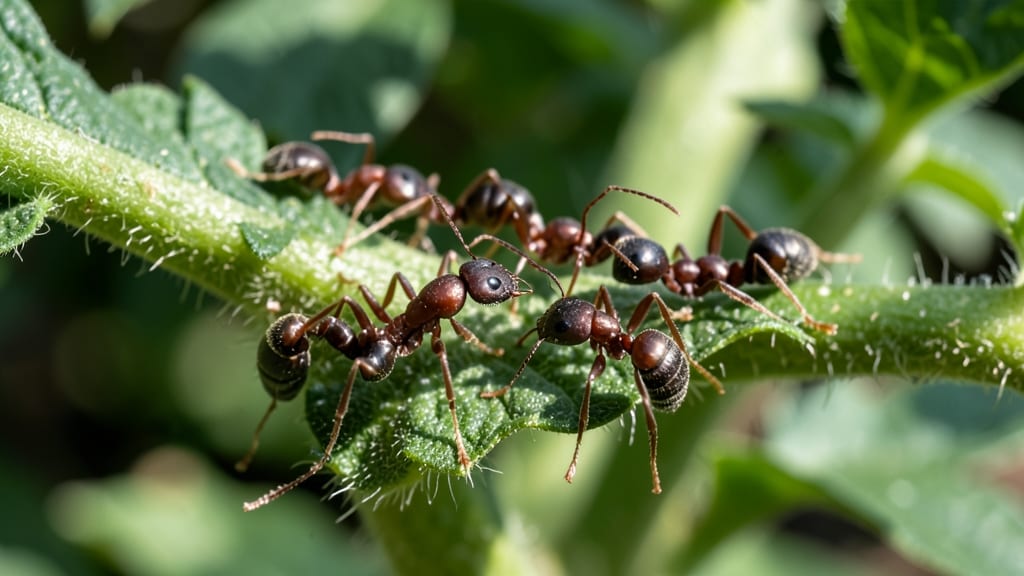
Ants on tomato plants aren't just a nuisance—they're a warning sign. 🌱 I've seen them turn a thriving tomato patch into a pest magnet overnight, all because they're protecting aphids and other sap-suckers. The good news? You can stop them in their tracks with simple, organic barriers that work fast.
These tiny workers aren't attacking your tomatoes directly—they're farming for aphids, which leave behind sticky honeydew that ruins fruit and attracts wasps. The key is breaking their trail system with diatomaceous earth, sticky barriers, or even a ring of cinnamon around the base.
It's like putting up "no trespassing" signs they can't ignore.
Within 24 hours, you'll see the ant trails disappear, and within a week, your tomato plants will bounce back with fewer pests and healthier growth. The plants stay strong, the fruit stays clean, and you avoid harsh chemicals that harm beneficial insects.
Works for backyard gardens, container tomatoes, and even raised beds. The same tricks stop ants on peppers and other garden crops too. Let's get those trails blocked for good!
Root Causes Of Tiny Invaders
When you spot ants marching across your tomato plants, it’s not just an annoying sight—it’s a sign of a deeper ecological imbalance in your garden. These six-legged troublemakers don’t just wander aimlessly; they’re following a trail of rewards, and your tomatoes might be the main attraction.
Let’s break down the real reasons why ants show up at your tomato party—and how their behavior connects to your plants’ health.
Ants are drawn to tomato plants primarily because of the sticky honeydew excreted by sap-sucking pests like aphids, whiteflies, and spider mites. These tiny insects feed on plant sap, leaving behind a sugary residue that ants love.
In fact, ants often farm these pests, protecting them in exchange for a steady food source. If your tomato leaves look curled, yellow, or dotted with tiny webs, you’ve got a hidden buffet attracting ants.
Why it matters: While ants themselves don’t directly harm tomatoes, their "farming" behavior allows destructive pests to thrive unchecked. Left unmanaged, aphids can weaken plants, stunt growth, and even transmit viruses.
Tomato plants provide the perfect microhabitat for ants: they offer shade, moisture (especially in damp soil or after watering), and a network of crevices to nest in. Ants are particularly fond of mulched beds or areas with thick organic matter, where they can build tunnels and colonies undisturbed.
If your garden has rich, moist soil or compost piles near your tomatoes, you’re essentially rolling out the welcome mat.
Key triggers:
- Overwatered or poorly draining soil (ants love humidity)
- Thick mulch layers that create hidden tunnels
- Wooden stakes, pots, or debris near plants (ideal nesting spots)
While ants aren’t typically fruit eaters, they’re opportunistic scavengers. If your tomatoes are overripe, damaged, or fermenting, the sugars and yeasts in the fruit can attract them—especially if the fruit is splitting or rotting on the vine.
Additionally, ants may target tomato seeds or fallen fruit in search of protein or moisture. This is less common but can happen in heavy infestations.
Red flag: If you notice ants clustering around specific tomatoes, check for bruises, cracks, or signs of disease (like blossom end rot). These spots become ant magnets.
Ants are often drawn to tomato gardens because of nearby attractive plants. Many common garden companions—like basil, fennel, or dill—emit scents or produce nectar that ants find irresistible.
Even weeds such as clover or alfalfa can lure them away from your tomatoes… or toward them if planted too close. If your tomato patch is surrounded by aromatic herbs or flowering plants, ants may use these as "highways" to reach your prized crops.
Pro tip: Strategic planting can repel ants. Try interplanting tomatoes with garlic, chives, or mint, which disrupt ant trails naturally.
Ants don’t just appear out of nowhere—they’re following established trails from nearby colonies. If you’ve spotted ants in your home, patio, or garden beds, they’re likely extending their territory. Tomato plants, with their vertical growth and dense foliage, offer an easy route for ants to colonize your garden.
Once a scout ant finds a food source (like honeydew or moisture), they’ll recruit the entire colony in hours.
Tell-tale signs:
- Visible ant trails on stems or soil
- Small mounds of soil or debris near plant bases
- Ants entering your home or shed (they’re expanding their range)
Ants are more active during warm, humid conditions, which coincide with tomato growing seasons. After rain or irrigation, the increased moisture in soil and foliage signals ants that it’s prime time to forage.
Additionally, late summer and early fall—when tomatoes ripen—see a surge in ant activity as they search for food before colder weather sets in.
Seasonal hotspots:
- Spring: Ants emerge from hibernation and scout for food
- Summer: Peak activity with high humidity and blooming plants
- Fall: Ants prepare for winter by stockpiling resources
Quick Fixes for Garden Invaders
Ants on your tomato plants aren’t just a nuisance—they’re often a sign of bigger problems lurking beneath the soil. But don’t stress! With the right approach, you can kick them out fast while keeping your plants thriving.
Below are practical, organic solutions tailored to the root causes of your ant problem, plus tips to keep them from crashing your harvest again.
Ants love the sticky honeydew left behind by sap-sucking pests, making your tomato plants their all-you-can-eat buffet. Break the cycle with these steps:
🍳 Step 1: Blast Pests Off with a Strong Spray
Mix 1 tsp of dish soap + 1 quart of water in a spray bottle. Give your plants a good dousing (especially undersides of leaves) to dislodge aphids, mealybugs, and scale. Repeat every 3–4 days until pests vanish.
👨🍳 Step 2: Introduce Natural Predators
Ants hate ladybugs, lacewings, and parasitic wasps—they’re the plant’s built-in pest control! Buy them online or attract them by planting dill, fennel, or marigolds nearby.
🥘 Step 3: Disrupt the Ant Trail
Ants follow scent trails like GPS. Wipe them down with a vinegar-soaked cloth or sprinkle diatomaceous earth (DE) along their paths.
For extra defense, place borax-soaked cotton balls (1 part borax to 4 parts sugar + water) near entry points—ants will carry it back to the colony.
Ants digging tunnels near your tomato roots can stress plants and even attract termites. Smother and deter them with these methods:
⏰ Step 1: Create a Physical Barrier
Line the base of your tomato plants with crushed eggshells, coffee grounds, or cinnamon. Ants hate crossing these textures—it disrupts their foraging routes. Refresh every week or after rain.
🌡️ Step 2: Use Heat or Cold to Evict Them
- Boiling water: Pour it directly into ant hills (early morning or evening to avoid harming plants).
- Ice cubes: Place them near entry points—the sudden cold shocks the colony.
✨ Step 3: Plant Ant-Repelling Companions
Tomatoes love basil, thyme, and garlic. These herbs mask the plant’s scent and confuse ants. Bonus: They improve your tomato’s flavor!
Once you’ve kicked the ants out, lock them out with these long-term strategies:
- 🔥 Keep Your Garden Tidy: Remove fallen fruit, weeds, and debris—ants love hiding in clutter. - 🌡️ Mulch Smartly: Use straw or pine needles instead of wood chips (ants nest in damp wood). - 🎯 Water in the Morning: Wet foliage at night attracts ants.
Morning watering gives leaves time to dry. - 💡 Use Citrus Peels: Scatter orange or lemon peels around your plants—ants despise the scent. - 🌱 Rotate Plant Locations: Ants return to familiar spots. Move tomatoes every few years to break their trail.
Pro Tip: If ants persist, check for underground moisture issues—they thrive in damp soil. Improve drainage with sand or compost to make your garden less inviting.
With these fast-acting, organic fixes, your tomato plants will stay ant-free while you enjoy a bountiful, pest-free harvest! 🍅🚫🐜
Frequently asked questions
Are ants actually harmful to tomato plants?
Indirectly, yes! While ants don't eat your tomatoes, they protect sap-sucking pests like aphids that leave behind sticky honeydew. This residue attracts more ants, weakens plants, and can lead to sooty mold. The real damage comes from the pests they shield, not the ants themselves.
What's the fastest way to stop ants without chemicals?
Create a barrier using diatomaceous earth or crushed eggshells around your plant base. These disrupt ant trails instantly. For immediate results, wipe down stems with a vinegar-soaked cloth—ants avoid the smell. Refresh barriers after rain.
Why do ants appear after I water my tomatoes?
Watering increases soil moisture, which ants love! They also follow the scent trails of honeydew (from pests like aphids) that becomes more concentrated when leaves are wet. Water in the morning instead of evening to let foliage dry before nightfall.
Can I use coffee grounds to repel ants?
Yes! Sprinkle used coffee grounds around your tomato plants—they create a physical barrier ants dislike and add nitrogen to your soil. Refresh every few days as rain washes them away. Bonus: The scent also deters slugs!
Will ants come back after I treat them?
Possibly, but you can break their cycle. Remove all ant trails daily, improve drainage (ants love damp soil), and plant garlic or mint nearby—these confuse their scent trails. Rotate your tomato location yearly to prevent colony memory from bringing them back.