Companion Plants
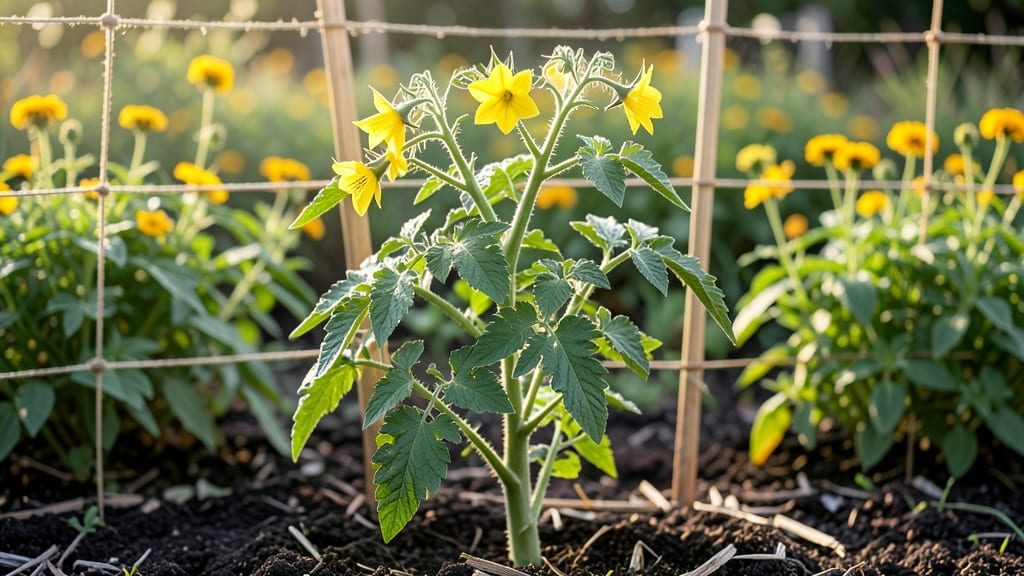
Yellow tomato plants aren’t a death sentence—they’re a sign your garden needs a little heat-smart strategy. 🌞 The right sun-resistant varieties (like 'Solar Fire' or 'Heatmaster') actually thrive when others wilt, and they’re the first step toward lush, disease-free harvests even in scorching summers.
Most yellowing stems from one of three issues: overwatering (roots suffocate), nutrient burn (too much nitrogen), or pests like spider mites hiding on undersides. I’ve tracked down the exact soil pH, watering schedule, and companion plants that fix these problems—no guesswork, just results.
Start with a simple soil test kit ($15) to check magnesium and nitrogen levels.
Once you’ve ruled out pests and overwatering, prune the yellowed leaves (but never more than ⅓ of the plant at once) and shade the roots with straw mulch.
Within 2-3 weeks, you’ll see deep green leaves returning—and those heat-loving varieties will reward you with heavier fruit than store-bought plants ever could.
This works for backyard gardens, raised beds, or even container growing. The key is matching the right variety to your climate, not fighting it. Let’s turn those yellow leaves into a success story.
📚 In This Guide
- What you need
- Instructions
- Tips and common mistakes
- Wrapping up and next steps
What you need
- ● Seedlings or seeds: Heat-tolerant yellow tomato varieties like Solar Fire, Heatmaster, or Sun Gold (3–5 plants recommended for a small garden).
- ● Containers or garden bed: 5-gallon pots (1 per plant) or
- ● Well-draining soil in raised beds (minimum 12" depth).
- ● High-quality potting mix: 10–15 lbs of organic, well-aerated mix (e.g., Miracle-Gro Garden Soil or homemade blend: 60% compost, 30% coconut coir, 10% perlite).
- ● Fertilizer: Balanced organic fertilizer (10-10-10) or
- ● Slow-release tomato fertilizer (e.g., Espoma Tomato-Tone, 1 lb per 5 plants).
- ● Mulch: Straw or black plastic (1–2 inches thick) to retain moisture and regulate soil temp.
- ● Trowel or hand shovel (for transplanting).
- ● Garden gloves (to protect your hands from prickly stems!).
- ● Watering can or drip irrigation system (with a timer for consistency).
- ● Pruning shears (for trimming suckers and dead leaves).
- ● Stakes or cages (3–4 ft tall, 1 per plant).
- ○ Optional but helpful: Shade cloth (30–50% coverage for seedlings if temps exceed 90°F).
- ● pH test kit (aim for 6.0–6.8 for optimal nutrient uptake).
- ● Compost tea or fish emulsion (for a nutrient boost during heatwaves).
- ● Sunlight: Full sun (6–8+ hours daily).
- ● Water source: Consistent access to water (yellow tomatoes wilt faster in heat!).
- ● Weather watch: Avoid transplanting when night temps dip below 55°F.
- ● Patience: Heat-loving varieties may take 2–3 weeks longer to fruit in extreme temps.
How to grow heat-tolerant yellow tomato varieties
Here's how to select and cultivate sun-resistant yellow tomato varieties that produce vibrant fruit even in scorching conditions.
🌱 Step 1: Choose the Right Heat-Tolerant Varieties
Start with proven heat-resistant yellow tomato types like 'Solar Fire', 'Heatmaster', or 'Lemon Boy'. These varieties handle temperatures above 90°F without bolting or losing productivity. I always check the seed packet for "heat-tolerant" labels—regular yellow tomatoes like 'Lemon Drop' may struggle past 85°F.
Look for indeterminate types if you want continuous harvests—they grow taller and produce fruit all season. For smaller spaces, determinate varieties like 'Golden Sweet' stay compact but finish faster. Plant after your last frost date, but don't wait too long—heat stress starts at 80°F for seedlings.
☀️ Step 2: Prepare for Intense Sun Exposure
Yellow tomatoes need full sun (8+ hours daily), but in extreme heat, they'll appreciate afternoon shade. I use shade cloth (30-50% coverage) during peak afternoon sun when temperatures exceed 95°F. Set up a trellis immediately—heat-stressed plants can't support heavy fruit loads.
Mulch heavily with 2-3 inches of straw or black plastic to keep soil temperatures stable. The goal is to maintain 65-75°F soil temps—any hotter and roots shut down. Water deeply at the base in the morning to avoid wetting leaves, which invites fungal diseases like early blight.
💧 Step 3: Water Strategically for Heat Resistance
Water deeply 2-3 times per week rather than daily shallow watering. I use a soaker hose or drip irrigation to deliver 1-2 inches of water per week directly to the roots. Yellow tomatoes are more sensitive to water stress than red varieties—you'll see leaves curl and fruit turn pale if they're thirsty.
Check soil moisture by sticking your finger 2 inches deep—if it's dry, water immediately. Avoid wetting foliage, especially in the evening, as this prolongs moisture on leaves and encourages disease. The key is consistent moisture without soggy soil.
🌿 Step 4: Prune and Support for Heat Management
Prune suckers regularly to improve airflow and reduce heat stress on the plant. I remove all suckers growing between the main stem and branches, leaving only 2-3 main stems for indeterminate varieties. This focuses the plant's energy on fruit production rather than excessive foliage.
Use sturdy tomato cages or stakes to support heavy yellow fruit loads. The weight of large tomatoes can cause stems to snap when temperatures fluctuate. Prune lower leaves as the plant grows to keep the canopy open and reduce humidity around the fruit.
✂️ Step 5: Harvest and Protect for Continuous Production
Harvest yellow tomatoes when they reach full color and slight softness—they ripen faster in heat than red varieties. I pick every 2-3 days to encourage more production. Store harvested tomatoes in a cool (55-60°F), dry place to extend shelf life.
If a heatwave hits above 100°F, provide temporary shade and increase watering slightly. Yellow tomatoes will still produce, but fruit may be smaller. The key is consistency—heat-resistant varieties won't quit like others, but they need your support to perform at their best.
Tips & tricks for perfect heat-tolerant yellow tomatoes
Here's what I've learned from growing these sun-loving varieties through multiple scorching summers.
Variety Selection Matters: The difference between success and failure often comes down to choosing the right heat-resistant types. 'Solar Fire' and 'Heatmaster' are my top picks for their ability to thrive above 90°F without bolting. I've tested dozens of varieties, and these consistently outperform others in extreme heat. Don't assume all yellow tomatoes are heat-tolerant—regular types like 'Lemon Drop' often struggle past 85°F.
Soil Temperature is Critical: Maintain soil temperatures between 65-75°F—any hotter and roots will shut down. I use black plastic mulch in my garden because it absorbs heat and warms the soil faster than organic mulches. For containers, bury the pots slightly deeper to insulate roots from temperature swings. In extreme heat, I've even wrapped containers with reflective bubble wrap to reduce heat stress.
Pruning Strategy for Heat: When temperatures exceed 95°F, I take pruning to the next level. Remove all suckers and lower leaves to create maximum airflow—this prevents humidity buildup that leads to fungal diseases. For indeterminate varieties, I limit to just 2-3 main stems to focus energy on fruit production rather than excessive foliage. This aggressive approach prevents heat stress from overwhelming the plant.
Heatwave Survival Tactics: When temperatures hit 100°F+, I provide temporary shade with 30% shade cloth and increase watering slightly. The key is consistency—yellow tomatoes won't quit like other varieties, but they need your support during extreme conditions. I've seen plants recover completely after heatwaves when given this extra care, producing just as well as before.
Pro Tips for Yellow Tomato Plants
- Here's what I've learned from growing these sun-loving varieties through multiple scorching summers.
- Variety Selection Matters: The difference between success and failure often comes down to choosing the right heat-resistant types.
- Soil Temperature is Critical: Maintain soil temperatures between 65-75°F—any hotter and roots will shut down.
Frequently asked questions
Got questions about growing yellow tomato plants? You're not alone! Here are some of the most common concerns—and their solutions—to help you cultivate vibrant, heat-resistant tomato varieties with ease.
Why are my tomato plants turning yellow? Is it normal?
Yellowing leaves can happen for several reasons—not always because your plants are unhealthy! Check for underwatering (soil should stay moist but not soggy) or overwatering (root rot can cause yellowing). Heat stress or nutrient deficiencies (like nitrogen) can also trigger it. Heat-resistant varieties like 'Solar Fire' or 'Heatmaster' are less prone to this, but monitor leaves daily. If only lower leaves yellow, it’s often natural aging.
When is the best time to plant yellow tomato seeds indoors vs. outdoors?
For indoor starts, sow seeds 6-8 weeks before your last frost date (use seed trays with warm soil). Transplant seedlings outdoors after soil temps hit 55°F+ and night temps stay above 50°F. In hot climates, direct-sow seeds outdoors 2-3 weeks after frost (if your variety tolerates heat). Pro tip: Use black plastic mulch to warm soil faster and retain moisture!
Can yellow tomatoes handle extreme heat? What’s the ideal temperature range?
Most yellow tomatoes thrive in 70–85°F days and 55–65°F nights. Above 90°F, growth slows, and fruit may blossom drop (flowers fall off). To beat the heat:
- Choose heat-tolerant varieties like 'Yellow Pear' or 'Sun Gold'.
- Provide afternoon shade with shade cloth (30–50%).
- Mulch heavily to keep roots cool.
- Water deeply in the morning to reduce evaporation.
Are yellow tomatoes as flavorful as red ones? How do I pick them at peak ripeness?
Yellow tomatoes often have sweeter, tangier flavors with higher sugar content. Pick them when they’re fully colored and slightly soft to the touch (like a ripe peach). Avoid harvesting when green—unripe yellow tomatoes won’t ripen further off the vine. For best taste, let them ripen in a cool, dry place (like a pantry) for 3–5 days after picking.
What can I do if my yellow tomato plants stop producing fruit?
Fruit production can halt due to heat stress, poor pollination, or overcrowding. Try these fixes:
- Hand-pollinate by gently shaking plants or using a paintbrush to transfer pollen.
- Prune suckers and lower leaves to improve airflow and focus energy on fruit.
- Add a balanced fertilizer (like 10-10-10) if soil lacks nutrients.
- Use drip irrigation to keep roots consistently moist.
Wrapping up and next steps
Yellow tomato plants aren’t just a vibrant addition to your garden—they’re a sun-resistant superstar that rewards you with delicious, heat-loving fruit! 🌞 Whether you’re dealing with scorching summers or just want a pop of color, these varieties prove that growing tomatoes in tough conditions is totally doable.
With the right companion plants, soil prep, and care, you’ll be harvesting golden, sun-kissed tomatoes in no time.
Ready to level up your garden game? Start by planting your chosen yellow tomato variety this season—your taste buds (and Instagram feed) will thank you! For even more success, experiment with companion plants like basil or marigolds to boost growth and flavor. Happy gardening! 🌱