
Planting
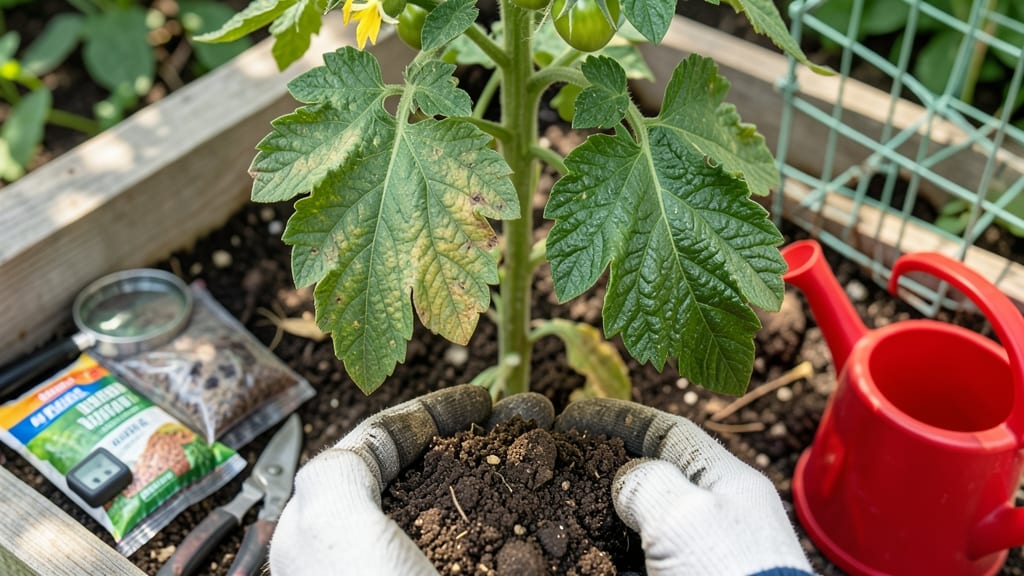
Your cherry tomato plant turning yellow could mean either too much water or not enough nutrients—both are fixable, and I’ll help you tell them apart. 🌱 The first step is checking the soil: if it’s soggy, you’re overwatering; if it’s bone-dry, the roots might be starving.
Either way, we can turn this around before the plant gives up completely.
Overwatering shows up as yellowing leaves that feel soft and mushy, often starting at the bottom. Nutrient deficiency, on the other hand, causes yellowing between the leaf veins (a classic sign of nitrogen or magnesium issues) while the stems stay firm.
Grab a small trowel—we’re digging into the root of the problem (literally) to diagnose correctly.
For overwatering, let the soil dry out between waterings and improve drainage with perlite or compost. Nutrient-deficient plants need a balanced fertilizer (like 10-10-10) or a quick fix of Epsom salt for magnesium. Within a week, you’ll see new growth pushing through—proof the plant is bouncing back.
Prevent future yellowing by watering deeply but less often and testing soil pH (aim for 6.0-6.8). And here’s the game-changer: mulch retains moisture without drowning roots, keeping your tomatoes lush all season. Let’s get those leaves green again!
Root Causes Of Yellowing Leaves
When your once-vibrant cherry tomato plant starts showing yellow leaves, it’s usually a cry for help from the roots—or something deeper. Understanding the specific triggers behind this shift is the first step to reviving your plant.
Below, we break down the most common culprits, why they happen, and what’s really going wrong at the cellular level.
Yellowing leaves are often a classic sign of overwatering, but the science behind it is more nuanced than just "too much water." Here’s what’s really happening:
- 🔬 Root Suffocation & Oxygen Deprivation
- Healthy roots need oxygen to respire and absorb nutrients. When soil stays soggy, pores fill with water, blocking oxygen. Without it, roots suffocate, slowing nutrient uptake.
- Symptoms: Yellowing starts at the bottom leaves (older leaves), which drop off as the plant prioritizes survival. Leaves may also feel slimy or mushy to the touch.
- 🧬 Nutrient Lockout
- Waterlogged soil creates anaerobic conditions, where beneficial microbes die off. These microbes help break down organic matter into nutrients like nitrogen, phosphorus, and potassium—critical for chlorophyll production.
- Result: Even if you’re fertilizing, the plant can’t access nutrients, leading to chlorosis (yellowing between veins).
- 🍄 Fungal Invaders
- Excess moisture invites root rot fungi (e.g., Phytophthora or Pythium). These pathogens clog root cells, preventing water and nutrient flow.
- Tell-tale sign: A foul, rotting smell at the base of the stem.
💡 Pro Tip: Stick your finger 2 inches into the soil. If it’s damp, wait to water. If it’s bone-dry, you’ve likely been underwatering (another common cause). Use a moisture meter for precision!
Yellow leaves can also signal a lack of essential nutrients, each causing distinct patterns. Here’s how to decode them:
🌿 Nitrogen Deficiency: The Classic "Old Leaf" Yellow
- 🔬 Why It Happens:
- Nitrogen is the building block of chlorophyll. Without it, leaves can’t produce enough green pigment.
- Common triggers: Leached soil (from overwatering), poor organic matter, or over-reliance on synthetic fertilizers that lack slow-release nitrogen.
- 👀 What to Look For:
- Yellowing starts on older, lower leaves (a process called senescence), but new growth stays green.
- Stems may appear thin or weak, and overall growth slows.
💚 Magnesium Deficiency: Interveinal Chlorosis
- 🔬 Why It Happens:
- Magnesium is the center of the chlorophyll molecule. Without it, leaves can’t synthesize green pigment, even if other nutrients are present.
- Why it’s common: Sandy or acidic soils bind magnesium tightly, making it unavailable. Over-fertilizing with nitrogen (without balancing minerals) also competes with magnesium uptake.
- 👀 What to Look For:
- Yellow patches between veins (while veins stay green), starting on older leaves first.
- Severe cases show brown, crispy edges as the deficiency worsens.
🍂 Potassium Deficiency: Weak & Wilting
- 🔬 Why It Happens:
- Potassium regulates water balance and enzyme activity in cells. A deficiency disrupts photosynthesis and stress responses.
- Common in: Overwatered plants (potassium leaches out), container-grown tomatoes (limited root zone), or soils with high sodium.
- 👀 What to Look For:
- Yellowing at leaf edges (often with brown, dead tissue), spreading inward like a V-shape.
- Leaves may curl or cup upward, and the plant becomes more susceptible to disease.
💡 Pro Tip: Test your soil’s pH—most tomato plants thrive in 6.0–6.8. If your soil is too acidic (below 6.0), magnesium and other nutrients become locked away. Add lime or wood ash to raise pH gradually.
Sometimes, yellowing isn’t about water or nutrients—it’s about environmental conditions throwing your plant off balance.
🔥 Heat Stress: Too Much Sun Too Fast
- 🔬 Why It Happens:
- Cherry tomatoes wilt and yellow when exposed to sudden heat spikes (above 90°F) or intense afternoon sun without acclimation.
- High temperatures damage chlorophyll and increase water loss, causing sunburn on leaves.
- 👀 What to Look For:
- Yellowing or white patches on upper leaves (directly exposed to sun).
- Leaves may feel crispy or papery to the touch.
🌡️ Temperature Swings: Night Chills
- 🔬 Why It Happens:
- Cherry tomatoes struggle below 50°F at night. Cold slows nutrient uptake and disrupts photosynthesis, leading to yellowing.
- Frost damage (below 32°F) causes blackened, mushy leaves within hours.
- 👀 What to Look For:
- Yellowing on new growth (unlike nutrient deficiencies, which hit older leaves).
- Purple or red tints on undersides of leaves (a stress signal).
🌡️ Quick Fix: Use row covers or shade cloth (30–50%) during heatwaves. For cold snaps, move potted tomatoes to a sheltered spot or use a cloche.
Not all yellowing is environmental—sometimes, tiny invaders are siphoning nutrients or blocking sunlight.
🐜 Aphids & Spider Mites: Sap-Sucking Bandits
- 🔬 Why It Happens:
- These pests pierce leaves to drink sap, injecting toxins that cause yellow stippling or curling. They thrive in dry, hot conditions.
- 👀 What to Look For:
- Sticky residue (honeydew) on leaves (aphids) or fine webbing (spider mites).
- Leaves may yellow unevenly with tiny white or brown specks.
🍄 Early Blight or Septoria Leaf Spot
- 🔬 Why It Happens:
- Fungal diseases like Alternaria solani (early blight) or Septoria lycopersici cause yellowing concentric rings on leaves.
- Spores spread via water, so overwatering or poor airflow creates the perfect breeding ground.
- 👀 What to Look For:**
- Yellow halos around dark brown/black spots (classic "bullseye" pattern).
- Spots often appear on lower leaves
Quick Fixes For Yellowing Cherry Tomatoes
Yellow leaves on your cherry tomato plant don’t mean the end of your harvest—just a call to action! 🌱 Whether it’s overzealous watering, nutrient starvation, or another issue, here’s how to diagnose and fix the problem fast before it spreads.
Below, we break down cause-specific solutions with step-by-step instructions and prevention tips to keep your plants thriving.
Signs: Yellowing leaves (especially lower ones), soggy soil, wilting despite moisture, or a foul odor.
🔥 Step 1: Check Soil Moisture
- 👨🍳 Stick your finger 1–2 inches into the soil. If it’s damp or sticky, you’re overwatering.
- ⏰ Water only when the top inch feels dry. Cherry tomatoes prefer consistent moisture but hate soggy roots.
🥘 Step 2: Improve Drainage
- 🔪 Repot if needed: Use a container with drainage holes (or add a layer of gravel at the bottom if in-ground).
- 🌡️ Amend soil: Mix in perlite, sand, or compost (20–30%) to loosen heavy clay soil.
🎯 Step 3: Adjust Watering Habits
- 💡 Water deeply but less often: Aim for 1–1.5 inches per week (including rain). Use a soaker hose or drip irrigation to avoid wetting leaves (which causes disease).
- ✨ Morning watering is best: Lets foliage dry before evening, reducing fungal risks.
Prevention Tip: 🌱 Mulch with straw or wood chips to retain moisture without drowning roots.
Signs: Pale yellow leaves (especially between veins), stunted growth, or slow fruit production.
🍳 Step 1: Test Your Soil
- 📊 Grab a soil test kit (or send a sample to a local extension office) to check pH (6.0–6.8 ideal) and nutrient levels.
- 💪 Quick fix: If pH is off, add lime (to raise pH) or sulfur (to lower pH) per package instructions.
🥗 Step 2: Fertilize Correctly
- 🌿 Use a balanced fertilizer (10-10-10 or 5-5-5) at half-strength every 2–3 weeks during growing season.
- 🍎 For nitrogen deficiency (yellow lower leaves): Switch to a high-nitrogen fertilizer (like fish emulsion) for 1–2 feedings.
- 💪 For potassium/magnesium deficiency (yellow edges or spots): Use Epsom salt (1 tbsp/gallon of water) or a tomato-specific fertilizer (higher in potassium).
⏰ Step 3: Boost Organic Matter
- 🌱 Mix in compost or worm castings around the base (but not touching stems) to slowly release nutrients.
- 💡 Top-dress with banana peels (for potassium) or crushed eggshells (for calcium) every few weeks.
Prevention Tip: 🌡️ Rotate crops—don’t plant tomatoes in the same spot yearly to avoid nutrient depletion.
Signs: Yellowing with spots, holes, or webbing; sticky residue (aphids); or fungal growth (black/moldy patches).
🔪 Step 1: Identify The Culprit
- 🐜 Pests (aphids, spider mites, whiteflies): Check undersides of leaves for tiny bugs or webbing.
- 🍄 Fungal issues (early blight, septoria leaf spot): Look for target-shaped brown spots or yellow halos.
🍳 Step 2: Treat Pests
- 💡 Spray with neem oil (1 tsp + 1 quart water + drop of dish soap) every 5–7 days until pests vanish.
- 🌿 Introduce beneficial insects: Ladybugs or lacewings eat aphids naturally.
- 🌱 Prune infected leaves (sterilize shears with rubbing alcohol) and dispose of them (don’t compost).
🥘 Step 3: Stop Fungal Spread
- 🌡️ Water at the base (avoid wetting leaves) and space plants for airflow.
- 💪 Apply copper fungicide (follow label) or baking soda spray (1 tsp baking soda + 1 quart water + drop of soap).
- ✨ Prevent recurrence: Rotate crops and sanitize tools between plants.
Prevention Tip: 🎯 Use row covers early in the season to block pests before they arrive.
Signs:** Yellowing with leaf curl, scorched edges, or drooping (heat stress); or pale leaves (too much shade).
🌿 Step 1: Optimize Sunlight
- 🔥 Cherry tomatoes need 6–8 hours of direct sun daily.
- 💡 Move potted plants to a sunnier spot or prune nearby shade-casters (trees, buildings).
- 🌡️ In extreme heat (above 90°F): Provide shade cloth (30–50%) for a few hours/day to prevent scorching.
🌱 Step 2: Protect From Wind & Cold
- 💨 Use windbreaks (burlap screens or tall plants like corn) if leaves are yellowing from windburn.
- ❄️ For cold stress (below 50°F): Cover plants with frost cloth at night or move pots indoors temporarily.
Prevention Tip: 🌱 Choose heat-tolerant varieties like ‘Solar Fire’ or ‘Heatmaster’ if you live in a hot climate.
If yellowing persists despite fixes:
- 🔪 Prune all severely yellow/diseased leaves (use clean shears).
- 🌿 Trim suckers (side shoots) to redirect energy to healthy growth.
- 💧 Flush soil with water to leach excess salts (if using tap water).
- 🌱 Repot if root-bound (roots circling the pot = stress).
💡 Pro Tip: If the entire plant is yellow, it may be too far gone—but save seeds from healthy tomatoes for next season!
Remember: 🌱 Act fast, but don’t panic.** Most yellowing is reversible with the right care. Monitor your plant’s response and adjust as needed—your cherry tomatoes will bounce back!
Frequently asked questions
Why are my cherry tomato leaves turning yellow only between the veins?
This classic pattern—called interveinal chlorosis—usually signals a magnesium deficiency. Magnesium is the center of the chlorophyll molecule, so without it, leaves can't produce green pigment between veins while keeping them green. Check soil pH (ideal: 6.0-6.8), as acidic soil locks out magnesium. Try Epsom salt (1 tbsp/gallon of water) sprayed on leaves weekly for 2-3 weeks.
Can I still harvest tomatoes if the leaves are yellow?
Yes! The plant can still produce fruit even with yellow leaves. Focus on removing only the most severely affected leaves to redirect energy to fruit production. However, if more than 50% of leaves are yellow or diseased, harvest remaining fruit quickly and compost the plant to prevent spreading issues to other plants.
What's the difference between yellow leaves from overwatering vs. nutrient deficiency?
Overwatering causes yellowing that starts at the bottom leaves, feels soft/mushy, and often has a foul smell at the base. Nutrient deficiencies (like nitrogen or magnesium) show yellowing between veins, with leaves staying crisp and dry. Check soil moisture—if it's soggy, you're overwatering; if dry, it's likely nutrient-related.
Will pruning yellow leaves help my cherry tomato plant recover?
Pruning removes the plant's energy drain from unhealthy leaves, allowing it to focus on new growth. Use sterilized shears to cut yellow leaves at the stem (not just tearing them off). For severe cases, trim back to healthy green leaves—this can shock the plant but often leads to faster recovery. Always prune in the morning when plants are hydrated.
How often should I fertilize cherry tomato plants to prevent yellowing?
Feed every 2-3 weeks during the growing season with a balanced fertilizer (10-10-10) at half-strength. For organic options, use compost tea or fish emulsion monthly. Avoid over-fertilizing—too much salt can actually burn roots and cause yellowing. Always water thoroughly after fertilizing to prevent salt buildup in the soil.