
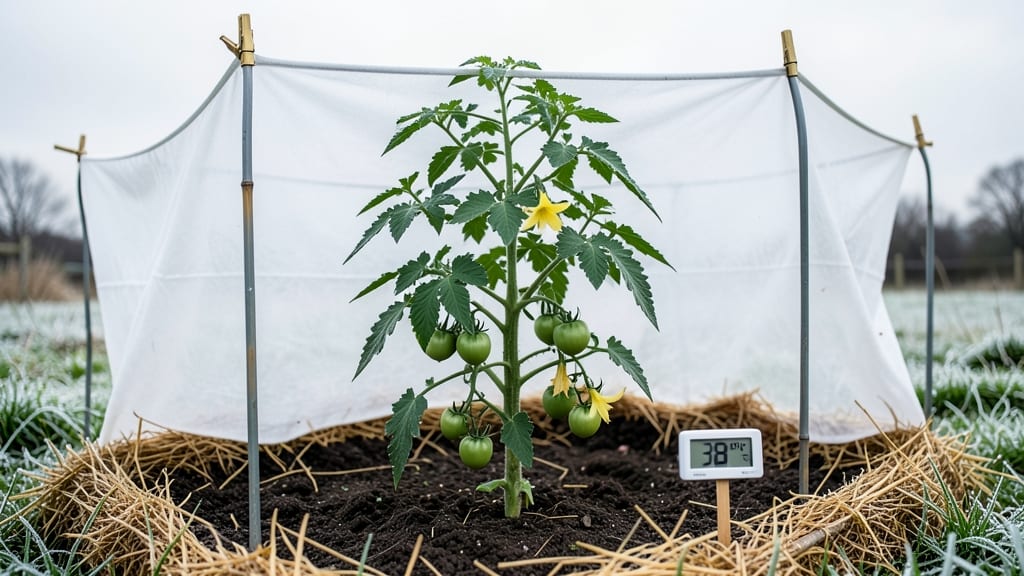
When to Cover Tomato Plants: Frost Protection Timeline by USDA Zone

Advice

When to Cover Tomato Plants: Frost Protection Timeline by USDA Zone

Cover tomato plants when nighttime temperatures dip below 50°F (10°C)—that’s the moment 🍅 seedlings go from safe to at risk.

Tomato plants can’t handle frost—even a light freeze can ruin your harvest. Knowing exactly when to cover them based on your USDA zone could mean the difference between a thriving garden and wasted effort.

In Zone 6a, where spring arrives slowly, that might mean pulling out frost cloth by April 15—but in warmer regions, you could wait until late May. The key is tracking your local last-frost date and adding a 10-day buffer for safety.

Below, I’ll walk you through the best materials to use, how to tell if your plants really need protection, and when to remove covers so they don’t overheat in the sun.

Critical frost dates for tomato plants by USDA zone

Tomatoes are tender perennials that can't tolerate temperatures below 32°F (0°C). Even a light frost can damage leaves, stunt growth, or kill young plants entirely. The key to protecting them is knowing your USDA zone and understanding local frost timelines.

I’ve grown tomatoes in Zones 5-8 for years, and I’ve learned the hard way that timing is everything—especially when it comes to covering plants.

Most gardeners use the 10-day rule as a guideline: cover your tomato plants 10 days before the average last frost date. This gives you a buffer for unpredictable weather swings. For example, if your zone’s last frost is May 10th, start covering on April 30th to be safe.

But remember, this is just a starting point—actual frost dates can vary by 1-2 weeks depending on your microclimate.

Here’s what you need to know about frost dates by USDA zone, including early vs. late spring risks and how to adjust your planting schedule. The comparison table below breaks down the critical frost windows for Zones 3-11, so you can plan accordingly.

How to choose the right frost protection method for your tomatoes

Protecting your tomato plants from frost isn’t just about throwing a blanket over them—it’s about choosing the right method for your USDA zone and temperature risks. A light frost (28-32°F) can damage leaves, while a hard freeze (below 28°F) can kill plants outright.

Knowing when to cover tomato plants depends on your local climate and the protection method you use.

Your choice of frost protection—whether row covers, cloches, mulches, or emergency blankets—should align with how cold it gets and how long the frost lasts. For example, row covers work well for light frosts (28-32°F), while cloches or blankets are better for hard freezes (below 28°F).

Let’s break down the best options based on temperature thresholds.

When to Cover Tomato Plants by Protection Method

Row Covers

Best for light frosts (28-32°F)

✅ Lightweight, breathable

✅ Easy to install/remove

✅ Allows sunlight & rain

Cloches

Best for hard freezes (below 28°F)

✅ Traps heat effectively

✅ Reusable for years

❌ Limited to individual plants

Mulches

Best for preventing soil frost (28°F+)

✅ Improves soil health

✅ Long-term protection

❌ Doesn’t protect foliage

Emergency Blankets

Best for sudden freezes (below 28°F)

✅ Heavy-duty protection

✅ Works for entire beds

❌ Can trap humidity

For USDA Zones 3-5, where frosts are common well into spring, I recommend using row covers or cloches once nighttime temperatures dip below 40°F.

In these colder zones, cover your plants in the late afternoon to trap daytime heat, then remove them during the day if temperatures rise above 50°F. This prevents overheating while still protecting against overnight chills.

In warmer zones (Zones 6-11), you’ll likely only need protection during unexpected late frosts or early fall freezes.

Here, a mulch layer (like straw or leaves) around the base of your plants can help insulate roots, while a lightweight emergency blanket draped over the entire plant works for sudden drops below 32°F. Always secure covers with bricks or stakes to prevent wind damage.

Remember, tomato plants are sensitive to humidity too. If you’re using plastic cloches or blankets, remove them during the day to prevent fungal diseases like blight.

And if your area experiences early morning dew followed by sunny afternoons, opt for breathable row covers instead of sealed cloches to avoid trapping moisture.

Pro tip: Keep a garden journal to track when you’ve covered your plants and how they respond. Over time, you’ll learn exactly when to cover tomato plants in your specific microclimate—whether that’s mid-April in Zone 5 or late October in Zone 9. Your future tomato harvests will thank you!

★★★★★4.6(9 reviews)
Categories Advice
USDA Zone Avg. Last Frost Cover Tomatoes By Early Spring Risk Late Spring Risk
Zone 3 May 20 - June 5 May 10 - May 25 High (late snow) Low (stable warmth)
Zone 4 May 5 - May 20 April 25 - May 10 Moderate (unpredictable) Moderate (cool nights)
Zone 5 April 25 - May 10 April 15 - April 25 Low (warmer microclimates) Moderate (late frosts)
Zone 6 April 15 - April 30 April 5 - April 15 Very Low Low (stable warmth)
Zone 7 April 1 - April 15 March 20 - April 1 Very Low Very Low
Zone 8