
Size
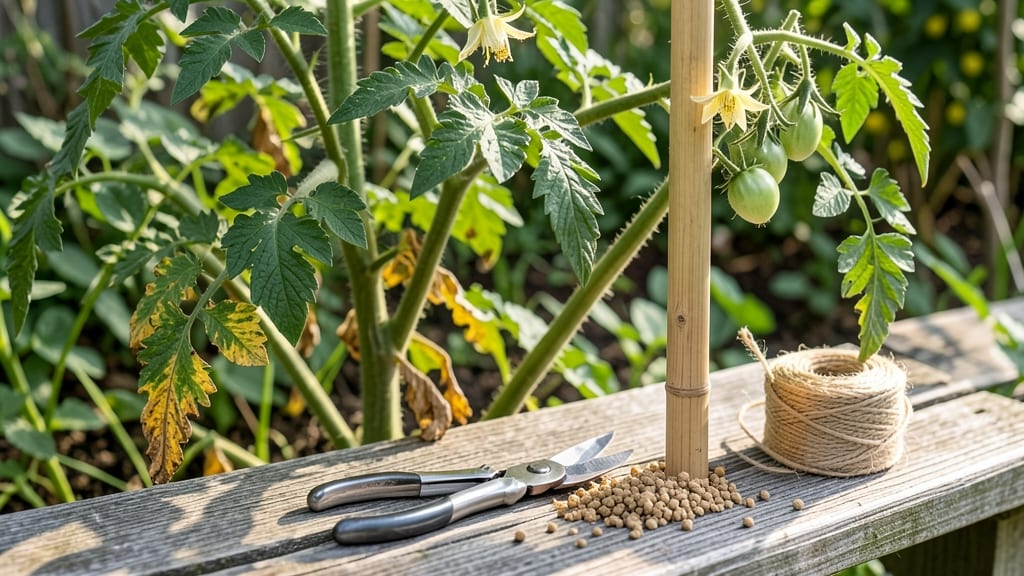
If your tomato plants get too tall, prune them by removing suckers (side shoots) to focus energy on fruit production, use stakes or cages for support, and trim the top growth to prevent sprawling. Always prune in the morning and avoid excessive trimming to prevent plant stress.
When tomato plants tower over your garden, they're not just taking up space—they're signaling a need for intervention. 🌱 Tall, unchecked growth diverts energy away from fruit production, leaving you with fewer tomatoes and more floppy stems.
The key is strategic pruning: removing those small shoots (suckers) between the main stem and branches redirects nutrients to where you want them—your fruit. I've found that indeterminate varieties (the ones that keep growing all season) benefit most from regular pruning, while determinate types (bush tomatoes) need less aggressive trimming.
Start by identifying suckers—those little shoots growing from the joint between a stem and a branch—and pinch them off with your fingers or clean pruners. For extra support, install stakes or cages early in the season to prevent stems from snapping under their own weight.
Timing matters too—morning pruning gives leaves time to dry before evening moisture sets in, reducing disease risk. And remember, less is often more: over-pruning can shock the plant and leave it vulnerable.
Think of it like giving your tomato plants a haircut—the goal is to shape them for strength, not strip them bare. With the right approach, you'll end up with bushier plants, better air circulation, and a bounty of ripe tomatoes instead of just tall, leafy stalks.
💡 In This Article
- How Pruning Tomato Plants Boosts Fruit Production
- Step-by-Step Tomato Pruning Guide for Beginners
How pruning tomato plants boosts fruit production
Pruning tomato plants isn't just about keeping them tidy—it's a strategic way to maximize fruit production by manipulating the plant's natural growth hormones. When you remove those small side shoots called suckers, you're essentially telling the plant to redirect its energy from creating new stems to developing larger, healthier fruit.
These suckers grow from the leaf axils (the junction where leaves meet the stem) and compete with your main branches for nutrients and water. By eliminating them, you reduce the plant's overall workload, allowing it to focus on what matters most: producing tomatoes.
The science behind this involves plant hormones, particularly auxin, which controls cell elongation. When you prune, you're removing sources of auxin that would otherwise promote vertical growth.
This shift causes the plant to produce more gibberellins, hormones that stimulate fruit development. 🌱 What's fascinating is how this works differently for indeterminate (vining) varieties like 'Sungold' or 'Brandywine' versus determinate (bush) types like 'Roma' or 'Celebrity'.
Indeterminate tomatoes keep growing until frost, so they benefit from aggressive pruning to maintain a strong central stem and support heavy fruit loads. Determinate varieties, which grow to a fixed size and set fruit all at once, need minimal pruning—just enough to improve air circulation and prevent disease.
Pruning also plays a crucial role in disease prevention by improving air circulation around the plant. Dense foliage traps moisture, creating the perfect conditions for fungal diseases like early blight or powdery mildew.
When you remove suckers and thin out leaves, sunlight can penetrate deeper into the plant, drying leaves more quickly after watering. This simple change can dramatically reduce disease pressure.
For example, I've seen tomato plants in crowded gardens develop blight within weeks, while properly pruned plants in the same conditions stayed healthy throughout the season. The difference in yield and plant vigor is truly striking.
There's a common misconception that pruning reduces overall tomato production, but the opposite is true when done correctly. Studies show that properly pruned indeterminate tomato plants can produce 20-30% more fruit than unpruned counterparts.
The key is balance—removing too much growth weakens the plant, while not pruning enough leads to sprawling, disease-prone plants. For instance, leaving a sucker grow can divert up to 15% of the plant's energy away from your main fruit clusters.
That's why regular pruning—every 1-2 weeks during the growing season—makes such a difference in your harvest.
Another important aspect is how pruning affects the plant's structural integrity. Tall, unpruned tomato stems can grow so heavy with fruit that they snap under their own weight, especially in windy conditions. When you prune and support your plants with stakes or cages, you're essentially creating a stronger framework.
I've seen 8-foot-tall indeterminate plants supported by sturdy bamboo stakes produce 20 pounds of tomatoes over the season—something that would be impossible without proper support and pruning. The combination of these techniques transforms a potential liability (a tall, floppy plant) into a high-yielding powerhouse.
For gardeners new to tomato pruning, it's helpful to visualize the plant's growth pattern. Imagine the main stem as the plant's backbone—strong and central. Each sucker is like a small branch trying to divert energy.
By removing these side shoots, you're reinforcing that central stem, which then becomes a more efficient conduit for nutrients and water to reach the developing fruit. This approach isn't just about quantity; it also improves fruit quality.
Pruned plants often produce larger, more flavorful tomatoes because their energy isn't spread too thin across too many growth points.
One final tip: pay attention to your plant's response to pruning. If you notice yellowing leaves or stunted growth after pruning, you may have removed too much. The goal is to maintain a balance where the plant still has enough leaves for photosynthesis while redirecting energy to fruit production.
With practice, you'll develop an intuitive sense of how much to prune—it's like giving your tomato plants the perfect haircut to show off their best features. 🌿