
Plants
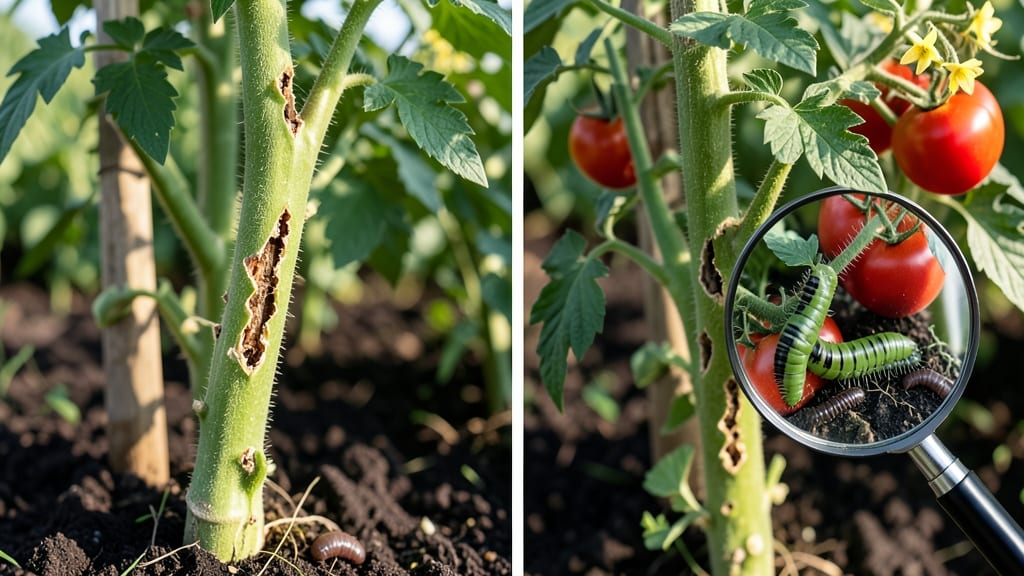
Your tomato plants aren’t just struggling—they’re being eaten alive, and the culprits are often hiding in plain sight. 🌱 From ravenous hornworms to sneaky cutworms, these stem-munching pests can turn your lush vines into skeletal remains overnight.
The good news? Identifying them is half the battle—and once you know who’s attacking, you can fight back with targeted fixes that actually work.
Most stem damage falls into three categories: chewing pests (like cutworms and slugs), boring insects (such as tomato fruitworms), or disease-related rot (often from overwatering or fungal infections). I’ve seen firsthand how a single missed inspection at dawn can mean the difference between a thriving plant and a total loss.
The key is checking stems early in the morning when pests are sluggish and signs of damage are fresh.
You’ll learn to spot the telltale signs—chewed stems, silky webbing, or blackened frass (insect poop)—and match them to the right fix. Organic options like neem oil or diatomaceous earth work for many pests, while row covers and companion planting can prevent future attacks.
No more guessing: just actionable steps to save your tomatoes before it’s too late.
Whether you’re dealing with a sudden outbreak or just want to prevent disaster, this guide cuts through the confusion. We’ll cover diagnosis, control methods, and even how to turn your garden into a pest-deterrent fortress. Let’s get those stems safe—and your harvest back on track.
Root Causes Of Stem Damage
Understanding why your tomato plant stems are being ravaged starts with identifying the real culprits—whether they’re sneaky pests, aggressive pathogens, or environmental stressors. Here’s a breakdown of the most common reasons, explained in clear, actionable terms:
Tomato stems are a buffet for hungry insects, each leaving distinct signs of destruction. Here’s how to spot them:
🔥 Hornworms: The Green Devourers
- What they do: These 5-inch caterpillars (with white diagonal stripes) chew stems, leaves, and fruit like a lawnmower.
They target young, tender growth, often stripping plants overnight. - Why it happens: Hornworms thrive in warm, humid climates and are drawn to tomato plants because they’re high in water content—perfect for their rapid growth. - Key clue: Look for large, jagged holes in stems or frass (green droppings) clinging to leaves. - Science behind it: Hornworms are the larval stage of the sphinx moth (Manduca sexta).
They inject digestive enzymes into plant tissue, breaking it down before consumption—like a built-in blender!
🍳 Colorado Potato Beetles: The Stem-Splitting Scourge
- What they do: These orange-and-black beetles (and their yellow larvae) skeletonize leaves and girdle stems, causing plants to wilt or snap.
- Why it happens: They’re highly resistant to pesticides and target stressed plants (drought, poor soil) first.
- Key clue: Chewed stems that look cleanly severed, often near the base.
- Science behind it: Their mouthparts are adapted for chewing tough plant tissue, and they release pheromones to attract mates—meaning one beetle can turn into a full-blown infestation in weeks.
👨🍳 Slugs & Snails: The Slimy Stem Snippers
- What they do: These nocturnal mollusks leave silver trails and irregular, slobbery holes in stems, especially after rain.
- Why it happens: They’re attracted to moist, shaded areas and decaying organic matter (like mulch or fallen leaves).
- Key clue: Shiny, wet damage on stems, often at ground level.
- Science behind it: Their radula (a tongue-like file) can grind through cellulose, and they’re most active when humidity exceeds 80%.
🥘 Aphids & Spider Mites: The Sap-Sucking Saboteurs
- What they do: While they don’t eat stems directly, their saliva weakens plant tissue, making stems brittle and prone to snapping.
- Why it happens: They thrive in crowded, dusty gardens and feed on phloem sap, injecting toxins that stunt growth.
- Key clue: Yellowing leaves, sticky residue (honeydew), or fine webbing on stems.
- Science behind it: Their piercing-sucking mouthparts disrupt auxin transport (a plant hormone), leading to stunted, deformed stems.
Not all stem damage comes from bugs—fungal and bacterial infections can turn your tomatoes into a zombie plant overnight.
🔪 Fusarium & Verticillium Wilt: The Fungal Stranglers
- What they do: These soil-borne fungi clog xylem vessels, cutting off water flow. Stems wilt suddenly, even when soil is moist.
- Why it happens: They spread via contaminated soil, tools, or infected plant debris.
Warm, poorly drained soil speeds up growth. - Key clue: Yellowing leaves, wilting that starts at the bottom, and dark streaks inside stems when cut. - Science behind it: The fungi produce mycelium that blocks water transport, causing vascular occlusion.
Once established, they’re nearly impossible to eradicate.
⏰ Bacterial Wilt (Ralstonia solanacearum): The Sudden Stem Killer
- What they do: Bacteria plug xylem vessels, turning stems black and mushy inside. Plants collapse in hours.
- Why it happens: Spreads via contaminated water, tools, or infected seeds.
Thrives in hot, humid conditions. - Key clue: Wilted leaves that stay upright (like a "daytime wilt"), oozing bacterial slime from stems. - Science behind it: The bacteria produce a biofilm that physically blocks water, and they’re highly contagious through sap.
🎯 Cracked Stems: Environmental Stress
- What they do: Rapid growth + uneven watering causes stems to split or burst, exposing flesh to rot.
- Why it happens: Tomatoes absorb water faster than roots can supply during hot spells or heavy rain, leading to internal pressure buildup.
- Key clue: Vertical splits along stems, often filled with white pith.
- Science behind it: Turgor pressure (water pressure inside cells) exceeds cell wall strength, causing mechanical failure.
| Symptom | Pest Damage | Disease Damage |
|---|---|---|
| Damage Speed | Slow (days/weeks) | Fast (hours/days) |
| Time of Day | Worse at night (slugs) or daytime (beetles) | No pattern |
| Stem Texture | Chewed, jagged, or slimy | Soft, mushy, or discolored |
| Season | Peaks in summer | Worse in heat/humidity |
🔥 Actionable Insight: If stems are chewed, it’s pests. If they’re wilting without chewing, it’s likely disease. Act fast—pests can be controlled, but diseases often require prevention (sterilized tools, resistant varieties).
How to Fix Chewed Tomato Stems
If your tomato plants are being devoured from the inside out, don’t panic—there’s a solution for every culprit! Below, we’ve mapped out the best fixes for each common cause, from quick fixes to long-term prevention. Grab your gloves and let’s get those plants thriving again.
Fix: 🔥 Set up beer traps – Bury a shallow container filled with beer near plants. Slugs and snails are drawn in and drown. Refresh every few days. 🍳 Use copper barriers – Slugs hate copper! Bend copper tape (or even a wire) around pots or garden beds to create a zap-free zone. 👨🍳 Handpick at dawn/dusk – Shake plants over a bucket of soapy water to collect them. (Bonus: It’s oddly satisfying.) 🥘 Spread diatomaceous earth (DE) – Sprinkle food-grade DE around stems. It’s non-toxic but deadly to slugs’ slimy bodies. Reapply after rain. Prevention Tips: ✨ Water in the morning – Slugs love dampness. Keep soil dry during nighttime. 🌡️ Remove hiding spots – Clear debris, boards, or thick mulch where they lurk. 🎯 Plant slug-resistant companions – Marigolds, thyme, and garlic deter these pests naturally. Fix: 🔪 Cutworm collars – Wrap the base of young plants with cardboard or foil tubes (cut lengthwise). They can’t climb to feast! ⏰ Inspect at dusk – Shake plants over a white sheet at night to spot cutworms in action. Squish or drop them in soapy water. 💡 Use floating row covers – Lightweight fabric blocks worms from reaching stems while allowing sunlight and water through. Prevention Tips: 🔥 Encourage predators – Birds, toads, and parasitic wasps love cutworms. Support them with a diverse garden. 🍎 Rotate crops – Avoid planting tomatoes in the same spot yearly to break the worm life cycle. Fix: 💦 Blast them off – Spray plants with a strong stream of water to knock aphids off stems. Repeat daily until gone. 🌿 Neem oil spray – Mix 1 tbsp neem oil + 1 tsp mild soap in 1 quart of water. Spray stems and undersides of leaves. Reapply every 5–7 days. 🐝 Introduce ladybugs – These tiny allies love aphids. Buy ladybug larvae online or attract them with dill, fennel, or yarrow. Prevention Tips: 📊 Inspect new plants – Quarantine freshly bought tomatoes for a week to spot hitchhiking pests. 💪 Boost plant health – Healthy plants resist pests better. Fertilize with compost tea or balanced organic fertilizer. Fix: 🧼 Prune infected stems – Cut away blackened or mushy stems with sterilized shears. Dispose of clippings in the trash (not compost). 🌡️ Improve airflow – Space plants 18–24 inches apart and prune lower leaves to reduce humidity. 🔥 Apply copper fungicide – Spray stems and soil with a copper-based solution (like Bordeaux mix) every 10–14 days. Prevention Tips: ✨ Water at the base – Avoid wetting leaves to prevent spore spread. 🎯 Rotate crops – Don’t plant tomatoes in the same spot yearly to break disease cycles.Need a quick cheat sheet? Bookmark this:
- Nighttime chewers? Slugs/snails → Beer traps + copper.
- Stems sawed at soil level? Cutworms → Collars + dusk inspections.
- Sticky leaves + wilting? Aphids → Water blast + ladybugs.
- Black/mushy stems? Fungal disease → Prune + copper spray.
Most fixes take under 10 minutes and can save your harvest. Try one today—your tomatoes will thank you!
Frequently asked questions
What time of day should I check my tomato plants for stem damage?
Check your tomato stems early morning (before 8 AM) or late evening (after 6 PM). This is when slugs, cutworms, and other pests are most active and visible. Look for fresh chew marks, slimy trails, or frass (insect droppings) that haven’t dried yet.
Can I use the same fix for both slugs and cutworms on tomato stems?
No, they need different approaches. Slugs respond to copper barriers or beer traps, while cutworms require collars around stems or handpicking at dusk. Mixing methods (like DE for slugs + collars for cutworms) covers both pests without overlap.
How do I tell if my tomato stems are damaged by disease or pests?
Pest damage shows chewed edges or irregular holes (slugs) or clean cuts (cutworms). Disease damage appears as soft, mushy stems with dark streaks inside when cut. Check for wilting patterns—pests cause uneven damage, while diseases wilt entire branches.
Will neem oil work on tomato stems damaged by fungal wilt?
No, neem oil treats insect pests (like aphids) but won’t stop fungal wilt. For diseases, use copper fungicide or prune infected stems immediately. Fungal infections spread through water, so avoid wetting leaves and improve airflow between plants.
How long does it take to see results from tomato stem fixes?
Quick fixes like handpicking slugs or water blasting aphids show results in 24 hours. Organic sprays (neem oil) take 5-7 days for full effect. For fungal diseases, pruning and copper sprays may slow spread in 3-5 days, but prevention is key—once established, diseases are hard to reverse.