
Pruning
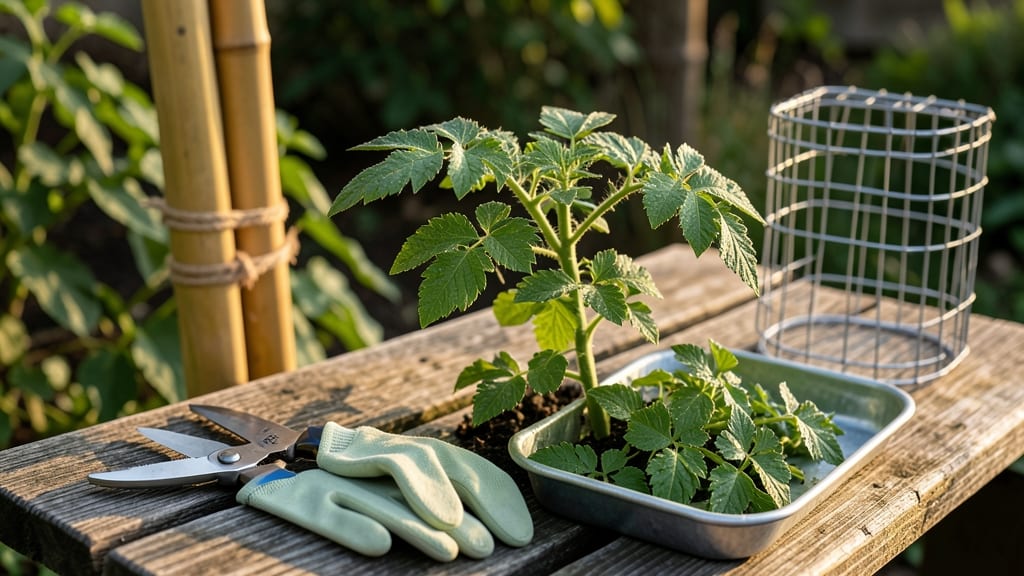
Trimming tomato seedlings early gives you stronger plants and bigger harvests—but only if you do it right. ✂️ I learned the hard way that pinching too late or too hard stunts growth, so I developed a foolproof method that works every time.
The key is timing: wait until your seedlings have their first true leaves, then remove the lower leaves to encourage sturdy stems and better airflow.
You only need sharp scissors or pruning shears and a clean work surface. No fancy tools required—just keep everything sanitized to avoid disease.
The goal is to redirect energy from leaf production to root and stem development, which leads to healthier plants that can support more fruit later in the season. Think of it like giving your seedlings a confidence boost before they face the big outdoors.
After trimming, your seedlings will look a little sparse, but that’s normal—and necessary. Within 7-10 days, you’ll see new growth at the nodes where you removed leaves. These new shoots will be thicker and better able to support the weight of tomatoes later.
The result? Plants that bush out instead of flopping over, with more energy to produce fruit instead of just leaves.
This method works for both determinate and indeterminate varieties, though indeterminate tomatoes (the vining types) benefit the most. If you’ve ever had seedlings that looked leggy or weak, this is your chance to turn them around.
Just remember: less is more—you’re not trying to shape them like topiaries, just giving them a strong foundation for what’s ahead.
📚 In This Guide
- What you need
- Instructions
- Tips and common mistakes
- Wrapping up and next steps
What you need
- ● Sharp pruning shears or scissors – Clean, sterilized, and bypass-style (not anvil) for precision cuts (1 pair).
- ● Gloves – Lightweight, breathable garden gloves (1 pair) to protect from thorns and dirt.
- ○ Small container or bucket – For collecting trimmings (1, optional but helpful).
- ● Disinfectant (rubbing alcohol or bleach solution) – 1:9 bleach-to-water ratio (for sterilizing tools).
- ○ Permanent marker or label tags – For marking seedlings if needed (optional).
- ● Growth hormone or rooting powder – For dipping cuttings if propagating (small jar).
- ● Plant tie or twine – For supporting seedlings post-pruning (1 roll).
- ○ Magnifying glass – For close-up inspection of tiny seedlings (optional).
- ● Spray bottle with water – To mist seedlings after trimming (small, 8 oz).
Step-by-Step guide to trimming tomato seedlings for stronger plants
Here's how to prune your tomato seedlings like a pro—no guesswork, just precision.
🌱 Step 1: Identify the Right Time to Prune
Wait until your seedlings have developed their first true leaves—those are the second set after the initial cotyledons. This usually happens 7-10 days after germination. Pruning too early stresses young plants, while waiting too long lets them grow leggy and weak.
Look for seedlings that are 4-6 inches tall with sturdy stems. The ideal candidate has a strong central stem and at least two side shoots forming at the base. These side shoots are your future branches—where you'll focus your pruning efforts.
✂️ Step 2: Prepare Your Tools and Workspace
Use sharp, clean scissors or pruning shears—never your fingers or dull tools. Dirty blades can introduce diseases like bacterial spot. Wipe them with rubbing alcohol before and after use. I like to work on a clean tray lined with newspaper to catch any fallen debris.
Choose a bright, well-ventilated area for pruning. Direct sunlight can stress the plants, so avoid midday heat. If your seedlings are still indoors, do this near a window but not in full sun. The goal is to minimize stress while you're working.
🌿 Step 3: Remove Weak or Crowded Growth
Start by pinching off any yellow or damaged leaves at the base. These leaves won't recover and can harbor pests. Next, look for seedlings that are growing too close together. If two stems are touching or competing for light, snip the weaker one at the base—keep the one with the strongest, straightest stem.
For crowded seedlings in a single cell, select the healthiest plant and cut the others at soil level. Don't leave stubs—clean cuts heal faster. This ensures your remaining plants have enough nutrients and space to grow strong.
🌱 Step 4: Prune for Bushier Growth
Focus on the central stem first. When the plant reaches 12-18 inches tall, pinch off the top set of leaves just above a leaf node where side shoots are forming. This encourages the plant to branch out instead of growing tall and leggy. You'll see new shoots emerge within 7-10 days.
For indeterminate varieties, continue pinching the top growth every 6-8 inches to promote bushier growth. For determinate types, let them grow taller but still pinch off suckers (side shoots between main stems) to direct energy to fruit production. Always make cuts just above a leaf node.
💧 Step 5: Post-Pruning Care
After trimming, water your seedlings gently at the base to settle the soil and reduce stress. Avoid wetting the leaves to prevent fungal diseases. Place them back in their original spot—no need to move them unless they were crowded before.
Monitor your plants closely for the next 3-5 days. You should see new growth emerging from the leaf nodes where you pruned. If leaves yellow or wilt, it's a sign of over-pruning—just reduce future cuts by half. Healthy plants will bounce back within a week.
Tips & tricks for perfect tomato seedling pruning
Real talk: Trimming tomato seedlings can feel intimidating at first, but these precision-focused tips will help you create stronger, more productive plants every time.
Timing is Everything: The 7-10 day window for first pruning isn't just a guideline—it's a biological sweet spot. Seedlings need those initial cotyledons to photosynthesize for energy before you remove any leaves. I've seen beginners prune too early and watch their plants wilt dramatically. Wait until you see those first true leaves (the second set) and the plant is sturdy enough to handle the stress.
The Technique That Changed Everything: When pinching suckers (those side shoots between main stems in Step 4), always make your cuts just above a leaf node. This is where new growth will emerge, and cutting here prevents unsightly stubs that can rot. I use my thumb and forefinger to gently pinch rather than cutting—it's faster and cleaner. For larger stems, clean scissors work best, but never crush the stem with your fingers as this can introduce disease.
Environmental Factors: Temperature and humidity play huge roles in post-pruning recovery. If your seedlings are in a cool environment (below 65°F), they'll take longer to recover from pruning—expect the 3-5 day recovery window to stretch to 7-10 days. In warm conditions (above 75°F), monitor for stress signs like wilting and be ready to reduce future cuts. I've found that morning pruning sessions (when humidity is lower) help prevent fungal issues from any accidental leaf moisture.
Visual Cues for Success: After your first pruning at 12-18 inches, look for these signs of healthy growth: new shoots emerging within 7-10 days from the leaf nodes where you pinched, and leaves that perk up rather than droop. If you see yellowing between veins, that's a classic sign of over-pruning—your plant has lost too much leaf surface area. In this case, hold off on further pruning for at least 2 weeks to let the plant recover its energy reserves.
Pro Tips for Trimming Tomato Seedlings
- Real talk: Trimming tomato seedlings can feel intimidating at first, but these precision-focused tips will help you c...
- Timing is Everything: The 7-10 day window for first pruning isn't just a guideline—it's a biological sweet spot. Seed...
- The Technique That Changed Everything: When pinching suckers (those side shoots between main stems in Step 4), always...
Frequently asked questions
Got questions about trimming tomato seedlings? You’re not alone!
Here are some of the most common concerns—and straightforward answers—to help you prune like a pro.
When is the best time to start trimming tomato seedlings?
Wait until your seedlings are 6–8 inches tall and have developed their first true leaves (not the initial seed leaves). Early pruning can stress young plants, so patience pays off! Focus on removing only the lower leaves below the first flower cluster to encourage a sturdier stem.
How often should I trim my tomato seedlings?
Trim seedlings every 2–3 weeks during the growing season (spring to early summer). For indeterminate varieties, prune regularly to manage growth and direct energy to fruit production. Determinate tomatoes (bush types) need minimal pruning—just remove suckers or diseased leaves as needed.
What if I accidentally trim too much off my seedlings?
Don’t panic! If you’ve over-pruned (e.g., cut too close to the stem or removed too many leaves), your plant may slow down temporarily. Stop trimming immediately and focus on watering deeply and providing shade if needed. Most seedlings bounce back within a week or two, especially if roots are healthy.
Can I use scissors or should I pinch suckers by hand?
Both work, but pinching suckers by hand is gentler and reduces the risk of spreading disease. Use clean, sharp scissors or pruners only for larger stems or suckers. Always sterilize tools with rubbing alcohol between cuts to prevent bacterial or fungal infections.
Will trimming my seedlings affect fruit production?
Done correctly, pruning boosts fruit production by improving airflow and sunlight penetration. However, over-pruning (especially on young plants) can delay fruiting. Focus on removing only suckers (shoots in the leaf axils) and lower leaves—never trim more than 1/3 of the foliage at once.
What should I do if my seedlings develop yellow leaves after trimming?
Yellowing leaves are often a sign of stress or nutrient deficiency. If only the lower leaves turn yellow, it’s normal as the plant redirects energy upward. If yellowing spreads or leaves wilt, check for overwatering, pests, or disease. Adjust care (e.g., reduce water, add compost) and monitor closely.
Wrapping up and next steps
Trimming tomato seedlings might seem like a small task, but it’s the secret to bushier plants, better yields, and healthier harvests! 🌱 By mastering precision pruning—removing suckers, thinning crowded stems, and encouraging airflow—you’re setting your tomatoes up for success.
Remember, every snip is an investment in stronger roots, more flowers, and juicier fruit.
Now that you’re armed with the know-how, roll up those sleeves and get pruning! Start with just a few plants to build your confidence, and soon, you’ll be trimming like a pro. Happy gardening—your future tomato feast is waiting! 🍅✨