Planting
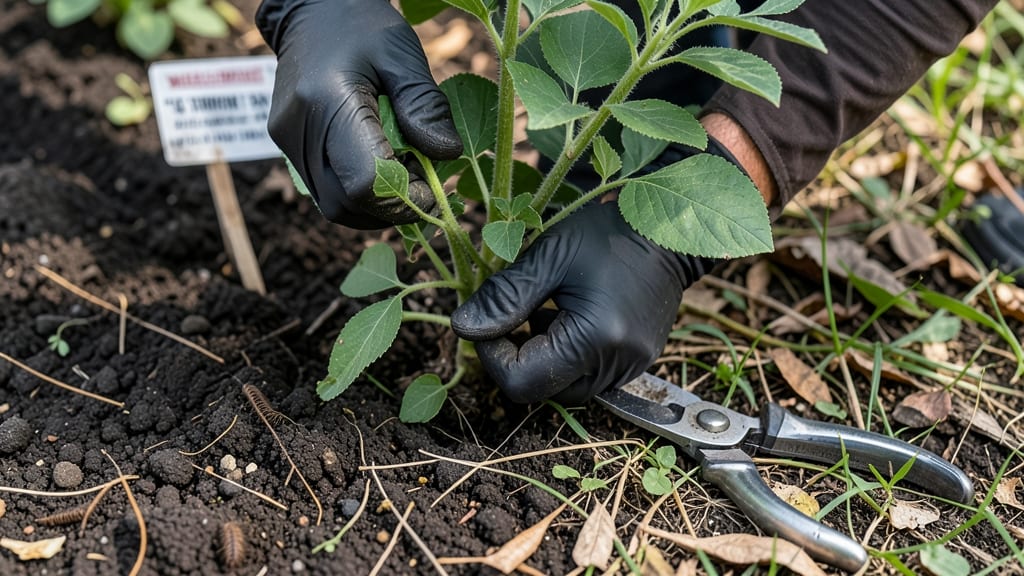
Toxic wild tomato plants, such as those from the Solanum genus including deadly nightshade and bittersweet nightshade, contain dangerous alkaloids like solanine and atropine. Exposure can trigger symptoms from nausea to hallucinations, so removal demands protective gloves, sealed disposal, and avoiding skin contact with plant sap or berries.
These invasive plants thrive in gardens and wooded areas, often disguised as harmless vines. 🌿 The danger lies in their glossy, black berries and lobed leaves—key identifiers that distinguish them from edible varieties.
Even small doses of their alkaloids can cause severe reactions, especially in children or pets, which is why immediate removal is critical. I always recommend double-checking plant identification before handling any unknown green growth, as misidentification can have serious consequences.
For gardeners, the key to safe eradication is timing and technique. Digging out roots completely prevents regrowth, while vinegar solutions (1:1 ratio) can kill foliage without spreading seeds. Always wear long sleeves and a mask during removal, as the plant's sap can irritate skin and lungs.
Proper disposal in sealed trash bags ensures these toxic plants don't contaminate compost piles or attract wildlife.
💡 In This Article
- Identifying Toxic Wild Tomato Plants and Their Dangerous Alkaloids
- Step-by-Step Guide to Safely Eradicating Wild Tomato Plants
Identifying toxic wild tomato plants and their dangerous alkaloids
The most critical visual clues for spotting toxic Solanum species start with their berries. Unlike edible tomatoes, these plants produce glossy black berries that resemble small grapes—often the size of a pea to a marble.
These berries contain concentrated levels of atropine, an alkaloid that can cause hallucinations even in tiny doses (as little as 2-5 milligrams for adults). The leaves are another dead giveaway: deeply lobed with jagged edges, often growing in a star-shaped pattern when fully mature.
Stems provide additional warning signs. Toxic varieties typically feature purple or green stems with hairy textures, while their foliage emits a faint, unpleasant odor when crushed. The plant's growth habit is aggressive too—vines can sprawl up to 10 feet long, smothering nearby vegetation.
Solanine, another dangerous alkaloid found in these plants, primarily concentrates in the green parts (leaves, stems) and unripe berries, with levels peaking in sunlight-exposed areas. For comparison, a single leaf might contain 0.05-0.1% solanine, while edible tomatoes have 0.001-0.002%—a 50-fold difference.
What makes these alkaloids so dangerous is their neurotoxic mechanism. Atropine blocks acetylcholine receptors in the nervous system, leading to symptoms like dilated pupils, rapid heartbeat, and confusion within 30-60 minutes of ingestion. Solanine, meanwhile, disrupts cell membranes, causing gastrointestinal distress and potential organ damage.
Children are especially vulnerable because their smaller body weight means even minimal exposure can trigger severe reactions. 🔥 The key is recognizing these plants before contact—never assume a tomato-like plant is safe based on appearance alone.
Seasonal variations also affect toxicity levels. Plants produce the highest alkaloid concentrations during late summer to early fall, when berries ripen. This is why gardeners in temperate climates should monitor these plants during their peak growing season (typically July through September).
The roots, though less toxic than berries, can still cause irritation if handled without protection. This is why I always recommend wearing nitrile gloves and a face mask when working near suspicious plants, as even broken stems release irritating sap.
Here's how to confirm identification with a simple test: crush a leaf between your fingers (while wearing gloves). Toxic varieties will release a bitter, acrid smell similar to green potatoes. For absolute certainty, consult a local botanist or use a plant identification app that includes Solanum genus warnings.
Remember, these plants aren't just dangerous—they're invasive. A single plant can produce hundreds of seeds, ensuring their spread if left unchecked.
For pet owners, the stakes are even higher. Dogs and cats are particularly susceptible to atropine poisoning, with symptoms appearing within 15-30 minutes of ingestion. Even small amounts of berries can cause seizures or coma.
This is why immediate removal isn't just about protecting your garden—it's about safeguarding your family and pets from potential poisoning incidents.