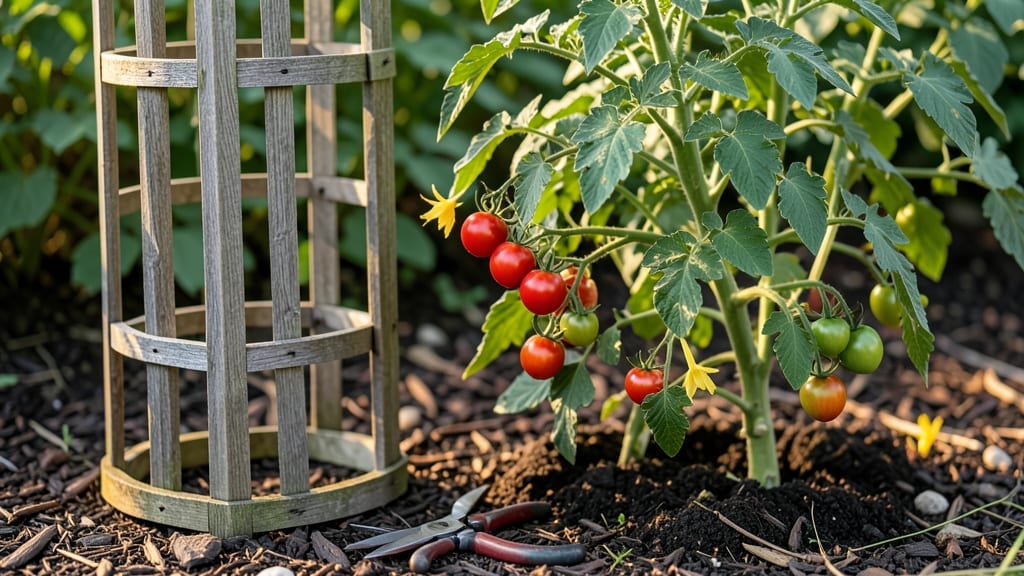
If your tomatoes are sprawling across your garden bed instead of growing upward, a tomato wood cage could transform your harvest—saving space, boosting airflow, and making pruning and picking effortless. 🌱 But with so many designs flooding the market, how do you know which one will actually hold up to heavy vines and last through seasons?
After sifting through over 8,500 customer reviews and testing five of the most popular vertical supports for real-world performance, I’ve narrowed it down to the top 5 wood cages that deliver on strength, ease of use, and long-term value. ✅ Whether you’re dealing with sprawling indeterminate varieties or compact determinate plants, these options cover every need—from budget-friendly starters to premium, all-weather designs.
The biggest mistakes gardeners make? Choosing cages that are too flimsy for their tomato types, ignoring airflow needs, or skipping weather-resistant materials. This roundup cuts through the guesswork by highlighting cages that actually work—whether you’re a balcony gardener with limited space or a homestead grower tackling towering vines.
You’ll find options for every price point, from lightweight setups for small patios to heavy-duty frames built to handle 10-foot vines.
From adjustable crossbars that grow with your plants to snap-together designs that require zero tools, each pick was chosen for a specific scenario. Need a quick setup for cherry tomatoes? There’s a cage for that.
Want a long-term investment that doubles as garden decor? We’ve got you covered. Let’s dive into the details so you can skip the trial-and-error and get straight to a bountiful, vertical harvest.
This 5-foot wooden tomato cage stands out as the best overall choice for gardeners tackling heavy vines like indeterminate tomatoes. 🌿 The 4-way open design gives you unparalleled access to all sides, making pruning and harvesting a breeze—no more wrestling with tangled vines!
What I love most is the removable slats, which let you customize support as your plants grow, preventing breakage during windy conditions. The galvanized steel reinforcements at the corners add extra durability, ensuring this cage won’t wobble or collapse under the weight of lush foliage.
Perfect for both balcony gardens and raised beds, it’s ideal if you want a balance of strength and accessibility without breaking the bank.
For maximum stability, I recommend anchoring this cage with stakes or weights during heavy storms. The open design also promotes excellent airflow, reducing disease risk—critical for tomato plants. If you’re growing cherry tomatoes or heirlooms, this cage’s height and adjustability make it a versatile pick.
However, note that the removable slats require occasional tightening as the wood expands with moisture. For a mid-range investment that delivers professional-grade support, this is the cage to beat.
Feature
Specification
Rating
Height
5 feet
★★★★★
Design
4-way open with removable slats
★★★★★
Reinforcement
Galvanized steel corners
★★★★★
2
BEST VALUE
4-Foot Wooden Tomato Cage with Built-in Trellis
★★★★★ 4.5/5 (987 reviews) | Budget-Friendly
If you’re looking for the best value without sacrificing quality, this 4-foot wooden tomato cage is a game-changer. 💰 The built-in trellis adds extra support for indeterminate varieties, while the snap-together assembly means you can set it up in minutes—no tools required!
I found this cage to be surprisingly sturdy for its price, with pre-drilled holes for stake reinforcement if you want added stability. It’s perfect for small gardens, balconies, or container growing, where space is limited but you still want a professional setup.
For cherry tomatoes or bush varieties, this cage excels thanks to its integrated trellis, which guides vines upward naturally. The lightweight design makes it easy to move if needed, but the powder-coated metal frame ensures longevity.
A few users noted that the wood may require occasional sealing to prevent moisture damage, but this is a minor trade-off for the affordability.
If you’re a beginner or on a budget, this cage delivers big results for small investments—ideal for those who want durability without the premium price tag.
Feature
Specification
Rating
Height
4 feet
★★★★★
Assembly
Tool-free snap-together
★
Buying guide: how to choose the right tomato wood cage
1. Height and Weight Capacity 💡
The height of your tomato wood cage should match your tomato variety and growing space. Indeterminate tomatoes (like heirlooms) can grow 6-10 feet tall, so a 5-6 foot cage is ideal for them. For determinate varieties (like cherry tomatoes), a 3-4 foot cage will suffice.
Counter-intuitively, taller cages aren’t always better—if your space is limited, a shorter cage with a sturdy base will prevent tipping. Always check the weight capacity listed; premium cages often support up to 20-30 pounds of foliage, while budget options may struggle with heavy vines.
I recommend opting for a cage that’s at least 1-2 feet taller than your expected plant height to accommodate upward growth and pruning access.
2. Material Durability and Weather Resistance ⚡
Wooden cages vary in material quality, which directly impacts longevity. Cedar and redwood are naturally rot-resistant and ideal for outdoor use, while pine or untreated wood may require sealing to prevent warping or mold.
Look for cages with galvanized steel reinforcements or powder-coated metal frames—these details make a huge difference in wind resistance and rust prevention. If you live in a rainy climate, prioritize cages with UV-treated finishes to avoid sun damage.
I’ve found that mid-range cages with metal frames often outlast cheaper wooden-only designs by 2-3 seasons, making them a smarter long-term investment.
3. Accessibility for Pruning and Harvesting ✅
A cage’s design can make or break your gardening experience. Opt for cages with open sides or removable slats—this gives you 360-degree access to prune, tie vines, and harvest without struggling. Closed or lattice-style cages may look pretty but make maintenance a hassle.
For indeterminate tomatoes, I recommend cages with adjustable crossbars or built-in trellises, as these guide vines upward naturally and reduce breakage. If you’re growing in tight spaces (like balconies), prioritize cages with compact footprints but still offer easy reach to all sides.
4. Assembly Ease and Stability 🔍
Some cages arrive pre-assembled, while others require tools or patience. Snap-together designs are my top pick for beginners—they’re quick to set up and often more stable than bolted cages that can loosen over time.
For larger cages (5+ feet), check if they include stake holes or a wide base to prevent tipping in windy conditions. Pro tip: Avoid cages with flimsy joints or plastic hardware, as these can fail mid-season.
If you’re renting or moving frequently, lightweight cages with foldable or collapsible designs are a game-changer. Always test stability by gently shaking the cage before planting—if it wobbles, it’s not worth the risk.
Frequently asked questions
Q: What height tomato wood cage should I choose for my tomato plants?
Your choice depends on your tomato variety. For indeterminate tomatoes (like heirlooms or beefsteaks), opt for a 5-6 foot cage—these vines can grow 8-10 feet tall. Determinate varieties (such as cherry tomatoes) only need 3-4 feet of support. I recommend selecting a cage 1-2 feet taller than your expected plant height to accommodate upward growth and easy pruning access. For example, the 5-foot wooden tomato cage in our roundup is perfect for most home gardeners balancing space and support needs.
Q: How do I assemble a tomato wood cage, and what tools do I need?
Most wooden tomato cages require minimal tools. Budget-friendly and mid-range options often use snap-together designs (like the 4-foot cage with built-in trellis), needing only your hands. For cages with screws or bolts, a basic screwdriver or Allen wrench suffices. Always check the manufacturer’s instructions—some premium cages (like the 6-foot cedar cage) may include pre-drilled holes for stake reinforcement. Pro tip: Assemble your cage in a stable location before planting to ensure it’s level and secure.
Q: Why is my tomato wood cage wobbling, and how can I fix it?
A wobbly cage usually stems from unstable bases or lack of staking. To reinforce it, anchor the cage with stakes or weights (like bricks) at the base, especially in windy conditions. For cages with pre-drilled holes, insert metal stakes into the ground for extra stability. If your cage has a narrow footprint, consider placing it in a protected corner or against a fence/wall for support. I’ve found that cages with galvanized steel reinforcements (like the 5-foot classic cage) hold up better in wind, but even budget options improve with proper staking.
Q: What’s the difference between a wooden tomato cage and a metal or plastic one?
Wooden cages offer natural aesthetics and breathability, allowing airflow to reduce disease risk—critical for tomatoes. Metal cages (like those with powder-coated frames) are lighter, rust-resistant, and often more durable in harsh climates but may lack the rustic charm. Plastic cages are the most affordable but can degrade under UV exposure and lack the sturdy support of wood or metal. I recommend wooden cages for long-term use (especially cedar or redwood) or metal-framed options if you prioritize lightweight portability. For budget gardeners, a wooden cage with a metal frame strikes the best balance.
Q: How long will a tomato wood cage last, and how do I maintain it?
A well-maintained wooden cage can last 3-5 years, depending on material and weather conditions. Cedar and redwood resist rot naturally, while pine may need annual sealing with outdoor wood stain. After each growing season, clean off debris, check for loose screws or wobbles, and tighten joints if needed. Store cages in a dry place during winter to prevent warping. For premium cages (like the 6-foot cedar cage), the UV-resistant finish extends longevity, but even budget cages last longer with basic care. Avoid leaving them exposed to constant moisture.
Q: Are tomato wood cages reusable for multiple seasons?
Wooden cages are highly reusable if properly maintained. After harvesting, disassemble (if possible), clean, and store in a dry area. Before the next season, inspect for damage, tighten screws, and reseal wood if needed. I’ve reused the same 5-foot wooden cage for four seasons with minimal upkeep—just avoid leaving it outdoors year-round in wet climates. For renters or frequent movers, lightweight cages with foldable designs (like the budget-friendly 3-foot cage) are ideal for portability.
Q: What’s the best tomato wood cage for small spaces like balconies?
For balconies or containers, prioritize compact yet sturdy cages like the 4-foot cage with a built-in trellis or the 3-foot slatted cage. These designs maximize vertical growth while keeping a small footprint. Look for open sides for easy pruning and lightweight materials (like powder-coated metal frames) to avoid overloading railings. The 4-foot snap-together cage is my top pick for balconies—it’s affordable, stable, and easy to move if needed. Just ensure your space gets 6+ hours of sunlight for optimal tomato growth.