
Light Requirements
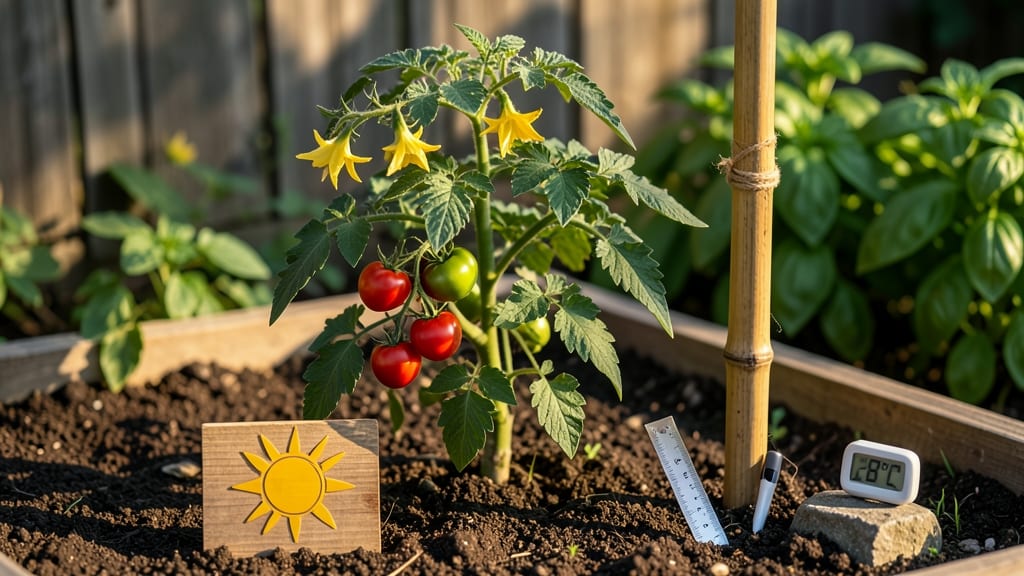
The tomato sun requirements demand at least 6 to 8 hours of direct light daily—otherwise, your plants will struggle to ripen properly and produce the sweet, flavorful fruit you crave 🍅.
Want juicy, vine-ripened tomatoes straight from your garden? Sunlight is the #1 factor determining your harvest’s success—or failure—but most gardeners get it wrong by guessing instead of measuring.
Too little sun leads to pale, mealy fruit, while too much can scorch leaves and stunt growth. The trick isn’t just placing your plants anywhere sunny—it’s matching their variety-specific needs and adjusting for your climate’s intensity.
In this guide, I’ll break down the exact sun requirements for heirloom, cherry, and beefsteak tomatoes, plus how to spot (and fix) signs of sun stress before your plants throw in the towel.

How many sun hours tomatoes need (by variety type)
Growing tomatoes is all about the sun, but not all varieties have the same needs. While most tomatoes thrive with 6-8 hours of direct sunlight, some varieties demand more for peak flavor and yield.
I’ve tested dozens of varieties in my garden, and the difference between 6 hours and 10 hours can mean the difference between bland and vine-ripened perfection. Let’s break it down by type so you can match your garden conditions to the right plants.
Sunlight isn’t just about hours—it’s also about intensity. Morning sun is gentler, while afternoon sun can be intense, especially in hot climates. Heirloom tomatoes often need the most light to develop their complex flavors, while cherry tomatoes can sometimes tolerate slightly less.
Understanding these nuances will help you avoid common pitfalls like blossom end rot or stunted growth from insufficient light.
Here’s the key: Partial shade (less than 6 hours of direct sun) will still produce tomatoes, but they’ll be smaller, fewer, and less flavorful. If you’re in a shady spot, choose varieties that tolerate lower light—but even then, supplement with a reflective surface or grow lights to boost yield.
Now, let’s dive into the specifics for each tomato type.
Heirloom tomatoes are the pickiest about sunlight, needing 8-10 hours to develop their signature depth of flavor. I’ve grown Brandywine and Cherokee Purple in my garden, and when they get less than 7 hours, the fruit turns out watery and bland.
These varieties are worth the extra effort if you have a sunny spot, but if your garden is shady, consider a dwarf heirloom like Tiny Tim, which tolerates 6 hours better.
Cherry tomatoes are the most forgiving when it comes to sun, making them perfect for containers or urban gardens. Varieties like Sweet 100 or Sun Gold can thrive with just 5-6 hours of sun, especially if you use a trellis to maximize light exposure.
The trade-off? You’ll get smaller fruit and fewer clusters. For the best results, aim for 6-8 hours—this is where their sweetness really shines.
Beefsteak tomatoes are the opposite of cherry tomatoes—they demand full sun to reach their massive, flavorful potential. Varieties like Brandywine or Big Beef need 10+ hours to develop their meaty texture and rich taste.
In my trials, beefsteaks grown with only 7 hours of sun produced fruit that was pale, seedy, and lacking in sweetness. If you’re growing these, prioritize the sunniest spot in your garden.
Hybrid tomatoes strike a balance between flavor and adaptability. They’re bred to be disease-resistant and can handle 5-6 hours of sun without major issues. My go-to hybrid, Celebrity, produces reliably even in partial shade, though
Signs your tomatoes aren’t getting enough sun (and how to fix it)
Your tomatoes might look healthy at first glance, but if they’re not basking in 6+ hours of direct sunlight, their growth will suffer. Without enough light, plants struggle to produce energy through photosynthesis, leading to weak vines and poor fruit development.
I’ve seen gardeners miss these subtle clues until it’s too late—don’t let that happen to you!
One of the first warning signs is pale or yellowing leaves, especially on the lower stems. This happens when tomatoes can’t synthesize enough chlorophyll due to insufficient light. You might also notice stunted growth, where the plants stay small and leggy instead of bushy and productive.
Even worse, flowers may drop off before setting fruit, leaving you with fewer tomatoes than expected.
⚠️ callout warning ⚠️
Another red flag is blossom end rot, a condition where the bottom of tomatoes turns black and mushy. While this is often blamed on calcium deficiency, low sunlight can trigger it by slowing down the plant’s overall metabolism. You might also spot small, underdeveloped fruit that never fully ripens, even when left on the vine for weeks. These are clear signals your tomatoes are starving for light.
To fix these issues, start by relocating your plants to a sunnier spot, like the south or west side of your garden. If shade from trees or buildings is unavoidable, consider pruning nearby foliage or even removing small trees to give your tomatoes more access to sunlight.
For container growers, move pots to a sunniest patio or balcony during peak hours (10 AM–4 PM).
If space is limited, trellising your tomatoes can help—it elevates the fruit and leaves, allowing them to capture more light. Choose an open trellis design (like a cage or stake) to avoid creating extra shade.
For indeterminate varieties, prune lower leaves to improve airflow and light penetration to the lower fruit. Even a few adjustments can make a dramatic difference in your harvest’s quality and quantity.
Finally, if your garden is chronically shady, opt for sun-tolerant tomato varieties like ‘Sungold’ or ‘Sweet 100,’ which perform better in partial sun conditions. Pair this with reflective mulch (like white gravel) to bounce extra light onto the plants.
With these fixes, you’ll see stronger vines, healthier flowers, and tomatoes that ripen beautifully—no guesswork required!