
Planting
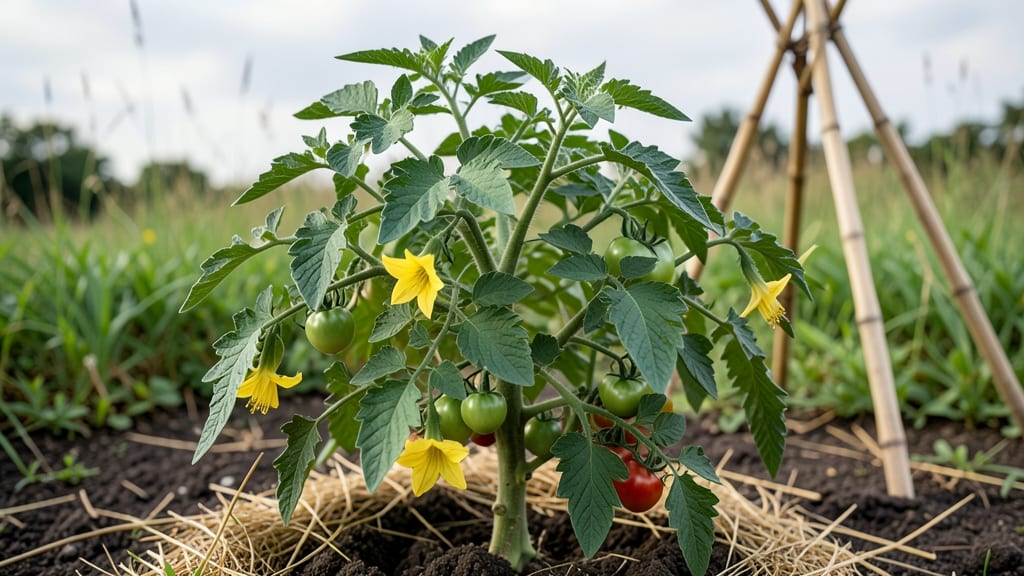
Building a tomato plant teepee turns sprawling vines into vertical productivity. 🌱 I’ve grown hundreds of tomatoes this way—no more crowded plants or lost fruit in the grass—and the sturdy wire frame holds up even when heavy with ripe tomatoes. The best part?
It transforms your garden into a lush, space-saving display that actually supports the plants’ natural growth. You’ll need just four 6-foot-long wire stakes and twisted wire or zip ties to create the frame, plus a few minutes to assemble it.
No fancy tools or complicated knots required—this is gardening that actually feels simple. The teepee works for determinate (bush) and indeterminate (vining) tomatoes, and you can adjust the size based on your garden space.
Once assembled, your tomatoes will climb upward instead of sprawling, making harvesting easier and keeping fruit off the ground where pests and rot can’t reach. The plants stay healthier, produce more, and look shockingly lush against any garden backdrop.
Plus, you’ll free up valuable ground space for other crops or paths. For larger gardens, build multiple teepees in a row, or try a double teepee for extra stability with heavy varieties like beefsteak tomatoes.
The key is keeping the frame tight enough to support the plants but loose enough to allow growth. Ready to turn your tomato patch into a vertical masterpiece?
📚 In This Guide
- What you need
- Instructions
- Tips and common mistakes
- Wrapping up and next steps
What you need
- ● Wire or metal stakes: 3–5 flexible, galvanized steel or sturdy bamboo stakes (5–6 ft tall, ¼-inch diameter).
- ● Twist ties or zip ties: 10–15 heavy-duty ties (or garden wire) to secure the frame.
- ● Pruners or wire cutters: For trimming stakes to size or adjusting the structure.
- ○ Garden twine or soft rope (optional but helpful): To reinforce connections between stakes.
- ● Tomato plants: 2–3 indeterminate varieties (e.g., Roma, Cherry, or Beefsteak) per teepee.
- ● Stakes or small pegs: 4–6 short stakes (6–12 inches) to anchor the teepee base.
- ● Coconut coir or burlap strips: For eco-friendly stake wrapping to prevent scratching.
- ● Garden fabric or shade cloth: To protect young plants from harsh sun.
- ● Plant ties or soft Velcro straps: For gently guiding tomato vines upward.
- ● Watering can or hose with a gentle nozzle: For post-setup hydration.
Step-by-Step guide to building a sturdy tomato teepee
Here's how to create a simple yet rock-solid support for your tomato plants—no sagging, no leaning, just steady growth.
🪴 Step 1: Gather and Prepare Your Materials
You'll need 4 stakes (each 6 feet tall), 20 feet of 12-gauge wire, and 4 tomato plants spaced 2 feet apart. I like to use bamboo stakes for their natural strength and rustic look, but PVC pipes work just as well. Cut the wire into 5-foot lengths—you'll need 4 pieces total to form the teepee's ribs.
Before you start, check your stakes for straightness. Tap them firmly into the ground at 45-degree angles, driving them 18 inches deep so they don’t wobble when laden with fruit. Space them 3 feet apart in a square formation. This creates a stable base that won’t spread outward under weight.
☀️ Step 2: Weave the Wire Frame
Take the first 5-foot wire and wrap one end tightly around the top of Stake 1, leaving 2 feet of wire exposed. Pull it diagonally toward Stake 2 and wrap the other end around its top, creating an X shape. Repeat with the second wire, crossing it over the first to form a crisscross pattern. This crisscrossing ensures the structure stays rigid even when heavy with tomatoes.
Add the third and fourth wires the same way, spacing them 6 inches apart vertically. You’ll end up with a lattice that looks like a mini teepee. Leave 6 inches of wire loose at the bottom of each rib—this will anchor the frame to the ground later. The goal is a frame that’s 3 feet wide at the base and tapers to 1 foot at the top, giving your plants room to grow upward without crowding.
🌱 Step 3: Secure the Frame and Plant Tomatoes
Once the wires are in place, bend the loose 6-inch ends at the bottom of each rib outward and stake them to the ground with small U-shaped wire pins or garden staples. This locks the teepee in place and prevents it from collapsing when you tie in the tomato vines. I like to add a horizontal wire ring about 1 foot up from the base to provide extra support for lower branches.
Plant your 4 tomato plants at the corners of your square, 6 inches from the stakes. Water deeply to settle the soil, and let the roots establish for 3-5 days before gently weaving the main stems through the wire lattice. Secure each vine with soft plant ties every 12 inches as they grow. This keeps the plants upright and encourages them to climb rather than sprawl.
✂️ Step 4: Maintain and Train the Vines
As your tomatoes grow, prune suckers (the small shoots that form in the leaf axils) to direct energy upward. Leave 2-3 main stems per plant for determinate varieties, or 1 strong stem for indeterminate types. When vines reach the top of the teepee (5-6 feet tall), pinch off the growing tips to encourage bushier growth and more fruit production.
Check the wire frame weekly for tightness—vines can loosen it as they thicken. Re-secure any slipping stems with fresh ties, and avoid over-tightening the wire, which can damage the plant. If your tomatoes get too heavy, add a second horizontal wire ring halfway up the teepee for extra support. This simple adjustment prevents the frame from bending under the weight of a bountiful harvest.
💧 Step 5: Harvest and Clean Up
When your tomatoes ripen, harvest them gently by twisting the stem—never pull them off the vine. This reduces bruising and keeps the plant producing. After the harvest season, remove the vines and compost them (unless they’re diseased, in which case dispose of them in the trash). Clean the wire frame by soaking it in a 10% vinegar solution to remove any residual plant debris or pests.
Store the stakes and wire in a dry place for next season. If your teepee shows signs of rust or wear, replace the wire but keep the stakes—they’ll last for years. With this setup, you’ll get healthier plants, better air circulation, and easier access to ripe tomatoes without the hassle of cages or stakes. Plus, it looks great in the garden!
Tips & tricks for sturdy tomato teepees
Here's what nobody tells you about building a tomato teepee that actually holds up all season.
Stake Placement Matters: The 45-degree angle and 18-inch depth for stakes are non-negotiable—this creates the foundation that prevents wobbling. I've seen teepees collapse when stakes weren't driven deep enough, especially when tomatoes get heavy. Use a mallet to ensure they're firmly planted, and check stability by gently pushing each stake after installation. This small effort prevents weeks of frustration later.
Wire Tension Technique: When creating the X pattern in Step 2, pull the wire taut but not so tight it cuts into the stakes. The goal is a snug lattice that won't loosen as vines grow. I like to twist the wire ends around the stakes twice for extra security—this creates a more permanent connection than simple wrapping. The 6-inch loose ends at the bottom should be bent outward at 90-degree angles to anchor into the soil like little stakes themselves.
Pruning Strategy: In Step 4, focus on removing suckers that form below the first flower cluster—these are the ones that drain energy from fruit production. I prune every 7-10 days during peak growth, using clean scissors to make cuts just above a leaf node. This encourages the plant to put energy into existing fruit rather than new growth. The 12-inch spacing for plant ties is perfect—any closer and you'll restrict growth, any farther and the plant might sag between supports.
Maintenance Hack: That second horizontal wire ring mentioned in Step 4 is worth adding if you're growing indeterminate varieties. Install it when your plants reach about 3 feet tall—this creates a secondary support level that prevents the entire structure from bending when tomatoes get heavy. I've seen teepees with just one ring collapse under 20-pound tomato clusters, while the double-ring versions stayed perfectly upright.
Pro Tips for Tomato Plant Teepee
- Here's what nobody tells you about building a tomato teepee that actually holds up all season.
- Stake Placement Matters: The 45-degree angle and 18-inch depth for stakes are non-negotiable—this creates the foundat...
- Wire Tension Technique: When creating the X pattern in Step 2, pull the wire taut but not so tight it cuts into the s...
Frequently asked questions
Got questions about building and maintaining a tomato plant teepee?
Here are answers to the most common ones to help you grow like a pro!
How tall should my tomato teepee be?
A standard teepee should be 6–8 feet tall for most tomato varieties. Tall indeterminate types (like 'Sungold' or 'Beefsteak') need the full height, while smaller determinate varieties (like 'Roma') can thrive in a 4–5 foot frame. Use stakes or a measuring tape to ensure even height before securing the wire.
What’s the best time to build a tomato teepee?
Construct your teepee 2–4 weeks before planting to let the soil settle and prevent root disturbance. If you’re transplanting seedlings, build it right after planting so vines can climb immediately. For direct sowing, set it up as soon as sprouts appear (about 2–3 weeks after seeds germinate).
Can I reuse a tomato teepee for multiple years?
Yes! With proper care, your teepee can last 3–5 years. After harvest, remove all plant debris, disinfect the wire with a 10% bleach solution, and store it in a dry place. Check for rust or bent wires annually—replace damaged sections to keep it sturdy. Pro tip: Add a fresh coat of paint or sealant to extend its lifespan!
What if my tomato plants aren’t climbing the teepee?
If vines hesitate, try these fixes:
- Tie them gently with soft plant ties or old T-shirts (avoid wire or tight ties).
- Check for overcrowding—prune lower leaves to improve airflow and light.
- Ensure the teepee is sturdy and centered over the plant’s growth habit.
- Add a small trellis or stake inside the teepee for extra support.
Are there alternatives to wire teepees for tomatoes?
Try these space-saving options:
Option
Pros
Cons
Bamboo stakes
Natural, biodegradable, and easy to assemble.
May not support heavy fruit loads; requires frequent tying.
Plastic tomato cages
Lightweight, reusable, and no assembly needed.
Can tip over; limited height for tall varieties.
Cattle panels or fencing
Super sturdy and customizable for large gardens.
Heavier to move; may require more space.
Wrapping up and next steps
Building a tomato plant teepee is a game-changer for gardeners—it maximizes space, supports heavy harvests, and keeps your plants thriving without the hassle of sprawling vines. Whether you're a beginner or a seasoned gardener, this simple DIY project delivers big results with minimal effort. 🌱
Ready to transform your garden? Grab your materials, follow the steps, and watch your tomatoes climb to new heights—literally! Next, plant those seeds or seedlings and enjoy a bountiful, organized harvest all season long.