
Diseases
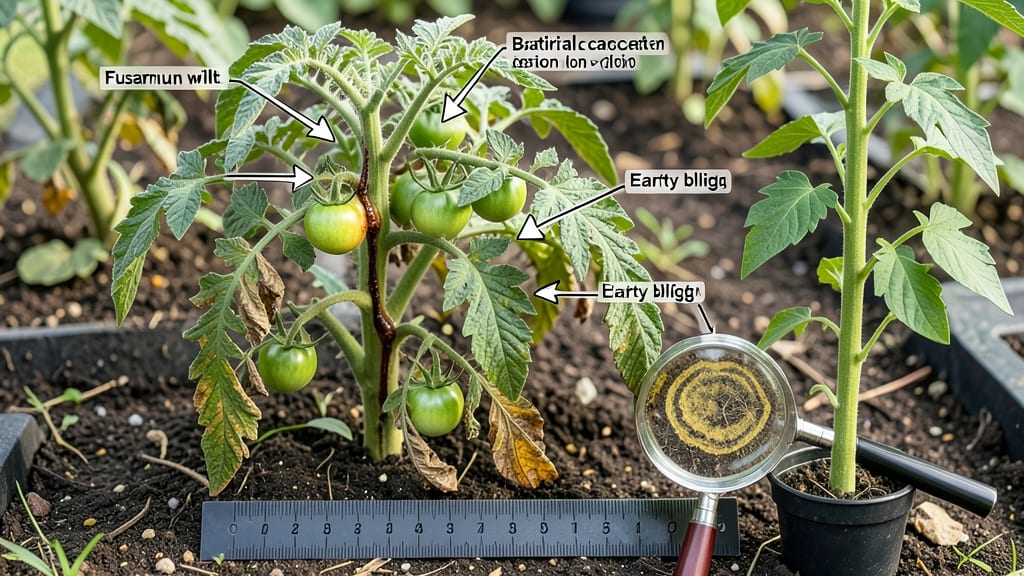
When tomato plant stems turn brown and wilt suddenly, your harvest disappears before it even starts. 🌱 I’ve lost entire plants to stem diseases like fusarium and verticillium wilt—until I learned the early signs and organic fixes that actually work.
The key is catching problems before they spread, not after your plants collapse.
These diseases thrive in warm, wet soil, where fungal spores or bacteria attack the stem’s vascular system. You’ll see yellowing leaves, wilting despite good water, and stems that snap easily when pulled.
The worst part? Once infected, there’s no cure—only prevention. But with the right soil care, pruning habits, and resistant varieties, you can keep your plants standing strong all season.
Start with sterilized soil and 3-year crop rotation to break disease cycles. Prune lower leaves to improve airflow, and choose disease-resistant tomato varieties like ‘Mountain Merit’ or ‘Defiant PhR.’ For existing infections, copper sprays or compost tea can slow spread—though removal is often the only real fix.
Long-term, healthy stems mean bigger yields and fewer headaches. Focus on soil health, avoid overwatering, and act fast at the first sign of trouble. Your tomatoes—and your sanity—will thank you.
Root Causes of Stem Weakness
Tomato plant stem diseases don’t just appear out of nowhere—they’re often the result of a perfect storm of environmental stress, microbial invaders, or poor growing conditions. Understanding why these issues arise is the first step to stopping them before they wreck your harvest.
Below, we break down the key culprits behind weakened tomato stems, from fungal infections to physical damage, so you can tackle them head-on.
Fungi thrive in damp, warm conditions, and tomato stems are prime real estate for them. Here’s how they strike:
- Verticillium and Fusarium Wilt 🍄 These soil-borne fungi enter through the roots and clog the plant’s xylem vessels (the plant’s plumbing system).
Once inside, they block water and nutrient flow, causing stems to wilt, turn brown, and weaken—often starting at the base. Why it happens? - Infected soil or compost (fungal spores can survive for years). - Poor drainage (waterlogged roots create the perfect breeding ground). - Stressed plants (weakened immunity from overcrowding or nutrient deficiency).
- Early Blight (Alternaria solani) 🍅💀 This fungus attacks leaves first but quickly spreads to stems, creating dark, sunken lesions that girdle (wrap around) the stem. Why?
- Splashing water during irrigation or rain spreads spores from infected foliage to stems.
- High humidity (ideal for spore germination).
- Old crop debris left in the soil (a fungal buffet for next season).
- Gray Mold (Botrytis cinerea) ❄️🍄 While it targets flowers and fruit, it can also infect stems—especially in cool, wet conditions.
It thrives on injured tissue, like pruning cuts or cracked stems. Why? - Poor air circulation (traps moisture on stems). - Overhead watering (keeps stems damp 24/7). - Late-season stress (plants weakened by cold or drought).
Some stem diseases aren’t caused by microbes at all—they’re the work of hungry pests that weaken stems until they snap or rot.
- Aphids and Spider Mites 🕷️🐜 These sap-suckers don’t just weaken leaves; they inject toxins that distort and weaken stems. Heavy infestations can lead to black sooty mold (a fungal hitchhiker) growing on their sticky honeydew, further stressing the plant.
- Cutworms 🌙🔪 These nocturnal caterpillars sever stems at ground level, often at night. Why they target stems?
- Young, tender stems are easy prey.
- Mulch or dense foliage provides hiding spots.
- Nighttime moisture makes stems softer and easier to cut.
- Stem-Boring Insects (e.g., Hornworms, Tomato Fruitworms) 🐛🍅 Larvae burrow into stems, creating entry points for bacteria and fungi. Infested stems may ooze sap, wilt, or collapse suddenly.
Tomatoes are tough, but push them too far, and their stems pay the price.
- Extreme Temperature Swings ❄️☀️
- Cold stress: Temperatures below 50°F (10°C) can cause cellular damage, making stems brittle and prone to cracking.
- Heat stress: Above 90°F (32°C), stems produce less lignin (the structural fiber that strengthens them), leading to floppy, weak growth.
- Overwatering or Underwatering 💦🌵
- Waterlogged soil: Roots suffocate, starving the stem of oxygen. This triggers anaerobic bacteria (like Pseudomonas) to attack weakened tissue.
- Drought stress: Stems shrink and become prone to splitting when suddenly rehydrated.
- Physical Trauma 💥🌪️
- Wind or hail damage can bruise or crack stems, creating wounds where pathogens like Phytophthora (a water mold) can invade.
- Improper pruning or staking (e.g., tying too tightly) restricts sap flow, weakening stems over time.
Sometimes, well-meaning gardening practices backfire and create the perfect conditions for stem diseases.
- Overcrowding Plants 🏢🌱
- Poor airflow between stems traps humidity, ideal for fungal spores to germinate.
- Competing plants steal nutrients, weakening stems and making them susceptible to pests.
- Reusing Infected Soil or Containers 🔄🍄
- Fungal spores like Verticillium can survive for years in old soil. Planting tomatoes in the same spot annually (especially susceptible varieties like Roma or Beefsteak) exhausts resistance.
- Ignoring Crop Rotation 🌍➡️🌱 Planting tomatoes (or nightshades like peppers/eggplants) in the same spot yearly lets soil-borne diseases build up. Why?
- No break = no time for beneficial microbes to outcompete pathogens.
- Root exudates (chemicals tomatoes release) can signal pathogens to "come and get it."
- Using Contaminated Tools or Mulch ⚠️🪒
- Pruners, trellises, or mulch from an infected garden can spread spores to healthy stems. Always sterilize tools with rubbing alcohol between plants!
Pro Tip: 💡 The best defense is a strong offense—healthy stems start with balanced soil (pH 6.0–6.8), proper spacing, and vigilant pest control. Keep an eye out for early signs (yellowing, wilting, or lesions), and act fast before the disease moves up the stem!
Revive Your Tomato Plants: Fixes for Stem Woes
Stem diseases can turn your thriving tomato plants into sad, wilted relics—unless you act fast! Below are practical, step-by-step solutions tailored to the most common causes, plus prevention tips to keep your garden healthy. Whether your stems are rotting, cracking, or oozing, we’ve got you covered.
If your tomato stems look mushy, discolored, or covered in fuzzy growth, fungal diseases like early blight, late blight, or Fusarium wilt are likely the culprits.
🍳 Prune and Remove Infected Stems
- Cut it out: Use sterilized pruners (wipe with rubbing alcohol) to snip off all infected stems and leaves—even if they’re just yellowing. Toss them in the trash (not compost!).
- Go deep: Dig around the base to check for blackened or rotting roots. Trim those too.
- Space matters: If multiple plants are sick, remove the entire plant to prevent spores from jumping to neighbors.
🌡️ Fungicide Fix (Natural & Chemical Options)
- Baking soda spray (for early signs): Mix 1 tsp baking soda + 1 tbsp vegetable oil + 1 tsp dish soap in 1 gallon of water.
Spray every 7–10 days on leaves and stems. Why it works: Raises pH, making it harder for fungi to thrive. - Copper fungicide (for severe cases): Follow label instructions for copper-based sprays (like Bordeaux mixture).
Reapply after rain. - Neem oil (preventative): Spray weekly (1 tsp neem oil + 1 tsp soap per quart of water) to smother fungal spores.
💡 Prevention Tips for Next Season
✅ Rotate crops: Don’t plant tomatoes (or nightshades like peppers) in the same spot for 3 years. ✅ Improve airflow: Space plants 18–24 inches apart and prune lower leaves to reduce humidity. ✅ Water at the base: Avoid overhead watering—wet leaves = fungal buffet.
If your stems are oozing yellow/green gunk, wilting suddenly, or cracking, bacterial diseases like bacterial wilt (Ralstonia) or canker may be to blame.
👨🍳 Quarantine & Destroy Infected Plants
- Bag and burn: Remove entire infected plants (roots and all) and sterilize tools with bleach.
- Check for vectors: Bacterial wilt spreads via hornworms and squash bugs. Handpick pests and drop them in soapy water.
🔪 Surgical Stem Repair (For Canker)
If only part of the stem is cracked or oozing:
- Scrape the area with a sterile knife to remove slimy bacteria.
- Dust with cinnamon or copper powder (natural antimicrobials).
- Wrap with plastic wrap (temporarily) to protect until new growth forms.
🎯 Prevention: Break the Cycle
✅ Solarize soil: Cover beds with clear plastic for 4–6 weeks in summer to kill bacteria. ✅ Use resistant varieties: Try ‘Mountain Merit’ or ‘Defiant PhR’ tomatoes (bred for disease resistance). ✅ Avoid contaminated tools: Sterilize pruners between plants.
If stems are thin, leggy, or snapping easily, they’re likely nutrient-deficient or overstressed.
🌱 Boost Stem Health in 3 Steps
- Stake or cage immediately: Use tomato cages, bamboo stakes, or even old pantyhose to support weak stems. Pro tip: Tie stems every 6–8 inches to prevent wind damage.
- Fertilize smart: - For weak stems: Use a balanced fertilizer (10-10-10) or fish emulsion (high in nitrogen). - For flowering/fruiting: Switch to low-nitrogen, high-phosphorus (5-10-10) once buds appear.
- Mulch like a pro: Apply 2–3 inches of straw or grass clippings to retain moisture and prevent soil-borne diseases.
💡 Quick Fixes for Emergency Support
- Popsicle stick splints: If a stem snaps, splint it with a popsicle stick and tape until it heals.
- Epsom salt boost: Mix 1 tbsp Epsom salt per gallon of water and spray foliage weekly for magnesium (strengthens cell walls).
| Problem | Quick Fix | Prevention |
|---|---|---|
| Fungal rot | Prune + copper spray | Crop rotation + airflow |
| Bacterial ooze | Remove plant + solarize soil | Resistant varieties + pest control |
| Weak, floppy stems | Stake + fertilize | Mulch + proper spacing |
Final Thought: Most stem diseases are preventable with good hygiene and smart gardening. Once you spot trouble, act fast—your tomatoes (and your dinner plate) will thank you! 🍅💪
Frequently asked questions
How can I tell if my tomato plant has a stem disease vs. just wilting from heat?
Check for specific symptoms: Stem diseases often show dark spots, discoloration, or oozing at the base, while heat wilt causes uniform drooping that recovers at night. If leaves turn yellow or brown and stems feel soft or hollow, it’s likely a disease like fusarium wilt. Heat stress usually affects whole plants evenly without visible damage.
Can I save a tomato plant with a cracked or oozing stem?
For minor cracks, scrape away infected tissue with a sterile knife, dust with cinnamon or copper powder, and wrap with plastic temporarily. For severe bacterial ooze, removal is often the only option—these infections spread fast. If you act within 24 hours, you might salvage the plant, but don’t delay!
What’s the fastest way to sterilize garden tools to prevent spreading diseases?
Use a 10% bleach solution (1 part bleach to 9 parts water) for 10 minutes, then rinse and dry. For quick fixes, rubbing alcohol (70% or higher) works instantly—just wipe tools between plants. Sterilize pruners, stakes, and containers after each use, especially in infected areas.
Are there tomato varieties that naturally resist stem diseases?
Yes! Look for disease-resistant hybrids like ‘Mountain Merit’ (V/F/N), ‘Defiant PhR’ (V/F/N), or ‘Bush Early Girl’ (V). The labels V (verticillium), F (fusarium), and N (nematodes) indicate resistance. These varieties cost slightly more but save time and heartache in the long run.
How do I know if my tomato stems are weak from disease or just overcrowded?
Overcrowding causes thin, leggy stems with good leaf color, while diseases show dark lesions, wilting despite water, or stem collapse. Check for poor airflow (a crowding sign) or fungal growth (a disease sign). Thin plants to 18–24 inches apart—this improves airflow and reduces disease risk.