
Vegetables
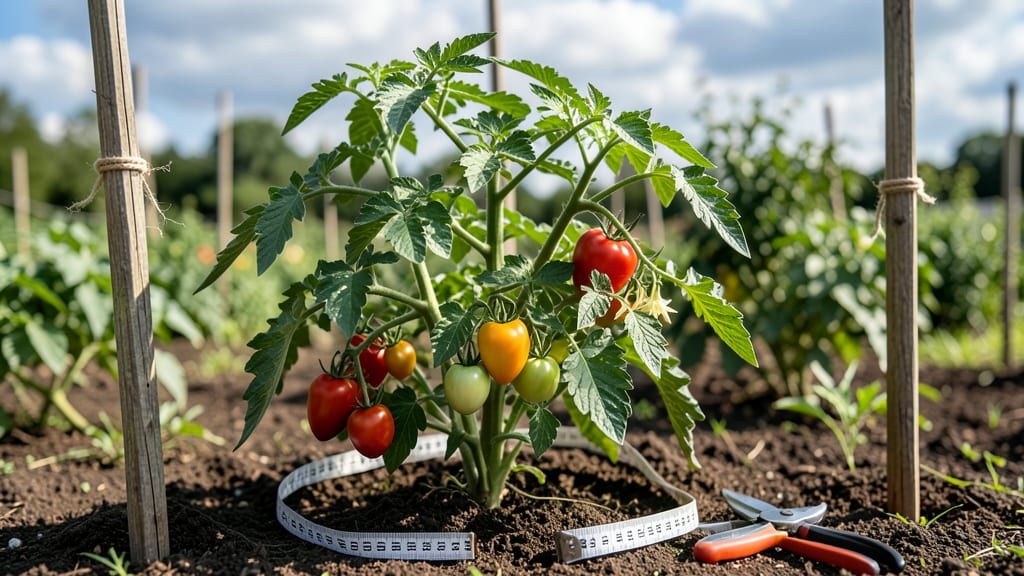
A Roma tomato size chart helps you visualize exactly how tall your plants will grow and how many pounds of fruit to expect from each variety.
If you're growing Roma tomatoes and wondering how tall they’ll get or how many pounds of fruit to expect, you’re not alone. Many gardeners struggle with planning space and yields, especially when comparing indeterminate varieties that climb to 6 feet with bush types that stay under 3 feet.
This chart breaks down everything by variety—so you can plan your garden layout and maximize your harvest.
From the compact Plum Perfect to the towering San Marzano, each Roma variety has distinct growth habits and yield potential. Knowing these details upfront saves you from overcrowding plants or underestimating their space needs. Plus, you’ll learn how pruning and trellising can tweak both height and fruit production.
Below, we’ll cover height comparisons, yield estimates, and practical tips to help you grow Roma tomatoes that meet—or even exceed—standard size expectations. Whether you’re a first-time gardener or a seasoned pro, these insights will keep your plants thriving from July to September.

Roma tomato height & growth habit by variety (indeterminate vs determinate)
Choosing the right Roma tomato variety starts with understanding their growth habits—whether they'll sprawl like a vine or stay compact like a bush. Indeterminate types keep growing all season, while determinate varieties stop at a fixed height.
Knowing these differences helps you plan garden spacing and support systems for maximum yields.
For example, the classic 'Roma VF' (virus-resistant) is determinate and stays under 4 feet tall, making it perfect for small gardens or containers. Meanwhile, 'San Marzano' (the Italian favorite) is often indeterminate, reaching 6+ feet without pruning.
Let's break down the key differences so you can pick the best fit for your space.
If you're short on space, determinate Roma varieties are your best bet—they top out at 4 feet and produce all their fruit at once. This makes them ideal for container gardening or small urban plots.
For example, 'Roma VF' stays under 4 feet tall and thrives in 5-gallon pots with proper support.
On the other hand, indeterminate Roma tomatoes like 'San Marzano' grow 6–8 feet tall and produce fruit continuously until frost. These need strong trellises or tall cages to support their weight.
Without support, they’ll sprawl and risk disease from poor air flow. I recommend wooden stakes or metal cages for these varieties.
For garden layout planning, space determinate plants 2–3 feet apart in rows 3 feet apart. Indeterminate varieties need 3–4 feet between plants and 4–5 feet between rows to accommodate their sprawling growth.
If you're using trellises, you can reduce row spacing to 2 feet since vines will grow upward.
Another key factor is fruit size. While all Roma tomatoes are plum-shaped and 2–3 inches long, indeterminate types often produce slightly larger fruits if given proper care. For consistent sizing, prune indeterminate plants to focus energy on fewer, larger tomatoes.
I’ve found that pinching off suckers (the shoots in the leaf axils) every 2 weeks encourages stronger stems and bigger fruit.
When choosing support, avoid flimsy plastic cages for tall varieties—they’ll bend under the weight of 10+ pound tomatoes.
Expected yield per plant: pounds of Roma tomatoes by variety
Knowing how many pounds of Roma tomatoes to expect per plant helps you plan your garden layout and set realistic harvest goals. Yields vary by variety, growing conditions, and care techniques—so let’s break down what to expect from popular Roma types.
Whether you’re growing in USDA Zone 7 or Zone 10, these estimates will help you maximize your harvest without overcrowding.
Roma tomatoes are prized for their meaty texture and rich flavor, but their yield depends heavily on whether the variety is indeterminate (vining, continuous production) or determinate (bush, single harvest).
Indeterminate varieties like 'Plum Perfect' can produce 20-30 lbs per plant in ideal conditions, while determinate types like 'Roma VF' typically yield 10-15 lbs per plant. Soil fertility, pruning, and trellising also play critical roles in boosting production.
To push your Roma tomatoes toward the high-yield end of these estimates, focus on three key factors: soil fertility, pruning techniques, and climate optimization. Amend your soil with compost before planting, and side-dress with a balanced fertilizer (5-10-10) every 4-6 weeks.
For indeterminate varieties, prune suckers regularly to direct energy toward fruit production, while determinate types benefit from minimal pruning to encourage bushier growth.
Climate also impacts yield—cooler regions (like USDA Zone 5) may see lower production unless you use row covers or black plastic mulch to extend the season. In hotter zones (like Zone 9), shade cloth can prevent sunscald and improve fruit set.
Always space plants according to their mature size: 18-24 inches apart for determinate types and 24-36 inches apart for indeterminate varieties trained on trellises.
Overcrowding is a common mistake that reduces yield by 30-50%. If you’re short on space, opt for dwarf Roma varieties like 'Roma Red' or grow in containers with 5-gallon pots. Remember, healthy plants with proper airflow produce more fruit and resist diseases like blight.
With the right care, even a 10-foot trellis can yield 50+ lbs of Roma tomatoes in a single season!
🌱