Watering
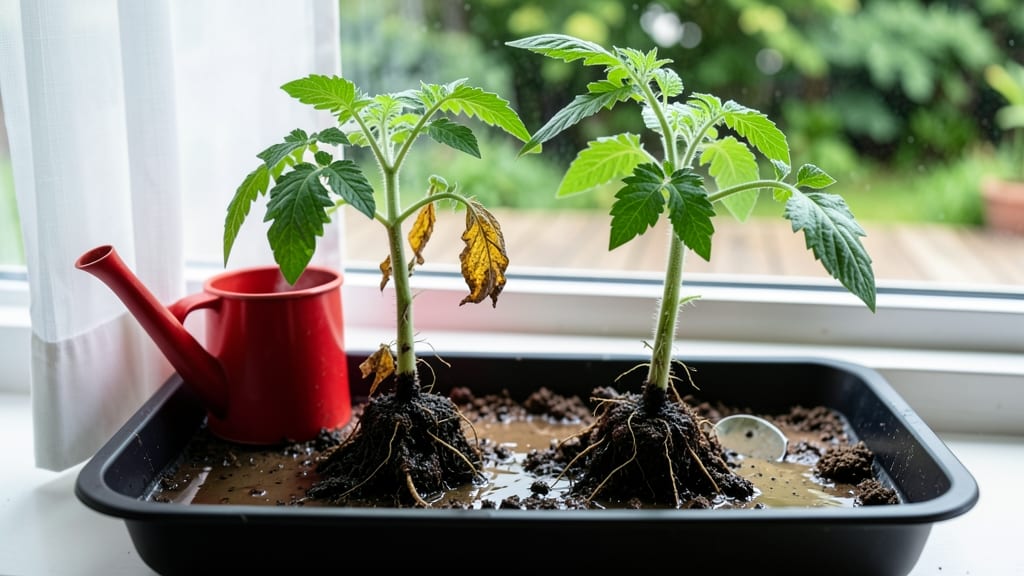
Overwatering tomato seedlings turns their leaves yellow and mushy—then you're staring at a sad, squishy mess instead of sturdy plants. 🌱 I've pulled seedlings back from the brink by fixing drainage, adjusting watering, and pruning the damage, and you can too.
The key is acting fast before fungal rot sets in. Most people drown seedlings by keeping soil soggy or using pots without drainage holes. Check your containers first—if water pools at the bottom, that's your problem.
For seedlings already struggling, let the top inch of soil dry out completely between waterings, and use a spray bottle instead of pouring water at the base. Within a week, you'll see new green growth as roots recover.
The plants might look rough at first, but with proper care, they'll bounce back stronger than ever. Just avoid the same mistakes next time by choosing well-draining soil and smaller pots for young seedlings. This method works for any overwatered seedlings, not just tomatoes.
The same principles apply to peppers, herbs, and flowers too—once you master the rescue, you'll spot the signs early and prevent future heartbreak.
Root Problems Stemming From Too Much Water
When your tomato seedlings receive more water than they need, their delicate root systems become overwhelmed, leading to a cascade of issues. Understanding the why behind these problems is the first step to fixing them—and preventing future mishaps.
Let’s break down the science behind why overwatering sends tomato seedlings into distress.
Tomato seedlings thrive when their roots have access to oxygen, which is essential for respiration—the process that fuels growth. When you overwater, the soil pores fill with water, displacing the air that roots need to breathe. This creates an anaerobic (oxygen-deprived) environment, which triggers:
- Root suffocation: Without oxygen, roots can’t absorb nutrients efficiently, leading to stunted growth or yellowing leaves.
- Toxic buildup: Anaerobic conditions encourage harmful microbes to produce ethylene gas and other toxins, which damage root cells.
- Fungal infections: Excess moisture creates the perfect breeding ground for Pythium and Phytophthora, fungi that rot roots and cut off water/nutrient flow.
💡 Pro Tip: Well-draining soil (like a mix of potting soil, perlite, and compost) helps prevent waterlogging. Test soil moisture by sticking your finger 1–2 inches deep—if it’s soggy, hold off on watering!
Overwatering doesn’t just drown roots—it flushes away vital nutrients that seedlings need to grow. Here’s how it happens:
- Soluble nutrients wash away: Elements like nitrogen, phosphorus, and potassium dissolve in excess water and drain from the root zone, leaving seedlings malnourished.
- pH shifts disrupt absorption: Frequent watering can alter soil pH, making it harder for roots to uptake calcium, magnesium, and iron—critical for cell structure and chlorophyll production.
- Salt buildup from fertilizers: If you’ve used synthetic fertilizers, overwatering can concentrate salts in the root zone, causing osmotic stress (where roots struggle to absorb water despite being surrounded by it).
🔥 Actionable Fix: Flush the soil occasionally with dechlorinated water to rinse away excess salts. Use a balanced organic fertilizer (like 5-5-5) to replenish lost nutrients gradually.
Consistent overwatering weakens tomato seedlings by:
- Encouraging weak, sparse roots: Roots grow toward moisture, but in waterlogged soil, they become long and thin (a sign of stress) instead of robust and branched. This makes seedlings top-heavy and prone to falling over.
- Promoting bacterial and fungal diseases:
- Bacterial wilt (Ralstonia solanacearum) thrives in soggy soil and clogs plant vessels, causing sudden wilting.
- Damping-off (a fungal disease) attacks seedlings at the soil line, causing them to collapse like a melted candle.
- Delaying transplant shock recovery: Overwatered seedlings struggle to adapt when moved to drier conditions, increasing transplant failure rates.
🌡️ Prevention Tip: Let the top 1–2 inches of soil dry out between waterings. Use sterilized potting mix and avoid overhead watering to reduce disease risk.
Now that you know the root causes (pun intended!) of overwatering damage, the next step is to revive your seedlings with targeted fixes. Stay tuned!
Revive Your Seedlings in 3 Steps
Overwatered tomato seedlings can feel like a gardening disaster, but with the right approach, you can nurse them back to health—even if their roots are struggling. The key is acting fast and addressing the root cause (literally and figuratively).
Below, we’ll break down practical fixes for common overwatering symptoms, paired with prevention tips to keep your plants thriving.
---
Before diving into fixes, pause all watering immediately. Overwatering creates a suffocating environment for roots, and giving them time to recover is critical.
How to check for damage: - Gently squeeze the soil near the base of the seedlings. If it feels soggy or emits a musty smell, roots are likely drowning. - Pull a seedling lightly—healthy roots should resist slightly, while mushy or gray roots signal rot. - Look for wilting despite damp soil. This is a classic sign of oxygen deprivation.
Quick fix: If roots are still firm but the soil is waterlogged, let it dry out for 1–2 days. Place seedlings in a shady spot (bright light speeds up evaporation) and avoid watering until the top inch of soil feels dry.
--- If roots are already damaged, you’ll need to revive them with better airflow and drainage. Here’s how:
#### H3: 🔧 Fix Compacted or Waterlogged Soil Overwatering often turns soil into a dense, clay-like mess. Break up the compacted layers to help roots breathe.
- Fork it out: Use a small garden fork or trowel to loosen the soil around the roots without disturbing them. Aim for 2–3 inches deep. - Add perlite or sand: Mix in 1 part perlite or coarse sand to 3 parts soil to improve drainage.
This prevents future waterlogging. - Raise the pot (if potted): If seedlings are in containers, prop them up on bricks or a saucer to allow excess water to drain away.
#### H3: 💦 Adjust Your Watering Routine Tomato seedlings hate soggy feet. Switch to a drip-watering method to keep roots moist but not drenched.
- Water at the base only: Avoid overhead watering, which can cause fungal issues.
Use a small watering can with a narrow spout or a spray bottle for gentle hydration. - Water in the morning: This gives soil time to dry slightly during the day, reducing rot risk. - Check soil moisture daily: Stick your finger 1 inch deep—if it’s damp, wait.
If it’s dry, water lightly.
#### H3: 🌿 Repot if Necessary If roots are severely damaged or the soil is beyond saving, repotting is the fastest fix.
- Prepare fresh soil: Use a well-draining potting mix (add compost or coconut coir for nutrients). - Trim damaged roots: Snip off any black, mushy, or slimy roots with sterilized scissors. - Transplant carefully: Place the seedling in the new pot, ensuring the base sits just below soil level.
Water lightly and keep it in shade for 3–5 days.
--- Now that your seedlings are on the mend, keep them healthy long-term with these habits:
#### H3: 🌡️ Master the "Finger Test" The easiest way to avoid overwatering? Check soil moisture regularly.
| Soil Feel | Action | |---------------------|-------------------------------------| | Dry up to 1 inch | Water lightly | | Damp but not soggy | Wait 1–2 days | | Cold, squishy, or smelly | Stop watering immediately |
#### H3: 💡 Upgrade Your Containers Poor drainage is a top cause of overwatering. Swap out old pots for these better options: - Containers with drainage holes (non-negotiable!). - Terracotta pots (breathable and dry faster than plastic). - Fabric grow bags (great for airflow but require more frequent watering checks).
#### H3: 🎯 Use Mulch to Regulate Moisture A 1-inch layer of mulch (straw, shredded leaves, or pine needles) helps slow evaporation and keeps soil temperature stable.
✨ Pro Tip: If you’re unsure about watering, underwater slightly—tomato seedlings are tougher than you think!
--- If seedlings are completely limp, blackened, or falling over, they may be beyond saving. But don’t give up—propagate from healthy stems if possible: 1. Snip off a 3–4 inch stem just below a leaf node.
2. Dip in rooting hormone (optional but helpful). 3. Plant in fresh, dry potting mix and keep in bright, indirect light. 4. Mist lightly every 2–3 days until roots form (usually 2–4 weeks).
--- Reviving overwatered tomato seedlings takes time, but with better drainage, smarter watering, and a little TLC, your plants can bounce back stronger. Monitor them closely in the first week, and soon you’ll be harvesting juicy tomatoes instead of dealing with soggy soil!
💡 Remember: Healthy seedlings = happy harvests. Next time, when in doubt, wait!
Frequently asked questions
How do I tell if my tomato seedlings are overwatered vs. underwatered?
Check the soil first: overwatered seedlings have soggy, cold soil that smells musty, while underwatered seedlings have dry, cracked soil. Look for yellow lower leaves (overwatered) versus crispy, brown edges (underwatered). A simple test: gently tug a seedling—if it pulls out easily, roots are likely rotting from too much water.
Can I save tomato seedlings with black, mushy stems?
If only the top of the stem is black, trim it back to healthy green tissue and replant in fresh, dry soil. For completely blackened stems, the seedling is likely beyond saving, but you can try propagating healthy leaves as cuttings. Act fast—fungal rot spreads quickly in damp conditions.
What’s the best soil mix to prevent overwatering?
Use a blend of 50% potting soil, 30% perlite or vermiculite, and 20% compost. This improves drainage while retaining enough moisture. Avoid garden soil—it compacts easily and holds too much water. For containers, add a 1-inch layer of gravel at the bottom to create extra drainage space.
How often should I water tomato seedlings?
Water only when the top 1 inch of soil feels dry. For most climates, this means every 2-3 days in warm weather or every 4-5 days in cooler conditions. Always water at the base (not overhead) to prevent fungal diseases. Morning watering is ideal—it gives soil time to dry before evening.
Will overwatered seedlings recover if I stop watering completely?
Not necessarily—stopping watering alone won’t fix root damage. You must also improve drainage and let the soil dry out completely. If roots are severely rotted, repotting in fresh soil is the only solution. Think of it like CPR for plants: you need to revive circulation (airflow) and nutrition, not just withhold water.