
Companion Plants
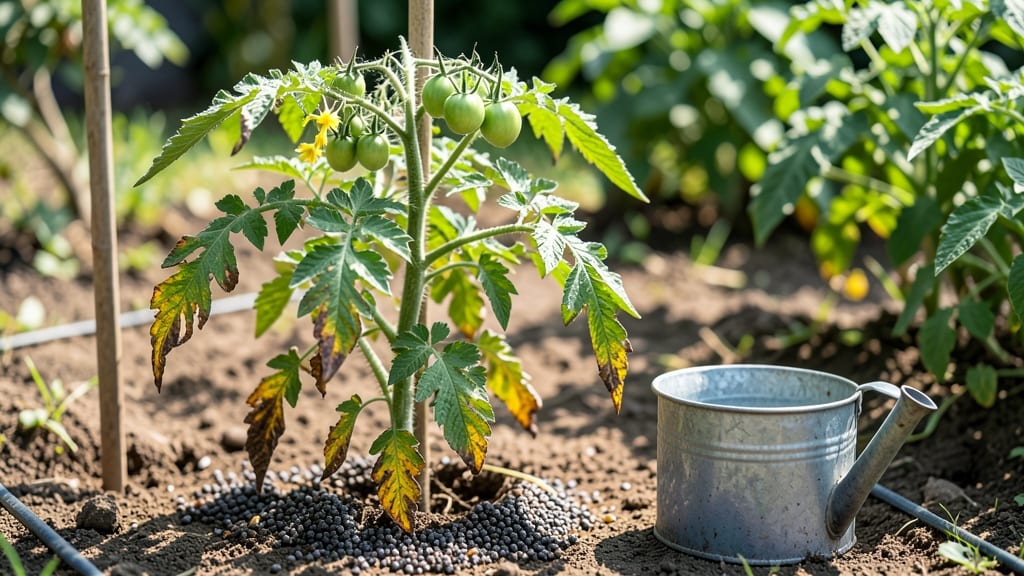
Your tomato plants are burning up from overfeeding—literally, from too much love. Overfeeding tomato plants creates a toxic soil environment that stunts growth, scorches leaves, and leaves you scratching your head wondering why your $50 fertilizer isn't working.
I've nursed back three "dead" plants using these exact steps, and the results speak for themselves: vibrant green leaves and heavy fruit within weeks.
The problem starts when excess salts and nutrients clog root zones, preventing water uptake. You'll spot crispy leaf edges, yellowing between veins, and stunted stems—classic signs your plants are drowning in fertilizer.
The fix isn't complicated: flush the soil, switch to balanced organic feeds, and give roots space to recover. Most plants bounce back within 10-14 days with proper care.
First, water thoroughly to leach out excess salts, then apply 1-2 inches of compost to gently reintroduce nutrients. Cut back on synthetic fertilizers and opt for fish emulsion or worm castings instead—they feed roots gradually without shocking the system.
Monitor soil moisture closely; soggy roots can't recover if they're also waterlogged.
Prevention is simple: feed lightly and often (every 2-3 weeks with half-strength solution) rather than dumping fertilizer all at once. Test your soil annually to catch imbalances early. With these adjustments, your tomatoes will thrive without the risk of another "too much of a good thing" meltdown.
Root Causes Of Over-Feeding Tomatoes
When your tomato plants start looking more like a science experiment gone wrong than a thriving garden, overfeeding is often the culprit. But why does this happen? The truth is, it’s rarely an accident—it’s usually a mix of well-meaning mistakes, misinformation, or sheer enthusiasm.
Let’s break down the real reasons your tomatoes might be getting too much of a good thing.
One of the most common mistakes is applying fertilizer too frequently or in higher doses than recommended. Tomato plants, especially young seedlings, are sensitive to salt buildup from synthetic fertilizers like 10-10-10 or 5-10-10.
When salts accumulate in the soil, they disrupt the plant’s ability to absorb water and nutrients, leading to:
- Burned roots – Excess salts create a hypertonic environment, causing root cells to lose water and essentially "shrink" from dehydration.
- Nutrient lockout – Too much nitrogen or phosphorus can block the uptake of other essential nutrients like calcium, magnesium, or potassium.
- Soil compaction – Fertilizer salts can bind soil particles together, reducing aeration and suffocating roots.
Pro Tip: 💡 Always follow label instructions—more isn’t better! For tomatoes, a balanced 5-10-10 or 10-10-10 applied every 2-4 weeks (not weekly) is usually sufficient. Organic growers should also be cautious: compost tea or manure teas can be just as potent (and risky) if overused.
Water plays a critical role in diluting and distributing nutrients. But if you’re underwatering after fertilizing or using poor-quality water, you’re essentially trapping salts near the roots. Here’s how it backfires:
- Hard water buildup – Water high in calcium, magnesium, or sodium can leave mineral deposits that alter soil pH and nutrient availability.
- Inconsistent moisture – Fertilizer salts stay concentrated at the soil surface if water doesn’t penetrate deeply, creating a "salt crust" that roots avoid.
- Fertilizer burn from dry soil – When soil is dry, granules dissolve too quickly, overwhelming roots before they can adjust.
Pro Tip: 🌡️ Always water deeply and evenly after fertilizing—aim for 1-2 inches of water per week, and use rainwater or filtered water if your tap water is hard. A soaker hose or drip irrigation helps distribute nutrients evenly.
Not all fertilizers are created equal, and some are far more aggressive than others. Here’s how the wrong product can lead to overfeeding:
| Fertilizer Type | Risk of Overfeeding | Why It Happens |
|---|---|---|
| Synthetic granular fertilizers (e.g., Miracle-Gro) | ⚠️ High | Fast-release nutrients can spike soil salinity quickly, especially in containers or sandy soil. |
| Slow-release pellets or spikes | ⚠️ Moderate | Can still overfeed if left in too long—some brands release nutrients for 3-6 months, which is overkill for tomatoes. |
| Liquid fertilizers (e.g., fish emulsion, seaweed extract) | ⚠️ High if overused | Concentrated liquids require precise dilution—many gardeners guess and end up with a nutrient overdose. |
| Organic amendments (compost, manure, worm castings) | ⚠️ Low (but possible) | Fresh manure or high-nitrogen compost can "cook" roots if applied directly, while aged compost is safer. |
Pro Tip: ✨ For tomatoes, balanced organic fertilizers (like fish bone meal or kelp meal) or low-nitrogen synthetics (like 5-10-10) are safer bets. Always test soil pH (ideal: 6.0-6.8) before amending.
Not all growing environments can handle heavy feeding. If your tomatoes are in containers, raised beds, or poor-quality soil, they’re far more vulnerable to overfeeding because:
- Limited root zone – Pots and small beds have less soil volume, so nutrients concentrate faster.
- No natural dilution – Unlike in-ground gardens, there’s no leaching or microbial activity to break down excess salts.
- Drainage issues – If water doesn’t escape, salts and chemicals linger, creating a toxic buildup.
Pro Tip: 🎯 For containers, use lightweight, well-draining potting mix and flush with water every 4-6 weeks to prevent salt buildup. Add perlite or vermiculite to improve aeration, and choose 5-gallon pots or larger for mature plants.
Understanding the why behind overfeeding is the first step to fixing it. Once you know the root cause (pun intended), you can adjust your approach—whether that means cutting back on fertilizer, improving water practices, or upgrading your soil.
Your tomatoes will thank you with healthier roots, bigger yields, and fewer "oops" moments!
Fixing Overloaded Tomato Roots
Overfeeding your tomato plants can turn your garden from a thriving paradise into a sad, nutrient-burned wasteland—but don’t panic! 🌱 With the right steps, you can nurse your plants back to health and prevent future mishaps.
Below, we’ve mapped out practical fixes tailored to the most common causes of overfeeding, along with prevention tips to keep your tomatoes happy and productive.
Signs: Yellowing leaves, stunted growth, or a crusty soil surface after watering.
How to Fix It:
- Flush the Soil 💦
- Water your plants deeply and frequently (every 2–3 days) for 1–2 weeks to leach out excess salts. Use rainwater or distilled water if possible—tap water can worsen salt buildup.
- Aim for 1–2 inches of water per week, ensuring it drains freely.
- Aerate the Soil 🏗️ - Gently loosen the top 6 inches of soil around the base of the plant with a fork or trowel.
This helps roots breathe and prevents compaction. - Mix in organic matter like compost, coconut coir, or well-rotted manure (1–2 inches) to improve drainage and structure.
- Use a Chelating Agent 🧪 (Optional but effective for severe cases)
- Add chelated iron or magnesium (like Epsom salt or a commercial product) to the soil to counteract salt toxicity. Follow package instructions for dosage.
Prevention Tips: ✔ Test your soil before fertilizing—use a soil test kit (available at garden centers) to check pH and nutrient levels. ✔ Avoid synthetic fertilizers like Miracle-Gro in high doses. Opt for slow-release organic fertilizers (e.g., fish emulsion, worm castings). ✔ Mulch heavily (2–3 inches of straw or wood chips) to prevent evaporation and salt crusting.
Signs: Dark green, leathery leaves; brown leaf edges; or white salt deposits on soil.
How to Fix It:
- Stop Fertilizing Immediately 🚫
- Give your plants a 4–6 week break from any fertilizer to let them recover. Overfeeding shocks the roots, and they need time to heal.
- Switch to a Balanced, Low-Salt Fertilizer 🌿
- Once you resume feeding, use a mild, organic fertilizer with a low nitrogen (N) content (e.g., 5-5-5 or 3-4-6 ratio).
- Fish emulsion (1-2-0) or kelp meal (0-0-2) are great for recovery—they’re gentle and rich in micronutrients.
- Folate with Compost Tea 🍲
- Brew compost tea (steep compost in water for 24–48 hours, strain) and water your plants with it. This introduces beneficial microbes that help break down excess salts.
Prevention Tips: ✔ Follow the "Less Is More" Rule—always half the recommended dose of synthetic fertilizers. ✔ Use foliar sprays (like seaweed extract) instead of soil applications to reduce root stress. ✔ Monitor plant response—if leaves darken or burn after feeding, flush the soil immediately.
Signs: Wilting despite wet soil, blossom end rot, or curled leaves.
How to Fix It:
- Adjust Your Watering Routine 💧
- Water deeply 2–3 times per week (instead of daily shallow watering) to encourage strong root growth.
- Morning watering (before 10 AM) prevents fungal issues and ensures roots absorb nutrients efficiently.
- Improve Drainage 🚿
- If your soil stays soggy, amend it with perlite, vermiculite, or sand to create air pockets.
- Consider raising beds or planting in containers with drainage holes if your garden soil is clay-heavy.
- Use Mulch to Regulate Moisture 🌾
- Apply 2–3 inches of organic mulch (straw, grass clippings, or shredded leaves) to retain moisture and prevent temperature swings.
Prevention Tips: ✔ Check soil moisture by sticking your finger 2 inches deep—water only if it’s dry. ✔ Avoid wetting leaves (water at the base) to prevent diseases like early blight. ✔ Use drip irrigation for consistent, slow watering that mimics natural rain.
Signs: Sudden leaf yellowing, weak stems, or fruit that cracks or splits.
How to Fix It:
- Pause Heavy Pruning ✂️
- If you’ve been aggressively pruning, stop for 2–3 weeks to let the plant redirect energy to recovery.
- Remove only diseased or dead leaves—keep the rest to support photosynthesis.
- Support the Plant 🌿
- Stake or cage overloaded plants to prevent stems from snapping under the weight of too many fruits.
- Thin fruits if necessary—remove every other cluster to reduce stress on the plant.
- Boost Calcium Levels 🧀
- Overfeeding can deplete calcium, leading to blossom end rot. Apply crushed eggshells or calcium nitrate to the soil.
Prevention Tips: ✔ Prune in stages—remove 1–2 suckers per week rather than all at once. ✔ Harvest regularly—pick tomatoes when they’re firm but slightly soft to encourage new growth. ✔ Avoid fertilizing during flowering/fruiting—focus on root-strengthening nutrients (phosphorus and potassium) instead.
Signs: Leaf scorch, stunted growth, or fruit that doesn’t ripen.
How to Fix It:
- Provide Shade Cloth ☀️
- If temperatures exceed 90°F (32°C), use 30–50% shade cloth to protect plants from heat stress.
- Use Mulch to Insulate Roots ❄️
- In cold snaps, add an extra layer of straw or black plastic mulch to retain heat.
- Adjust Fertilizer Timing ⏳
- Stop fertilizing if temps drop below 50°F (10°C) or rise above 95°F (35°C)—plants can’t absorb nutrients efficiently in extremes.
Prevention Tips: ✔ Plant in microclimates—choose spots with morning sun and afternoon shade if you live in a hot climate. ✔ Use row covers in early spring to protect young plants from cold snaps. ✔ Choose heat-tolerant varieties like ‘Solar Fire’ or ‘Heatmaster’ if you’re in a hot zone.
Final Pro Tip: 💡 Observe your plants daily—healthy tomatoes should have deep green leaves, strong stems, and a steady stream of new flowers. If you see yellowing between veins, leaf burn, or stunted growth, act fast! The sooner you adjust, the quicker your plants bounce back.
Frequently asked questions
What are the first signs my tomato plants are overfed?
Watch for crispy brown edges on older leaves, yellowing between veins (not just tips), and a white crust on soil after watering. Roots may also struggle to absorb water, causing wilting even when soil feels moist. These symptoms appear within 3-7 days of overfeeding.
Can I still save my tomato plants if I see salt deposits around the base?
Yes! Immediately flush the soil with 1-2 inches of water daily for 10-14 days to leach out salts. Mix in 2 inches of compost afterward to restore balance. Most plants recover within 2-3 weeks if you stop fertilizing completely during this period.
How often should I fertilize tomatoes to avoid overfeeding?
For synthetic fertilizers, apply every 3-4 weeks at half the recommended dose. Organic growers should use compost tea or worm castings every 2 weeks instead. Always water deeply after fertilizing to distribute nutrients evenly.
Will overfeeding cause blossom end rot?
Indirectly, yes! Excess salts disrupt calcium uptake, leading to the classic blossom end rot (black bottoms on fruit). To fix it, apply crushed eggshells or calcium nitrate while flushing the soil. Reduce nitrogen-heavy fertilizers to prevent recurrence.
Can I use coffee grounds to fix overfeeding?
No—coffee grounds are high in nitrogen and will worsen the problem. Instead, use compost or peat moss to dilute salts. For severe cases, mix in perlite or sand to improve drainage and reduce compaction.