
Companion Plants
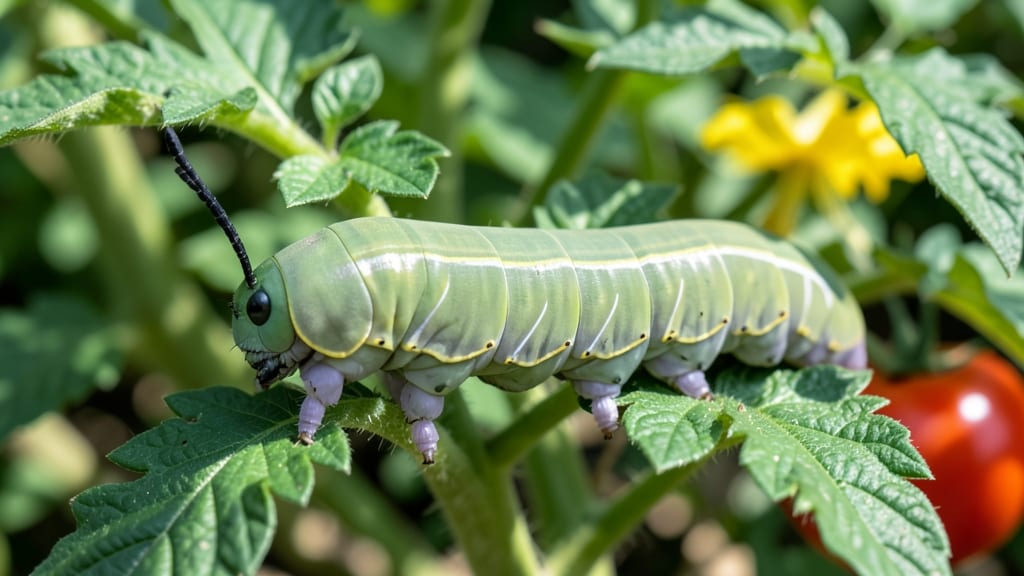
That large caterpillar on tomato plant devouring your tomato leaves isn't just a pest—it's a tomato hornworm, and it moves fast. 🌿 I've watched these striped caterpillars strip entire plants bare in just 24 hours, but I've also learned the organic fixes that stop them before they ruin your harvest.
The key is acting quickly with the right tools.
These caterpillars aren't picky eaters—they'll chow down on tomatoes, peppers, and even eggplants. The good news? They're easy to spot with their green bodies and white stripes, and their lifecycle gives you a narrow window to strike.
Handpicking works for small gardens, but for larger plots, you'll want to combine Bacillus thuringiensis (a natural bacteria) with preventive planting tricks.
Within hours of treatment, you'll see the hornworms stop feeding, and your plants start recovering. The real win? These methods protect your garden without chemicals, so you can keep harvesting tomatoes all season long. No more sad, skeletonized leaves—just lush, productive plants.
Works for backyard gardens, containers, and even small urban plots. Here's how to tackle them before they become a full-blown infestation—without losing your crop.
The Real Culprits Behind Caterpillar Invasions
Finding a large caterpillar munching on your tomato plants isn’t just a random act of nature—it’s usually a sign of a deeper issue. These hungry pests don’t just appear out of nowhere; they’re drawn to your garden for specific reasons.
Understanding why they’re there is the first step to stopping them before they devour your harvest. Let’s break down the most common causes and what’s really inviting them to the party.
Tomato plants are like all-you-can-eat restaurants for caterpillars, especially for species like the hornworm or tomato fruitworm. Why? Because tomatoes are packed with nutrients that caterpillars love, particularly:
- Soft, tender foliage: Young tomato leaves are easy to chew through, making them a caterpillar’s dream snack.
- High moisture content: Healthy tomato plants retain water, which keeps caterpillars hydrated and energized.
- Volatile organic compounds (VOCs): When tomato leaves are damaged (even slightly), they release chemical signals that attract more caterpillars—and their predators’ predators (like parasitic wasps, which lay eggs inside caterpillars).
Actionable fix: If you notice early signs of damage (like ragged edges or tiny holes), prune and remove affected leaves immediately. This reduces the scent trail and removes the caterpillar’s favorite dining spot.
Caterpillars are opportunists—they target plants that are already struggling. When tomato plants are overcrowded, underwatered, or nutrient-deficient, their defenses weaken, making them prime targets. Here’s how stress opens the door:
- Poor air circulation: Dense foliage traps moisture, creating the perfect humid environment caterpillars crave (especially for egg-laying).
- Weakened natural defenses: Stressed plants produce fewer alkaloids (natural pesticides) and tannins, which deter pests.
- Attracts secondary pests: A struggling tomato plant may also draw in aphids or whiteflies, which then attract caterpillars as a secondary food source.
Actionable fix:
- 🌱 Space plants properly: Give tomato plants at least 18–24 inches between them for airflow.
- 💧 Water deeply but consistently: Avoid wetting leaves (use drip irrigation) to prevent fungal issues that stress plants.
- 🌿 Fertilize wisely: Use a balanced organic fertilizer (like compost or fish emulsion) to boost resilience.
Most large caterpillars start as tiny eggs, often laid by tomato hornworm moths or white-lined sphinx moths. These moths are highly selective—they only lay eggs on plants they know their larvae can eat. Here’s how it happens:
- Moths scout for healthy plants: They use their keen sense of smell to find tomato plants in bloom or with new growth.
- Eggs hatch in 2–5 days: A single female can lay 200–500 eggs in her lifetime, and they’re nearly invisible until the caterpillars emerge.
- Timing matters: Peak egg-laying occurs at dusk or dawn, when moths are most active and predators (like birds) are less likely to spot them.
Actionable fix:
- 🔦 Inspect leaves regularly: Check the undersides of leaves for tiny, pale green eggs (about the size of a pinhead).
- 🌙 Use yellow sticky traps: Place them near plants to catch adult moths before they lay eggs.
- 🕷️ Encourage natural predators: Ladybugs, lacewings, and parasitic wasps eat caterpillar eggs. Plant dill, fennel, or marigolds nearby to attract them.
Caterpillar populations explode under certain conditions, and your local climate plays a huge role. Here’s what makes your garden a caterpillar magnet:
| Factor | Why It Helps Caterpillars | Peak Risk Period |
|---|---|---|
| 🌞 Warm nights | Speeds up egg hatching and larval growth. Caterpillars grow faster in temps above 70°F (21°C). | Late spring to early fall |
| 🌧️ High humidity | Keeps eggs and young caterpillars from drying out. Moisture also attracts the moths that lay eggs. | After rain or in shaded gardens |
| 🍃 Long growing seasons | More time for multiple generations of caterpillars to hatch, eat, and reproduce. | Southern U.S. or coastal regions |
Actionable fix:
- 🌡️ Monitor weather forecasts: If a heatwave is coming, cover young plants with row fabric to disrupt moth activity.
- ☀️ Improve drainage: Avoid soggy soil, which attracts slugs (another caterpillar ally) and fungal diseases.
- ⏳ Stagger plantings: If possible, plant tomatoes in successive waves so not all are vulnerable at once.
Now that you know why those caterpillars are crashing your tomato party, the next step is to outsmart them with organic, effective solutions. Stay tuned for our next section on natural remedies that actually work!
Quick Fixes for Tomato Plant Pests
Got a large caterpillar munching on your tomato plants? 🌱🐛 Don’t panic—there are fast, organic solutions to save your harvest. Below, we break down the most effective fixes based on the cause of the problem, so you can act quickly and prevent future infestations.
Best for: Small to medium infestations (1-5 caterpillars).
- 👨🍳 Scout Early & Often – Check your tomato plants daily (especially in the morning or evening) when caterpillars are most active.
- 🔪 Drop Them in Soapy Water – Use a pair of gloves and tweezers to pluck caterpillars off leaves and stems.
Drop them into a bucket of soapy water (1 tbsp dish soap per gallon) to kill them instantly. 3. 🌿 Relocate to a Safe Zone – If you prefer not to kill them, place caterpillars in a container with leaves of dill, parsley, or basil (they’ll eventually wander away).
💡 Pro Tip: Focus on undersides of leaves—that’s where caterpillars hide!
Best for: Larger infestations or when caterpillars are hard to spot.
| Solution | How to Use | Frequency |
|---|---|---|
| Neem Oil Spray | Mix 1 tsp neem oil + 1 tsp mild soap + 1 quart water. Spray directly on caterpillars & leaves. | Every 3-5 days until gone. |
| Garlic & Chili Pepper Spray | Blend 4 garlic cloves + 1 tbsp cayenne pepper + 1 quart water. Strain, add 1 tsp soap, and spray. | Every 2-3 days. |
| Bacillus Thuringiensis (Bt) | Sprinkle Bt powder (organic bacteria) on leaves—caterpillars ingest it and die within 48 hours. | Every 5-7 days (safe for bees!). |
✨ Bonus: Add a few drops of food-grade diatomaceous earth around the base of plants—it dehydrates caterpillars without harming your tomatoes.
Best for: Long-term prevention and keeping pests away naturally.
- 🌿 Plant Repellent Herbs – Surround tomato plants with: - Basil (confuses pests) - Mint (deters caterpillars) - Marigolds (natural insect repellent)
- 🕷️ Introduce Beneficial Insects – Ladybugs, praying mantises, and parasitic wasps love eating caterpillars.
Buy them online or attract them with dill or fennel. 3. 🧵 Use Row Covers – Lightweight floating row covers (like Agribon) block caterpillars while allowing pollination (remove when flowers appear).
🎯 Prevention Tip: Plant nasturtiums as a trap crop—caterpillars prefer them over tomatoes!
Best for: Severe infestations (dozens of caterpillars) or if organic methods fail.
- 🐞 Biological Control (Nematodes) – Beneficial nematodes (Heterorhabditis bacteriophora) infect and kill caterpillars. Apply at dusk with a watering can.
- 🍎 Fruit & Leaf Removal – If caterpillars have already damaged fruit, pick and discard heavily infested tomatoes (don’t compost them!).
- 🌡️ Solarization (For Extreme Cases) – In hot climates, cover the soil with clear plastic for 4-6 weeks to kill larvae before they hatch.
Final Reminder: The key to beating caterpillars is speed and consistency—check your plants regularly, act fast, and prevent future outbreaks with companion planting! 🚀🌿
Frequently asked questions
What kind of large caterpillar is eating my tomato leaves?
The most common culprit is the tomato hornworm, with its distinctive green body and white stripes. Other possibilities include the tomato fruitworm (smaller, brownish) or hawk moth caterpillars. Check for droppings (frass) and chewed leaves to confirm—hornworms leave behind large, irregular holes.
Are these caterpillars harmful to my tomato plants?
Yes, they can be devastating! A single tomato hornworm can defoliate a plant in 24 hours, reducing yields and stressing the plant. Even smaller caterpillars weaken plants by feeding on leaves and fruit. Act fast to prevent long-term damage to your harvest.
How do I safely remove caterpillars from my tomato plants?
Use a pair of tweezers or gloves to gently pick them off and drop them into soapy water. For large infestations, try Bacillus thuringiensis (Bt)—a natural bacteria that kills caterpillars within 48 hours without harming your plants or beneficial insects.
Will my tomato plants recover after caterpillar damage?
Young plants may struggle, but mature tomatoes are resilient! Prune damaged leaves to encourage new growth, and focus on keeping the plant healthy with proper watering and fertilization. If only a few leaves are lost, the plant can often bounce back—just stay vigilant for more pests.
Can I use chemical pesticides on my tomato plants?
While chemical pesticides work, they’re not recommended for organic gardens or if you plan to eat the fruit. Instead, opt for neem oil, garlic spray, or beneficial nematodes—these are safer for your plants, pollinators, and the environment while still effective.