
Companion Plants
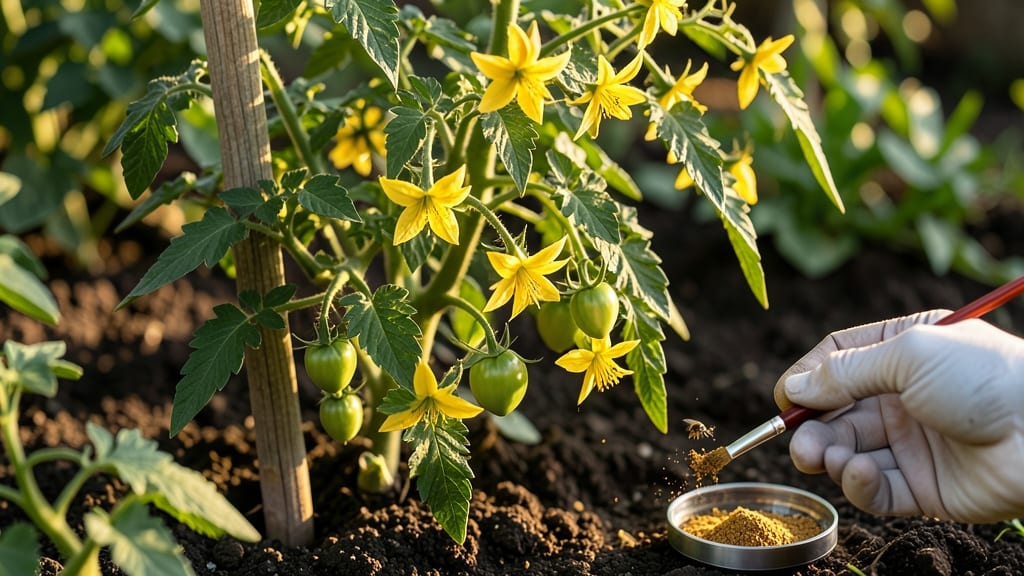
When your tomato plants flower but refuse to set fruit, you're staring at a how to pollinate tomato plants puzzle. 🌱 The good news? Heavy fruit sets are just a gentle nudge away—whether from nature or your own hands.
My first year growing tomatoes, I watched blossoms drop like rain, only to learn that even outdoor plants sometimes need a little help from gardeners (or bees that never showed up).
This isn't about fancy equipment or complicated science—just understanding how tomatoes want to be pollinated. Wind, bees, and even a soft breeze can do the job, but when Mother Nature skips her shift (like in greenhouses or rainy seasons), you step in.
The tools you need are simple: patience, a small paintbrush or cotton swab, and about 5 minutes twice a day during flowering.
By the end of the season, you'll watch those flowers swell into plump tomatoes—2-3 times more fruit than before.
The key is timing: pollinate in the morning when flowers are fresh, and you'll see the first signs of success within 3-5 days (tiny fruit bumps where blossoms used to be).
Works for both outdoor vines and greenhouse plants, and the same tricks boost fruit set in peppers too. Let's get those blossoms turning into harvests!
📚 In This Guide
- What you need
- Instructions
- Tips and common mistakes
- Wrapping up and next steps
What you need
- ● Tomato plants – Choose varieties like Beefsteak, Cherry, or Roma for best results.
- ● Small paintbrush or cotton swab – A soft-bristled brush (like a makeup brush) or a clean cotton swab for gentle pollination.
- ○ Water spray bottle – A fine-mist sprayer to lightly dampen flowers (optional but helpful for sticky pollen).
- ● Notebook & pen – To track pollination dates and monitor fruit development.
- ● Pruning shears (sterilized) – For trimming excess foliage or dead flowers if needed.
- ● Handheld magnifying glass – Helps spot tiny anthers and stigma for precise pollination.
- ● Bees or beneficial insects – If you prefer natural pollination, attract them with bee-friendly flowers nearby.
- ● Gloves (nitrile or cotton) – Protects hands from thorns and plant sap.
- ● Grow light or timer – Ensures consistent light exposure for optimal flower production.
Step-by-step guide to hand-pollinating tomato plants
Here’s how I boost fruit production—even when bees aren’t around. These tricks work for both indoor and outdoor plants.
🌱 Step 1: Identify Ready-to-Pollinate Flowers
Pick flowers that have fully opened but haven’t dropped their yellow pollen yet. Look for white or pale yellow blossoms with sturdy petals—these are prime candidates. Avoid flowers that look wilted or have already started to close, as they won’t produce fruit.
Gently shake the plant in the morning (when humidity is high) to see if pollen naturally falls. If nothing happens, that’s your cue to step in. I always check two to three flowers per cluster—this ensures a good distribution of pollen without overdoing it.
🌿 Step 2: Collect Pollen with a Soft Brush
Use a small, clean paintbrush (or even a cotton swab) to tap the center of the flower where the pollen sits. You’ll see a fine, yellow dust clinging to the brush—this is what fertilizes the flower. If the pollen doesn’t stick well, the flower might already be past its prime.
Real talk: Don’t use your fingers unless you’ve washed them first. Tomato flowers are sensitive, and oils from your skin can smother the pollen. I keep a dedicated brush in my gardening kit just for this job—it’s worth the small investment.
💧 Step 3: Transfer Pollen to Flower Centers
Gently brush the pollen from the brush into the center of another flower’s stigma (the sticky, raised part in the middle). You’ll see the pollen stick instantly—this is the moment fertilization begins. For four plants, I pollinate three flowers per cluster to maximize fruit set.
Work quickly but carefully. If you miss the stigma, the pollen won’t take, and the flower will drop. I like to do this in the early morning when flowers are fully open and dew helps the pollen adhere better.
⏰ Step 4: Repeat Daily Until Flowers Fade
Tomato flowers only stay fertile for one day. After that, they close and won’t produce fruit. Check your plants every morning and pollinate any new blooms that opened overnight. I set a reminder on my phone—skipping a day means lost potential fruit.
If you’re growing determinate tomatoes (bush varieties), focus on the lower clusters first. For indeterminate tomatoes (vining types), pollinate flowers as they appear up the stem. This ensures a steady harvest all season long.
☀️ Step 5: Support Pollinated Flowers for Heavy Fruit
Once pollinated, flowers will start to swell into tiny tomatoes within 3-5 days. To prevent branches from breaking under the weight, I tie sturdy stakes to the main stem and gently weave side branches through them. This keeps the plant upright and supports the growing fruit.
Water at the base deeply but infrequently—soaked soil encourages strong root growth, which helps the plant support heavy fruit loads. Avoid wetting the leaves or flowers, as this can lead to disease. A drip irrigation system or watering can with a narrow spout works best.
Tips & tricks for hand-pollinating tomato plants
Here's what nobody tells you about getting the most out of your tomato pollination—these little tricks make all the difference.
Timing is Everything: The early morning is your best window for pollinating because dew helps pollen stick to the stigma. I like to work between 7:00-9:00 AM when humidity is highest, and flowers are fully open. If you miss this window, try again in the late afternoon when temperatures drop slightly—this helps prevent pollen from drying out too quickly.
Tool Selection Matters: While a clean paintbrush works perfectly, I've found that a cotton swab gives me more control, especially for smaller flowers. Keep your tools dedicated to pollination—don't use them for anything else, or you risk transferring oils or contaminants. Store them in a sealed container between uses to maintain cleanliness.
Visual Cues for Success: When transferring pollen, look for the stigma to become slightly darker where the pollen lands—this confirms fertilization. I also check for pollen transfer by gently shaking the brush over a white surface; if you see yellow dust, you've got plenty to work with. For four plants, I pollinate three flowers per cluster to maximize fruit set without overwhelming the plant.
Environmental Considerations: If your flowers aren't opening properly, check your plant's environment. Tomato flowers need temperatures between 55-85°F to open and pollinate effectively. If it's too hot or cold, the flowers may close before pollination can occur. I've also noticed that plants in low-light conditions produce fewer flowers, so position yours where they get 6-8 hours of sunlight daily.
Pro Tips for Pollinate Tomato Plants
- Here's what nobody tells you about getting the most out of your tomato pollination—these little tricks make all the d...
- Timing is Everything: The early morning is your best window for pollinating because dew helps pollen stick to the sti...
- Tool Selection Matters: While a clean paintbrush works perfectly, I've found that a cotton swab gives me more control...
Frequently asked questions
Got questions about tomato pollination? You’re not alone! Here are some of the most common queries—and their simple, actionable answers to help you grow a bountiful harvest.
Why aren’t my tomato flowers turning into fruit?
If your flowers drop off or stay green, it could be due to lack of pollination, extreme heat (over 90°F/32°C), or poor growing conditions. Hand-pollinate by gently shaking plants or using a small brush. Also, ensure proper watering and balanced fertilizer to support fruit development.
When is the best time to pollinate tomato plants?
Pollinate in the morning when flowers are fully open and humidity is lower. Avoid midday heat, as it can stress plants. For indoor or greenhouse tomatoes, pollinate daily during flowering (every 2–3 days for outdoor plants). Consistency is key!
Can I use a hairdryer or fan to pollinate tomatoes?
While a gentle breeze (like a fan on low) can help, avoid hairdryers—they can damage delicate flowers with heat. If using a fan, place it 1–2 feet away and run it for short bursts (5–10 minutes) during peak flowering hours.
What if I don’t want to hand-pollinate? Are there alternatives?
Yes! Try these tricks:
- Plant companion flowers like marigolds or basil nearby to attract pollinators (bees love them!).
- Use a small paintbrush or cotton swab to transfer pollen between flowers.
- For determinate tomatoes, a light shake of the plant can work.
My tomato flowers are falling off—what’s wrong?
This is often called “blossom drop” and happens due to:
- Temperature stress (too hot or cold).
- Inconsistent watering or over-fertilizing.
- Lack of pollination (especially in greenhouses).
Wrapping up and next steps
Pollinating your tomato plants doesn’t have to be a mystery—with the right techniques, you can boost your harvest and enjoy juicy, plentiful tomatoes all season!
Whether you’re using a paintbrush, a gentle shake, or nature’s helpers like bees, these methods ensure your flowers turn into fruit. Now that you’re armed with the know-how, grab those tomatoes and get growing!
Ready to take it further? Experiment with companion plants like basil or marigolds to attract more pollinators and protect your plants. Happy gardening! 🌱🍅